In a city like Houston, Texas, where sudden hailstorms are a seasonal reality, vehicle owners often face the challenge of repairing dents quickly without compromising value. This article explores how Paintless Dent Removal (PDR) has become a preferred solution for auto hail damage repair, offering a faster, more cost-effective alternative to traditional body shop methods. By preserving the original factory finish and reducing repair time, PDR helps drivers restore their vehicles efficiently while avoiding unnecessary expenses—making it an ideal choice for Houston’s storm-prone conditions.
Why Houston vehicles are vulnerable to hail and why fast repair matters
Houston, TX sits in a storm corridor where spring and fall cold fronts collide with Gulf moisture, producing frequent, fast-moving hailstorms. Auto hail damage ranges from peppered “peppercorn” dents across hoods and roofs to deeper impacts along beltlines and door edges. Left untreated, those dents trap moisture, accelerate corrosion, and diminish resale. Quick, expert hail repair and hail damage repair protects the original finish, helps retain vehicle value, and prevents small dents from becoming costly structural issues.
Why fast response is critical
- Insurance claim surge: After a major Houston hail event, insurers are inundated. A fast response gets you a detailed estimate and a place in line before adjuster backlogs grow.
- Protect the paint: Even when paint isn’t cracked, prolonged UV and moisture around dent edges can degrade clearcoat. Timely paintless dent repair (PDR) preserves the factory finish and restores pre-storm condition.
- Keep mobility: Early scheduling secures rental cars or alternative transport if needed and reduces downtime for fleet services and daily drivers.
Mobile and on-site options in Houston
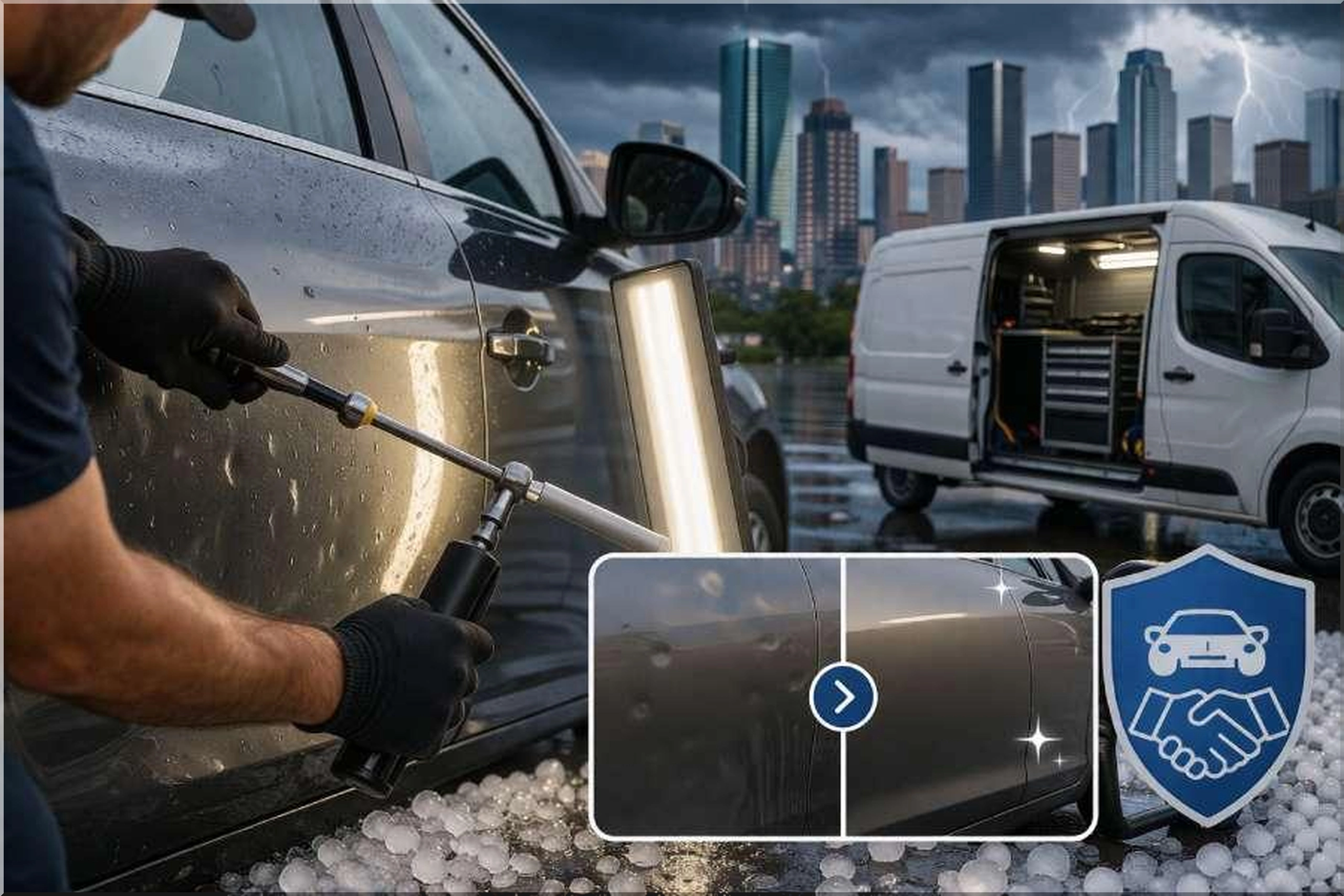
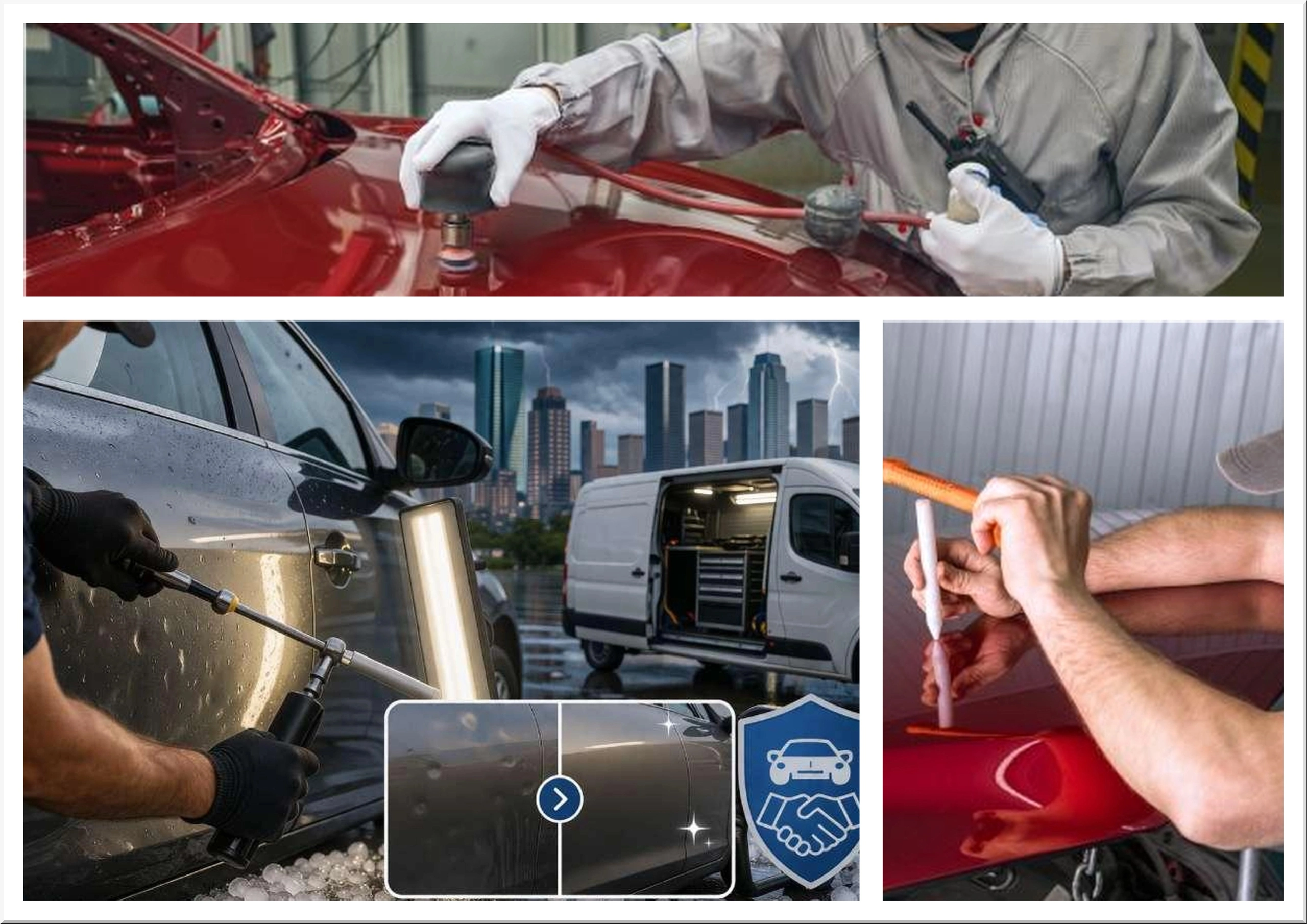
Mobile dent repair and on-site repairs are popular in Houston Texas because they reduce travel time and speed up vehicle repair. Many Hail Damage Repair Service providers offer 24/7 assistance during peak storm weeks, flexible schedule options, and triage lanes for small dent removal. Mobile teams can set up lighting and state-of-the-art equipment at work sites, dealerships, or fleet yards for efficient dent removal.
What paintless dent removal (PDR) is, how it works, and when it's the right solution
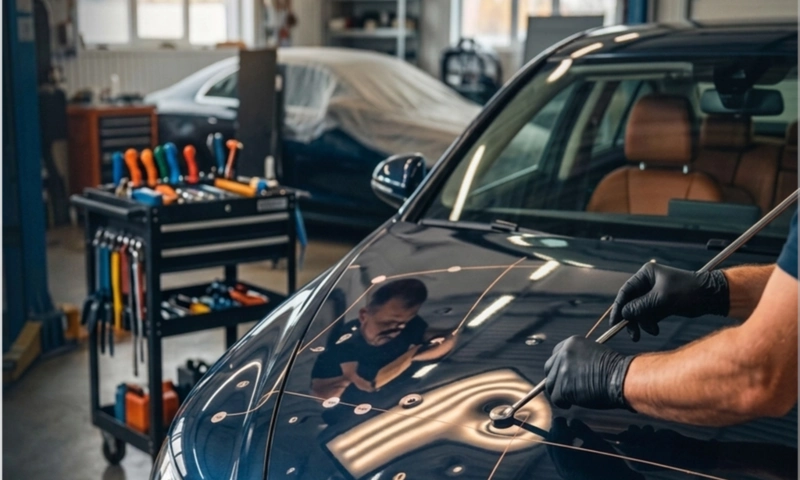
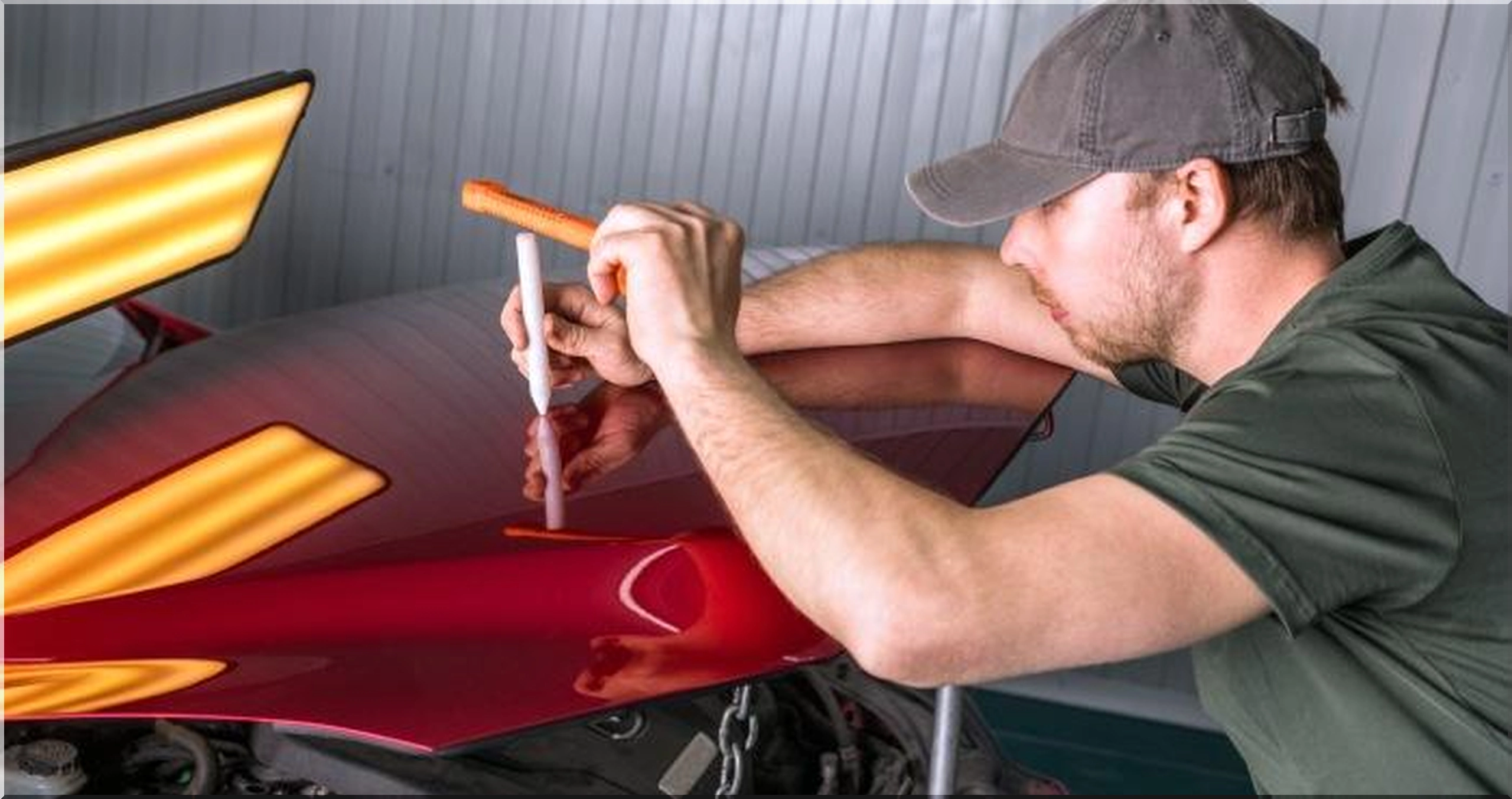
Paintless dent repair (PDR) is a specialized auto dent repair technique that reshapes metal panels from behind without sanding, fillers, or repainting. By preserving the OEM finish, PDR is both cost-effective and a proven way to retain vehicle value.
How PDR works
- Access: Technicians gain access behind the dent through factory openings, trim gaps, or by dropping headliners.
- Precision pushes: Using PDR rods, levers, and glue-pull tabs under state-of-the-art equipment and lighting, repair specialists apply micro-precise pressure to massage the metal back to contour.
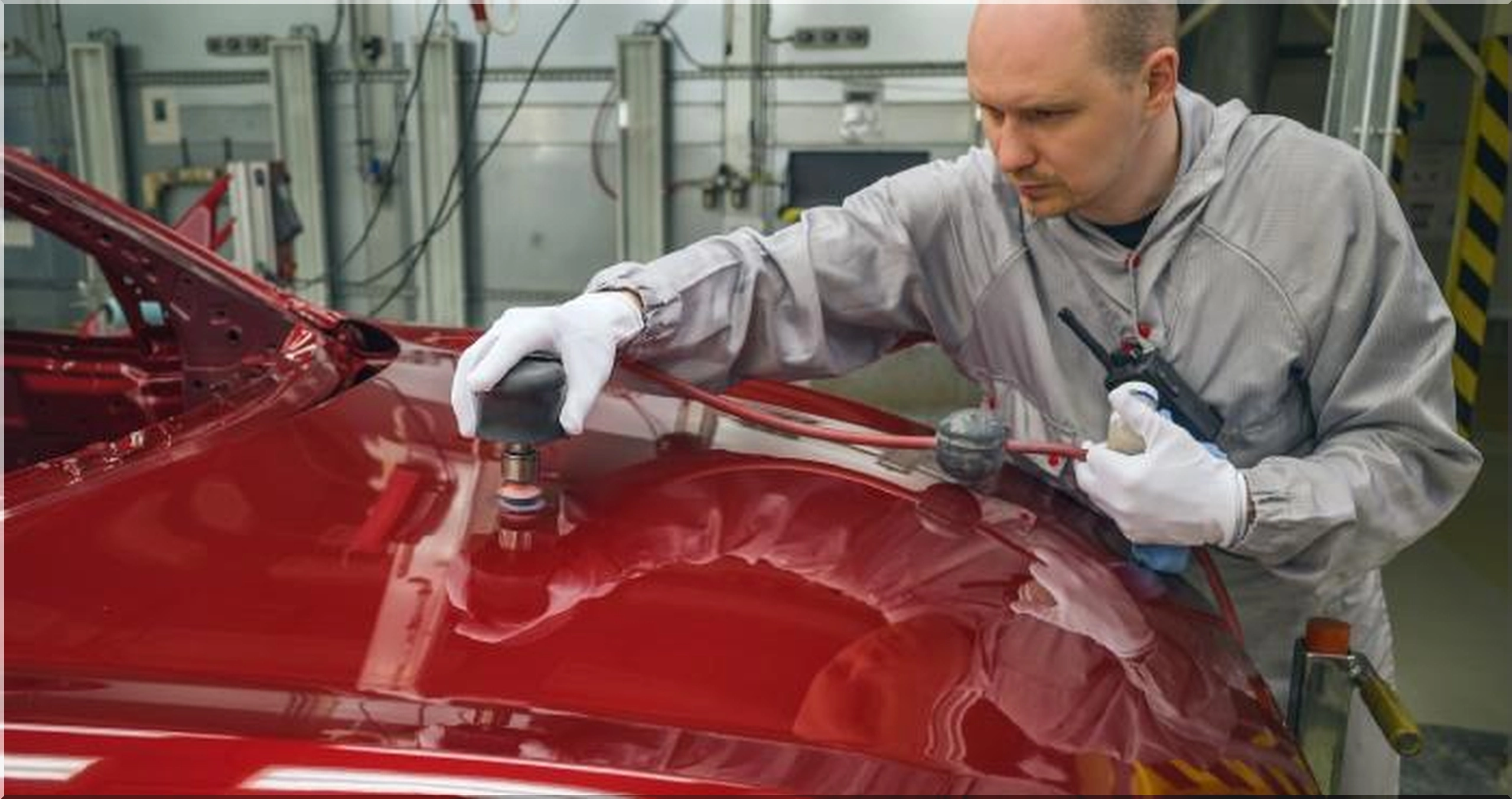
- Finish out: Orange-peel and “highs/lows” are blended until the panel reflects uniformly. The repair process safeguards the original finish and avoids color-matching issues.
When PDR is ideal—and when it’s not
- Best fit: Auto hail damage with intact paint; small dent removal from door dings; broad, soft dents on hoods, roofs, quarter panels; aluminum or steel panels with accessible backing.
- Possible with expertise: Large dent removal where metal memory remains and paint integrity is uncompromised.
- Not ideal: Sharp creases at panel edges, stretched metal, or cracked paint, where conventional repairs at a body shop (filler and repaint) or collision repair techniques are more appropriate.
Panels and vehicles that benefit most
Classic Cars, luxury finishes, and newer vehicles benefit greatly from PDR’s ability to preserve factory coatings. Door ding repair and roof rail dents are common Houston use cases where PDR shines, including for fleets needing consistent results across multiple units.
Time and cost comparison: PDR vs. conventional body repair for Houston hail
For Houston customers, time and budget often drive the decision. Both methods can restore vehicle value, but they differ significantly in workflow.
Turnaround times in real conditions
- PDR: One day for a few panels; two to three days for moderate hail; three to five for heavy hits, especially when interior trim R&I is needed. Mobile dent repair can shorten wait times with on-site repairs.
- Conventional repairs: Often one to two weeks due to parts ordering, paint booths, curing, and more extensive body shop scheduling.
Cost ranges and key factors
- PDR: Typically more cost-effective for hail damage repair, with pricing tied to dent count, size, depth, and panel material. Savings come from avoiding repaint, materials, and blending.
- Conventional repairs: Higher due to sanding, filler, paint materials, blending adjacent panels, and longer labor times. May require rental cars longer.
- Value retention: Because PDR maintains the original finish, it generally helps retain vehicle value versus repainted panels.
Example Houston scenarios
- Hood with 40–60 minor dents: PDR often completed within 24–48 hours with a competitive detailed estimate.
- Roof with multiple large, soft dents: Advanced PDR by qualified technicians can still be faster than repaint, provided paint is intact. If paint is fractured, conventional repairs become necessary.
Insurance considerations
Most insurers in Houston Texas recognize PDR for Auto Hail Damage Repair and may approve it when the paint is intact. Bring thorough damage documentation and request a Photo Estimate if offered. Clarify deductible impacts and rental coverage before authorizing work.
Why PDR sustains resale
By preserving factory e-coat and topcoat, PDR keeps panel integrity intact, often showing better long-term gloss and panel match than repainted sections—key for trade-in appraisals and discerning buyers.
The repair journey: step-by-step PDR process, turnaround times, and quality checks
A disciplined repair plan ensures efficient dent removal and consistent results.
Step 1: Intake, damage assessment, and documentation
- Check-in and lighting map: Technicians map dents under specialized lights, note panel access, and mark small vs. large dent removal needs.
- Damage documentation: High-resolution photos and counts per panel support insurance paperwork and a precise repair plan.
Step 2: Estimate, scheduling, and setup
- Detailed estimate: You’ll receive a line-by-line scope for hail damage repair, including R&I needs, PDR counts, and any non-PDR items.
- Photo Estimate and Book Appointment: Many Houston providers offer online Photo Estimate tools, visible Store Hours, and a flexible schedule for drop-off or on-site repairs. During storm peaks, ask about fast response lanes.
Step 3: PDR execution by experts
- Access and protection: Interior trim may be removed to access panels safely.
- Precision tooling: Qualified Technicians and Repair Specialists use state-of-the-art equipment—PDR rods, knockdowns, glue systems—to execute the repair process panel by panel.
- Mobile options: Where feasible, mobile dent repair teams set up controlled lighting for consistent quality.
Step 4: Quality checks and delivery
- Panel auditing: Cross-light inspections verify contour, orange peel consistency, and reflection uniformity.
- Final assurance: Many reputable shops back workmanship with a lifetime warranty or national warranty, helping you restore vehicle appearance to pre-storm condition with high-quality service.
Insurance and provider selection: claims tips, choosing a certified Houston PDR shop, warranties, and aftercare
Navigating claims and picking the right partner in Houston can make hail damage repair smoother and faster.
Claims and communication tips
- File promptly: Start your claim early; ask your insurer to note preference for paintless dent repair if paint is intact.
- Meet the adjuster prepared: Provide damage documentation, dent counts, and a preliminary detailed estimate from a trusted auto body shop.
- Logistics: Confirm rental cars, 24/7 assistance lines during catastrophe events, and whether on-site repairs are permitted at workplaces or fleet yards.
Choosing a certified Houston PDR provider
In Houston, TX, look for established names and transparent processes:
- Recognized operations: CARSTAR REV Collision (part of CARSTAR/CARSTAR REV networks), Dent Sharks, and Hail Lions (including Hail Lions Mobile Paintless Dent Repair) are examples of Houston providers known for Hail Damage Repair Service, Mobile Dent Repair, Collision Repair, and Auto Hail Damage Repair.
- Capability and scope: Verify that the Auto Body Shop or PDR team handles both small dent removal and large dent removal, door ding repair, and can escalate to conventional repairs if necessary.
- People and accountability: Ask for a dedicated advisor—having a single point of contact (someone like “Jim” or “Logan Lowenstein” on the shop roster) to oversee your repair plan improves communication for the customer.
- Equipment and skill: Seek qualified technicians trained on aluminum and high-strength steel with state-of-the-art equipment and original equipment manufacturer (OEM)-safe procedures.
- Convenience: Confirm Store Hours, Book Appointment options, Photo Estimate availability, and mobile dent repair capacity for on-site repairs. Fleet services experience is a plus for business owners.
Warranties, certifications, and questions to ask
- Warranty terms: Look for a lifetime warranty on PDR workmanship; some branded networks offer a national warranty that travels with you.
- Insurance coordination: Ask whether the shop communicates directly with adjusters to streamline insurance paperwork and supplements.
- Turnaround and updates: Request written timelines, progress photos, and clear next steps in the repair plan.
Aftercare and maintenance
- Immediate care: Avoid harsh washes for a few days while sealants settle after trim R&I. PDR itself doesn’t disturb paint, but gentle handling is wise.
- Ongoing protection: Consider covered parking or hail blankets during Houston storm season.
- Documentation: Keep your final invoice and before/after photos; they support resale and validate warranty service if needed.
By prioritizing PDR where appropriate, Houston drivers can achieve faster, more cost-effective dent removal while preserving the original finish. The right provider, a clear damage assessment, and a disciplined repair plan are the keys to efficient vehicle repair after a Gulf Coast hail event.
- 77 views