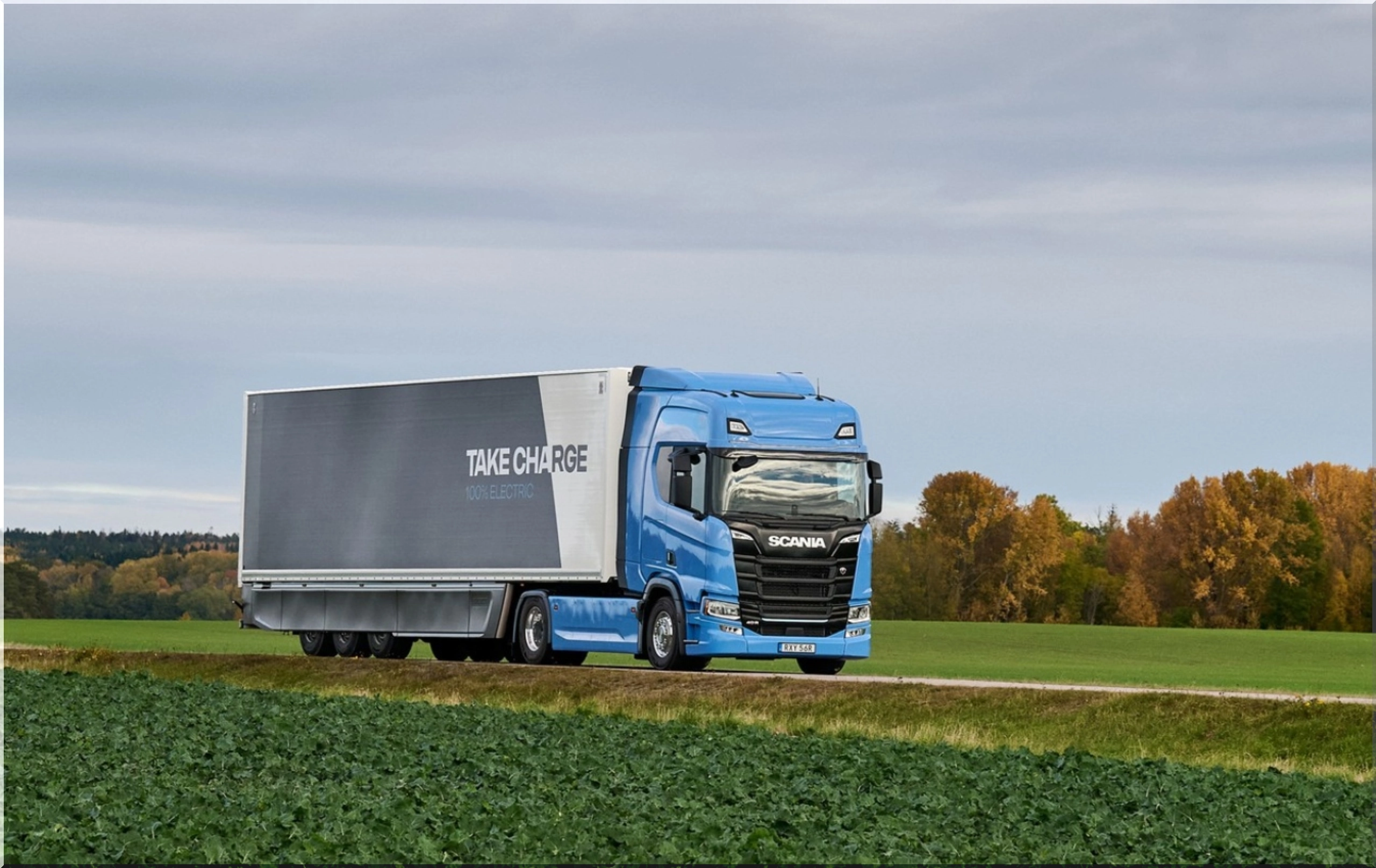
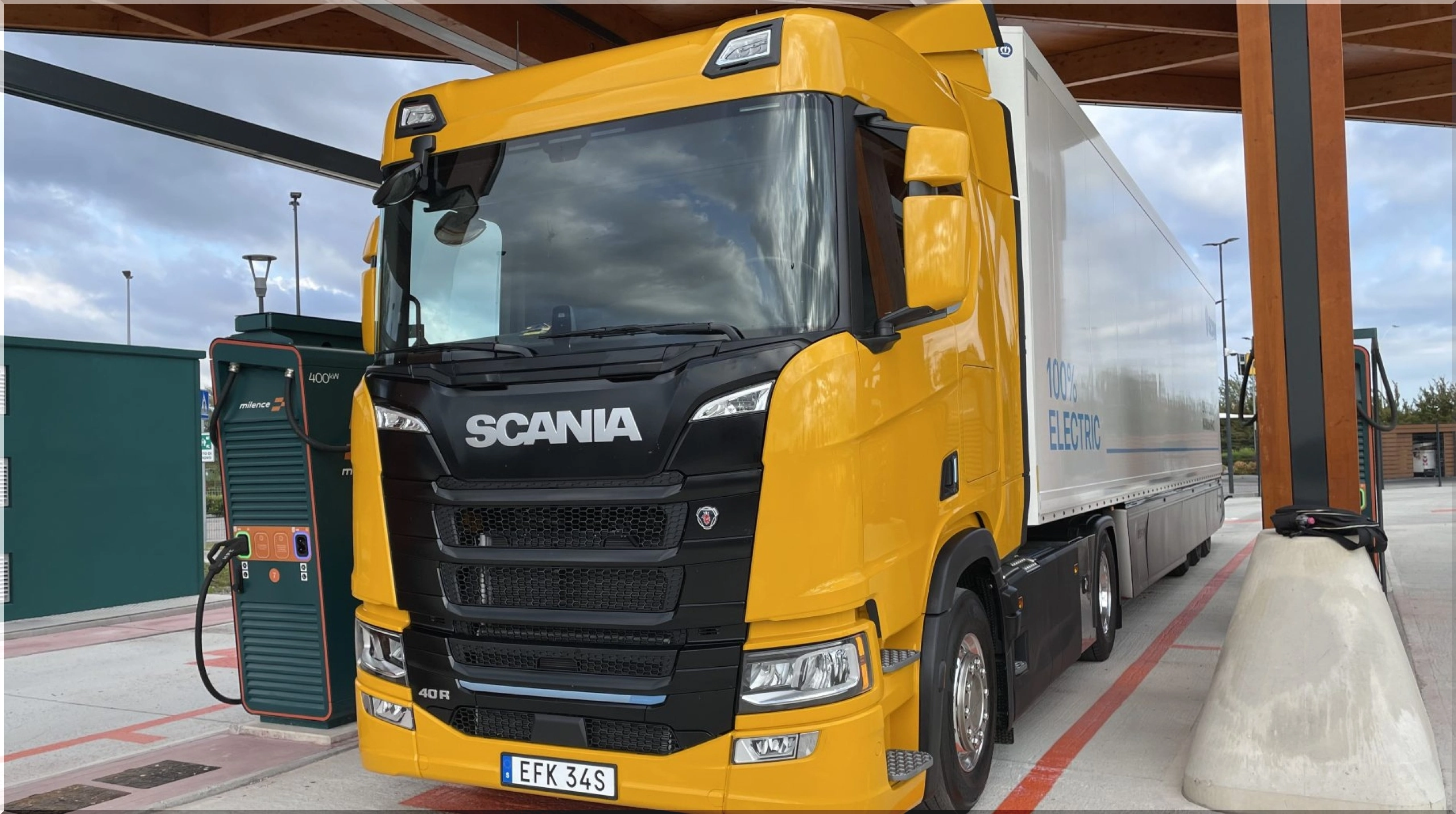
The Scania 40 R Electric makes a convincing case for regional freight. Its 400 kWh usable battery supports an estimated 465 km (289 miles) at the reported test consumption, while a four-speed electric drivetrain and quiet sleeper cab address the driver's working day.
The buying decision still comes down to route energy, charging access and electricity prices.
What does the Scania 40 R Electric road test reveal?
The tested 4x2 electric truck combines 400 kW, approximately 544 metric horsepower, with five NMC battery packs. Vado e Torno reports a 40-tonne combination completing 307 km (191 miles) using 264 kWh. That equates to 0.86 kWh/km, or 1.38 kWh/mile, with 34% battery remaining.
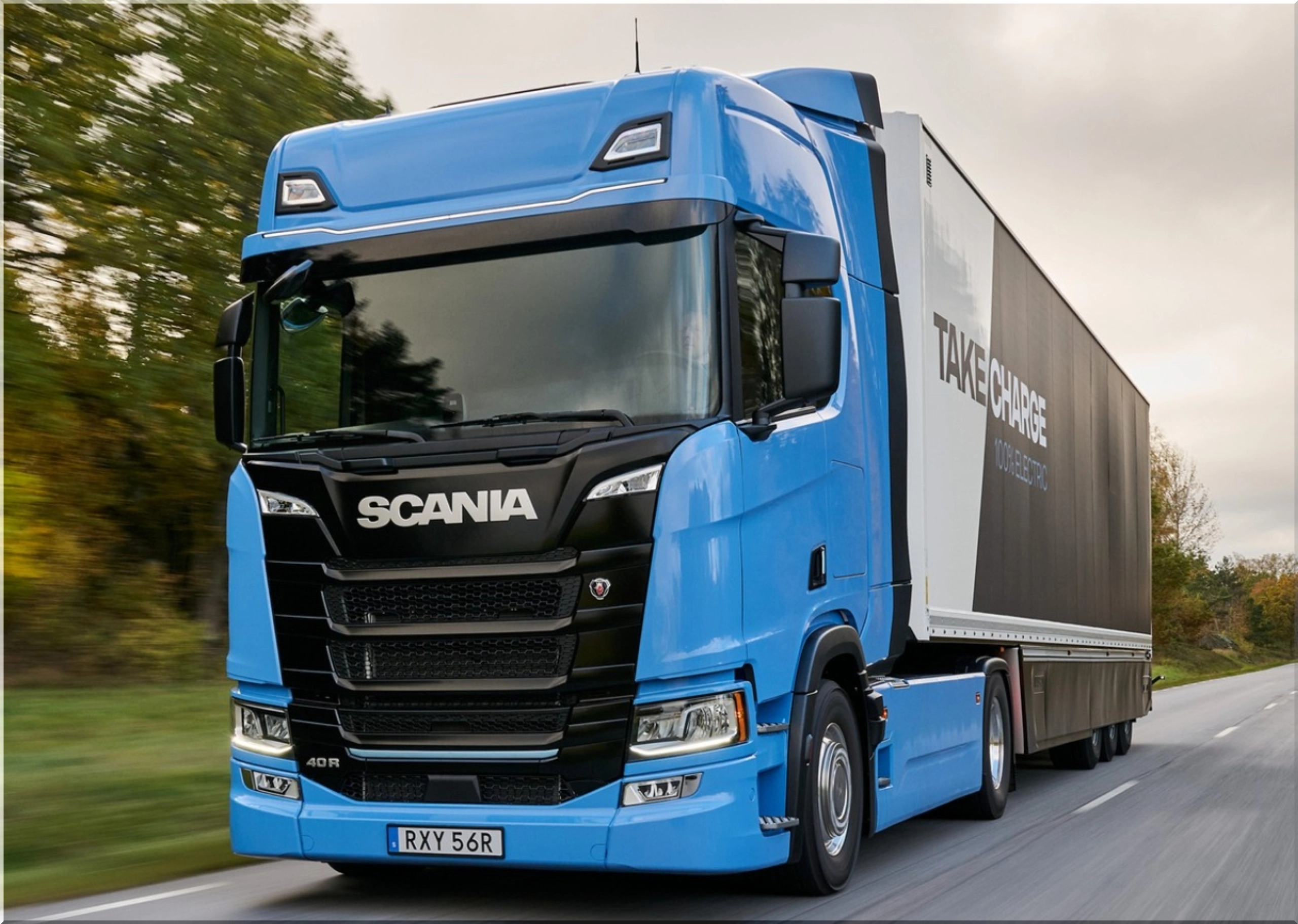
Scania's summary lists 301 km; the original test's 307 km reconciles the energy total with the stated consumption.
| Technical point | Published specification | Fleet relevance |
|---|---|---|
| Electric drivetrain | 400 kW; four-speed automatic | Multiple ratios match motor speed to road load |
| Battery capacity | 445 kWh installed; 400 kWh usable | Calculate routes from usable energy |
| Battery chemistry | Five nickel-manganese-cobalt packs | Pack configuration determines energy storage |
| CCS2 charging | Up to 375 kW | Confirm the site's actual power delivery |
| CR20 N sleeper | Reclining lower bunk, 800 mm (31.5 inches) wide | Provides rest space between assignments |
How far can it travel with a battery reserve?
A fleet keeping 10% of usable battery energy in reserve could plan approximately 419 km (260 miles) at 0.86 kWh/km. This calculation assumes departure with a full usable battery and comparable conditions. The advertised 465 km consumes the entire usable allowance, leaving no operational margin.
A 20% consumption increase reduces that reserve-adjusted distance to approximately 349 km (217 miles). This scenario illustrates sensitivity; it does not predict a measured winter penalty.
Regenerative braking helps recover descent energy. It cannot cancel the effects of higher payload, climbing, heating or aerodynamic drag.
How quickly can the Scania 40 R Electric charge?
Scania Romania quotes approximately 40 minutes for 20-80% DC Fast Charging, under suitable conditions. Across a 400 kWh usable window, that represents 240 kWh and an implied 360 kW average. A charger carrying a 375 kW rating alone cannot guarantee that average throughout the session.
Scania Italy also documents a separate 40 R with 750 kW MCS charging. Confirm the ordered truck's equipment before budgeting for that capability.
The CR20 cab adds adjustable seating, digital instruments and sleeper accommodation. Electric propulsion removes diesel combustion noise and vibration; Vado e Torno praised the quiet driving environment.
What electricity price makes regional operation attractive?
At the test's consumption, electricity alone costs approximately €12.90-€51.60 per 100 km, across the illustrative tariffs below. These calculations exclude charging losses, network fees and charger investment. They show why procurement teams should assess charging contracts alongside the vehicle quotation, rather than treating energy as a fixed expense.
| Assumed electricity tariff | Energy cost/100 km | Energy cost/mile |
|---|---|---|
| €0.15/kWh | €12.90 | €0.21 |
| €0.30/kWh | €25.80 | €0.42 |
| €0.60/kWh | €51.60 | €0.83 |
Pro-Tip: Before ordering:
- Run a loaded trial across your hardest scheduled route.
- Record charger-meter energy alongside truck consumption.
- Request purchase, maintenance and depot connection quotes.
Neither cited Scania release supplies a purchase price. Total cost of ownership also needs financing, payload revenue, maintenance and residual-value assumptions.
- 1 view