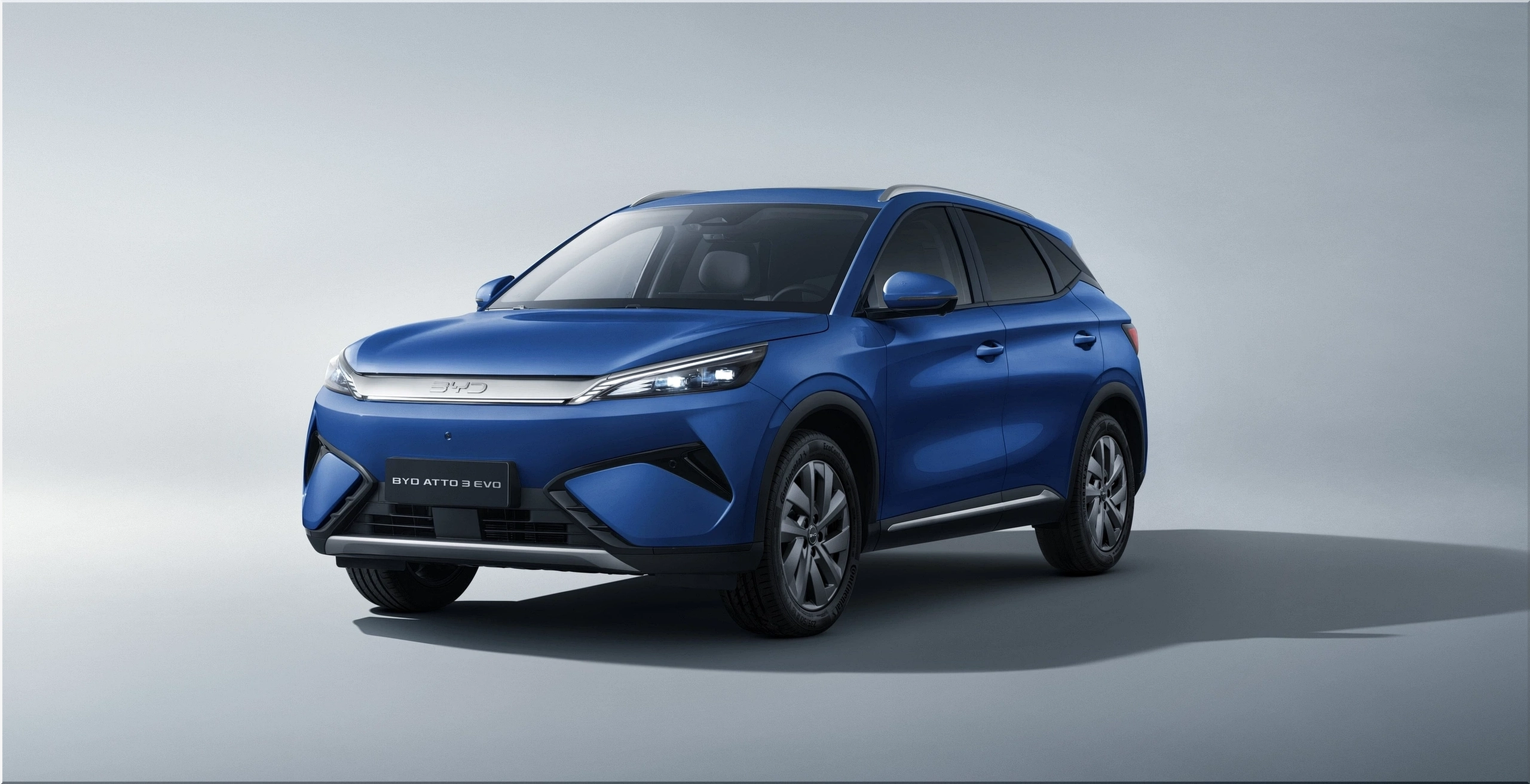
BYD gave the Atto 3 a major hardware and packaging update, and the changes go well past a trim shuffle. The new BYD Atto 3 EVO moves to rear-wheel drive or all-wheel drive, adds a larger 74.8 kWh LFP Blade Battery, brings 800V electrical architecture, and pushes peak DC fast charging to 220 kW.
That matters. It changes how this compact electric SUV performs on the road, how fast it refills on long trips, and how it competes in the European family EV segment.
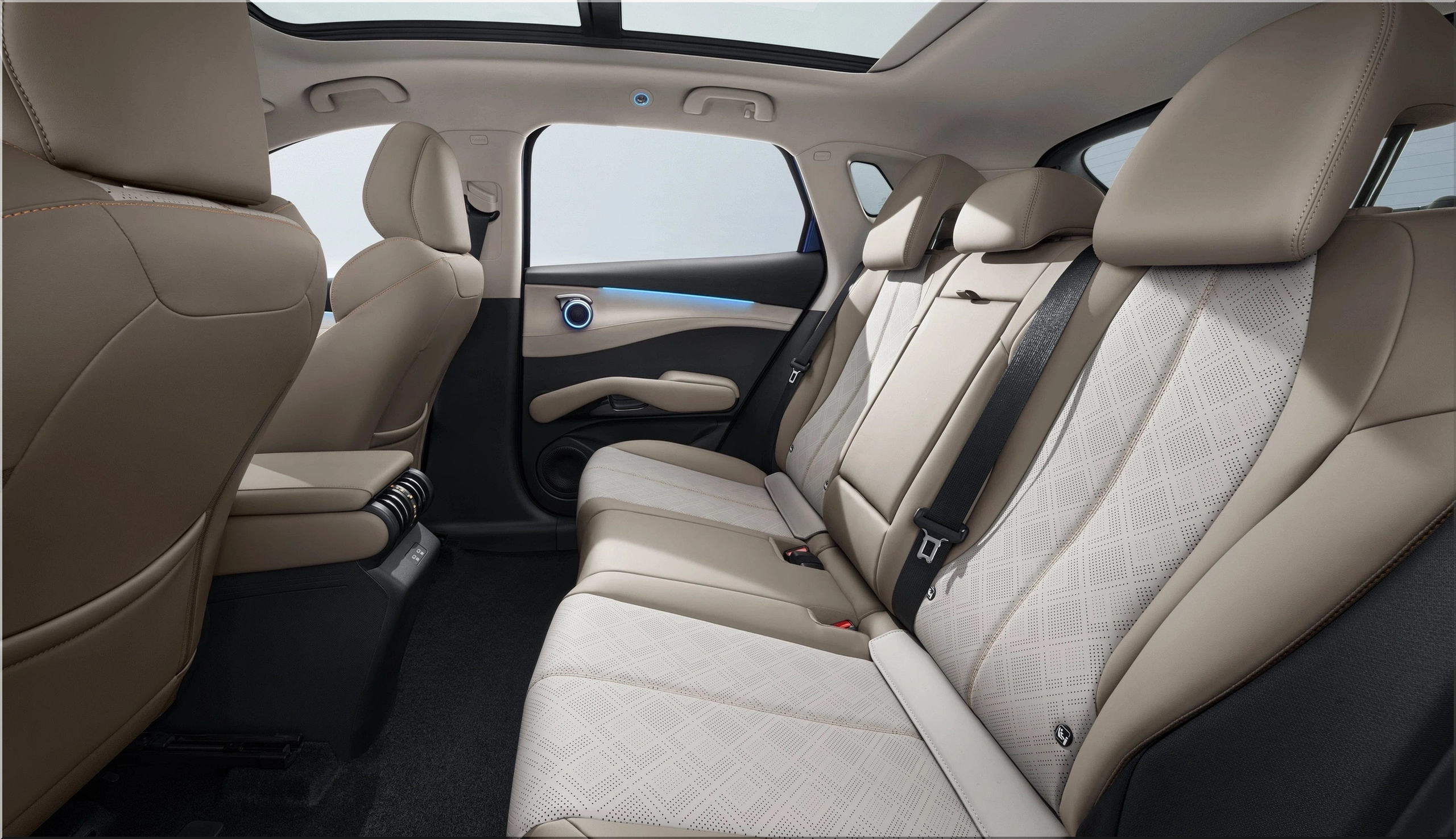
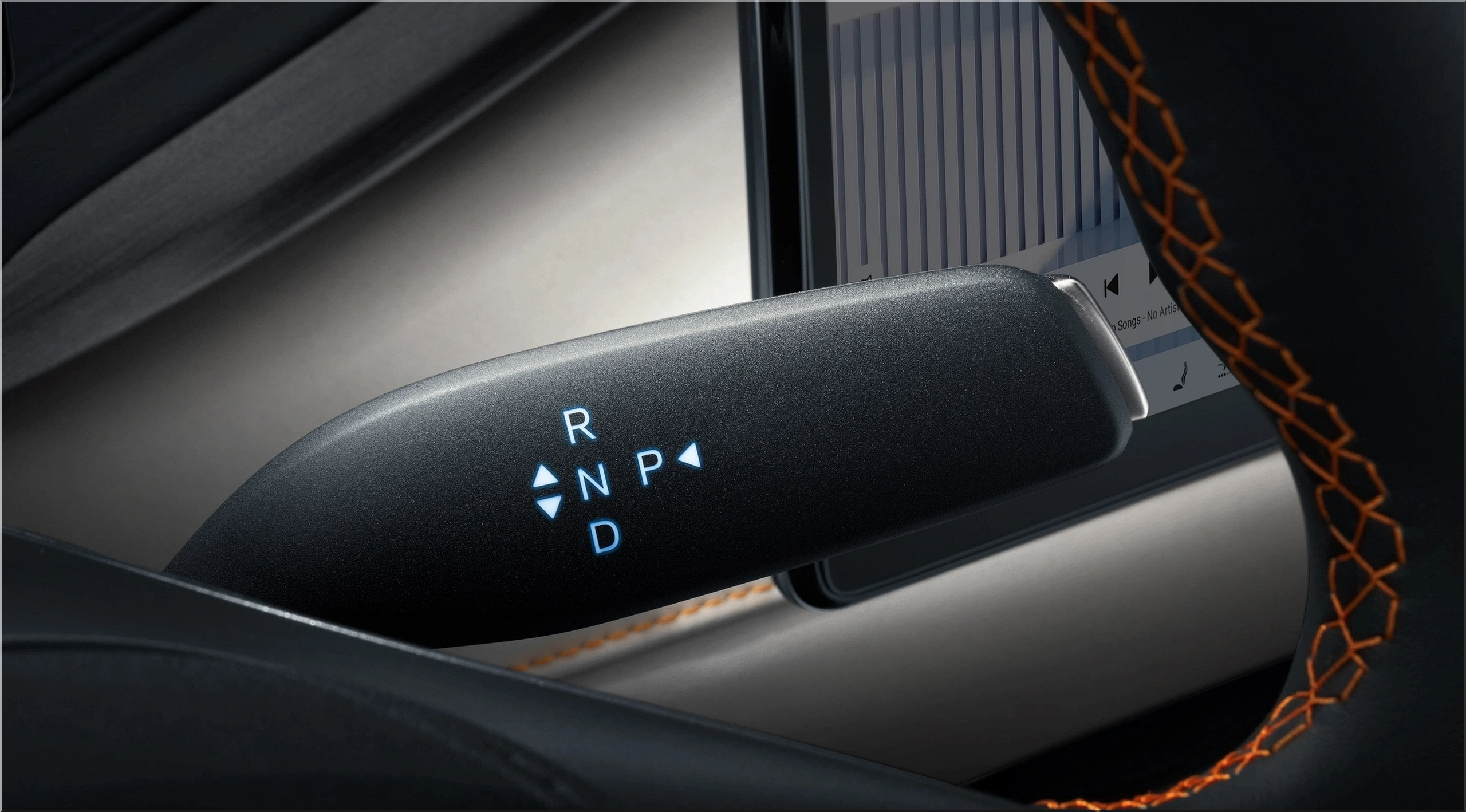
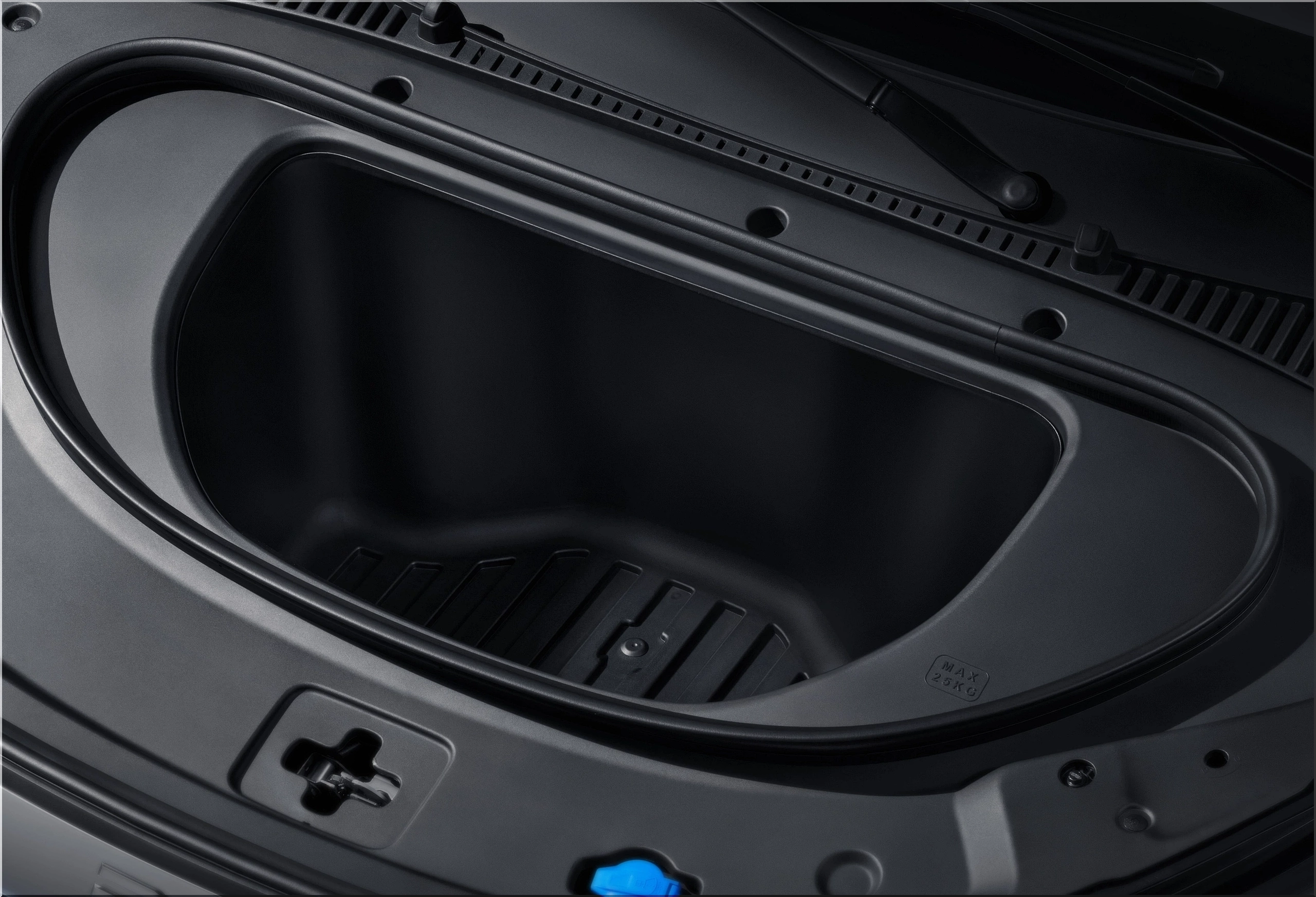
Looking at the data, BYD also fixed practical pain points. The cabin layout frees console space with a steering-column shifter, the boot grows, and a new front trunk adds cable storage without stealing rear-seat room.
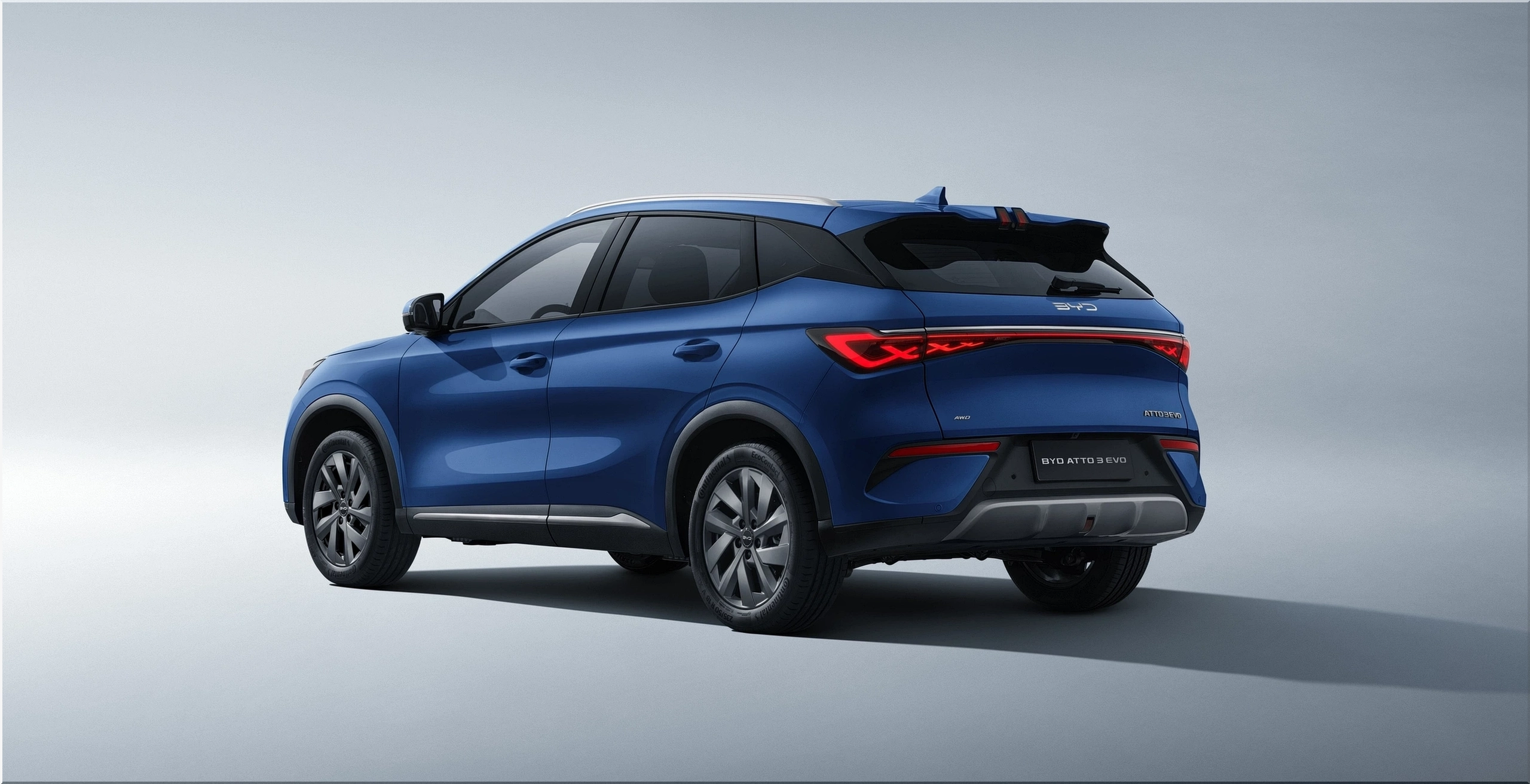
What Changed in the BYD Atto 3 EVO
BYD now splits the model into two clear versions: Design (RWD) and Excellence (AWD). Both use the same larger battery pack and high-voltage charging setup, but they target different buyers.
Specifically, the new lineup replaces the older front-wheel-drive structure with a rear-drive base and an AWD flagship. That shift gives BYD a stronger technical story in a segment where many buyers now compare traction, charging speed, and towing capacity before they compare screens.
Core upgrades at a glance
- Rear-wheel drive standard on Design
- All-wheel drive available on Excellence
- 74.8 kWh battery (both versions)
- 800V architecture
- 220 kW DC charging
- 10% to 80% in 25 minutes (claimed)
- Up to 317 miles WLTP combined range (RWD)
- 0-62 mph in 3.9 seconds (AWD)
- Boot grows to 490 liters
- New frunk: 101 liters
- Multi-link rear suspension
- 3 kW / 3.3 kW V2L capability (market wording varies)
In addition, BYD says both trims keep a 1,500 kg braked towing capacity, which gives the BYD Atto 3 EVO a useful edge for family buyers who tow small trailers, bike carriers, or light utility loads.
BYD Atto 3 EVO Powertrain and Performance Specs
The Atto 3 EVO now runs on BYD's latest e-Platform 3.0 configuration for this model, paired with the brand's Blade Battery and Cell-to-Body (CTB) construction. BYD integrates the battery into the chassis structure, which improves stiffness and packaging efficiency while lowering the floor packaging penalty that usually eats into cabin volume.
From an expert perspective, this architecture choice explains why BYD could grow storage volume while keeping the same exterior dimensions and wheelbase. CTB packaging lets BYD pull more utility out of the same footprint instead of stretching the body and adding weight where it hurts efficiency.
BYD Atto 3 EVO Design vs Excellence specs
| Spec | Atto 3 EVO Design (RWD) | Atto 3 EVO Excellence (AWD) |
|---|---|---|
| Drive layout | Rear-wheel drive | Four-wheel drive |
| Rear motor | Permanent magnet synchronous motor | Permanent magnet synchronous motor |
| Front motor | None | AC asynchronous motor |
| Power | 313 PS / 230 kW | 449 PS / 330 kW |
| Torque | 380 Nm | 560 Nm |
| 0-62 mph | 5.5 sec | 3.9 sec |
| Top speed | 112 mph | 124 mph |
| WLTP combined range | 317 miles | 292 miles |
| WLTP city range | 441 miles | 391 miles |
| Battery capacity | 74.8 kWh | 74.8 kWh |
| DC charging | 220 kW | 220 kW |
| AC charging | 11 kW 3-phase | 11 kW 3-phase |
| DC 10-80% | 25 min | 25 min |
By comparison, the AWD version gives up 25 miles of WLTP combined range versus the RWD model, but it cuts the 0-62 mph run by 1.6 seconds. That is a big delta in this class, and it shows how aggressively BYD tuned the Excellence trim for performance buyers.
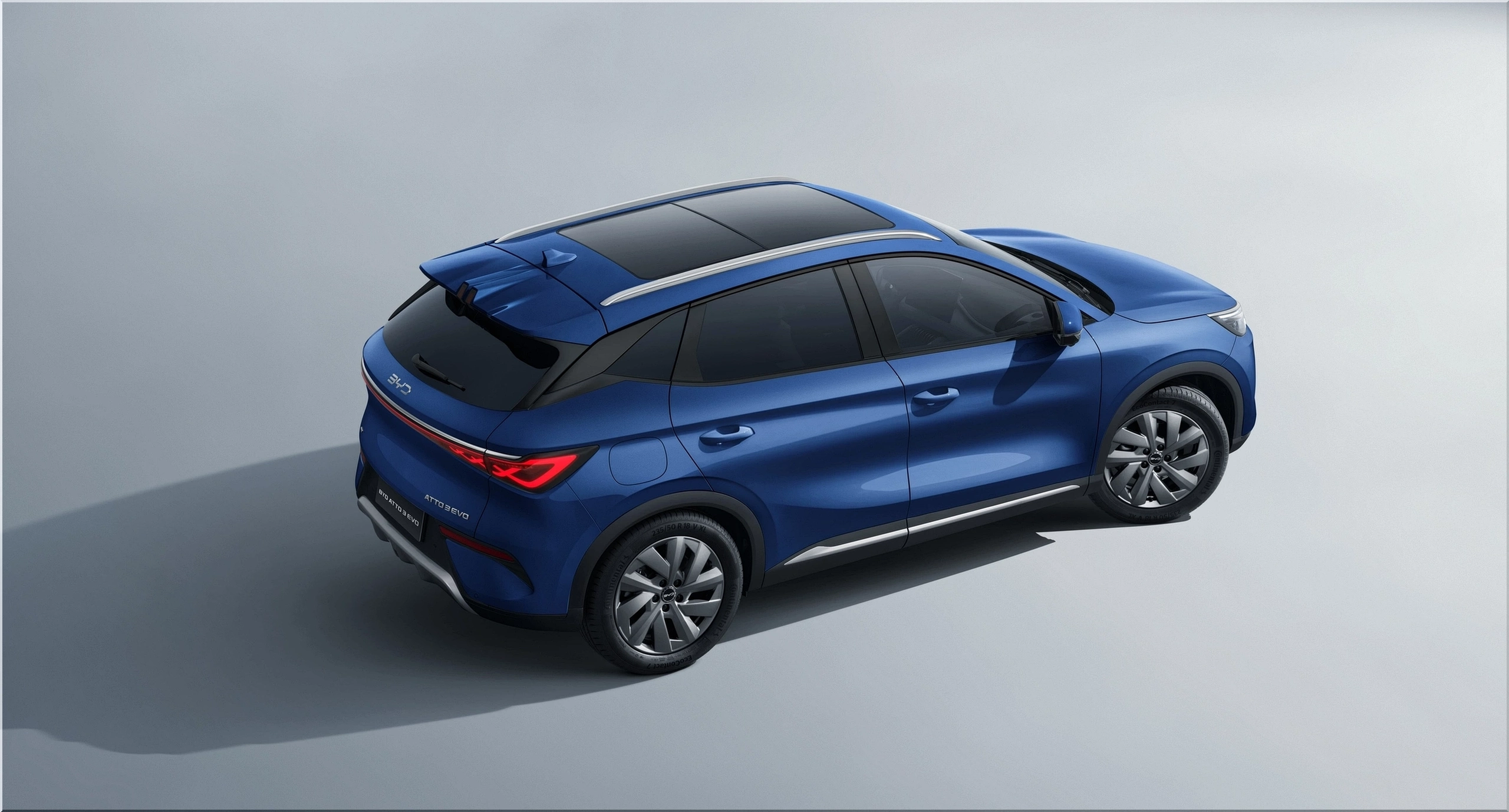
Battery, Charging, and Real-Use Logic
The 74.8 kWh LFP battery sits at the center of this update. BYD pairs that pack with an 800V system and quotes 220 kW DC charging, which moves the Atto 3 EVO into a stronger position for high-mileage users and drivers who regularly use motorway rapid chargers.
Consequently, the charging headline matters more than the peak number alone. BYD claims 10% to 80% in 25 minutes, and that charging window usually tracks how drivers actually use public DC chargers on trips.
Why the 800V move matters
- It can reduce charging current for the same power level
- It can improve thermal management during high-power charging sessions
- It can support stronger repeat-charge behavior on long drives
- It gives BYD more room for future software and hardware tuning
Looking at the data, BYD also quotes 11 kW AC charging (3-phase) and an 8-hour 0-100% AC time. That setup fits the typical European home and workplace charging pattern, where overnight charging still handles most weekly driving.
Pro-Tip: Range planning for the Atto 3 EVO
If you want the best trip efficiency, target the RWD Design and use short DC sessions from roughly 15% to 70%. If you want stronger overtaking punch and wet-road traction, take the AWD Excellence and accept the lower WLTP figure.
Dimensions, Packaging, and Cargo Space Gains
BYD kept the Atto 3 EVO's exterior dimensions the same as the outgoing model while improving storage. That is the kind of update family buyers actually feel every day.
The published dimensions remain:
- Length: 4,455 mm
- Width: 1,875 mm
- Height: 1,615 mm
- Wheelbase: 2,720 mm
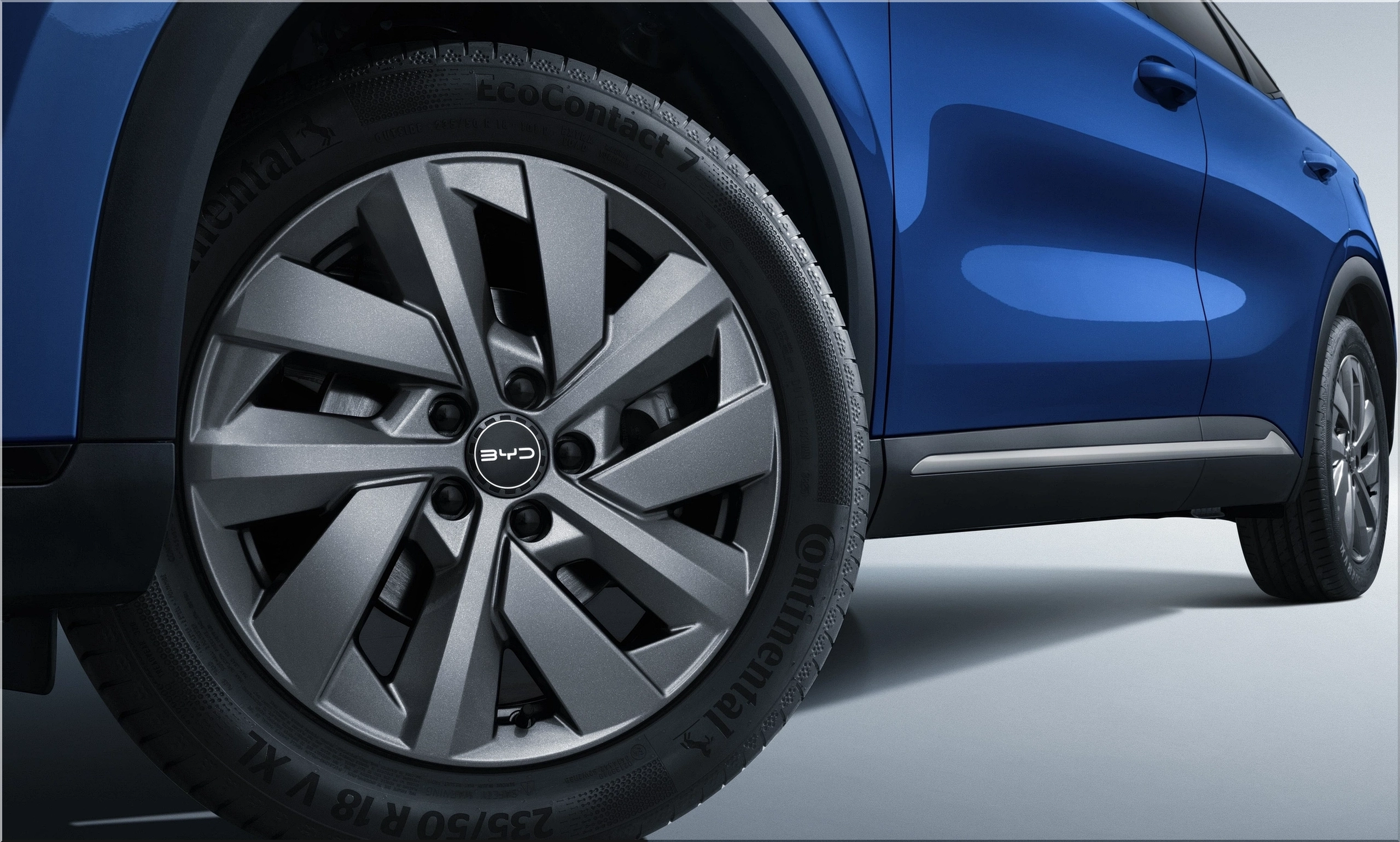
- Wheels: 18-inch alloys
Specifically, BYD says the rear boot grows by 50 liters to 490 liters, expands to 1,360 liters with the rear seats folded, and adds a 101-liter frunk under the hood.
Dimensions
| Measurement | Metric | Imperial |
|---|---|---|
| Length | 4,455 mm | 175.4 in |
| Width | 1,875 mm | 73.8 in |
| Height | 1,615 mm | 63.6 in |
| Wheelbase | 2,720 mm | 107.1 in |
| Wheel size | 18 in | 457.2 mm |
| Boot (seats up) | 490 L | 17.3 cu ft |
| Boot (seats down) | 1,360 L | 48.0 cu ft |
| Frunk | 101 L | 3.6 cu ft |
| Towing (braked) | 1,500 kg | 3,307 lb |
From an expert perspective, the 101-liter frunk solves a common EV ownership annoyance: cable storage. You stop stuffing charging leads into the rear cargo floor and keep the main boot usable for strollers, grocery runs, or airport bags.
Suspension, Ride, and Handling Strategy
BYD also upgraded the rear suspension from a four-link layout to a multi-link rear suspension setup for the BYD Atto 3 EVO. The front remains MacPherson strut.
That change supports BYD's wider mission here. The company added power, increased weight in some configurations, and chased faster acceleration, so it also needed better wheel control and body composure to keep the SUV stable under braking and corner entry.
Kerb weight and chassis context
- Design (RWD): 1,880 kg (about 4,145 lb)
- Excellence (AWD): 1,990 kg (about 4,387 lb)
In addition, the AWD model adds roughly 110 kg (about 243 lb), which lines up with the extra motor and associated hardware. The suspension and chassis tuning have to manage that mass without making the car feel loose over mid-corner bumps.
Interior, Infotainment, and Family-Use Features
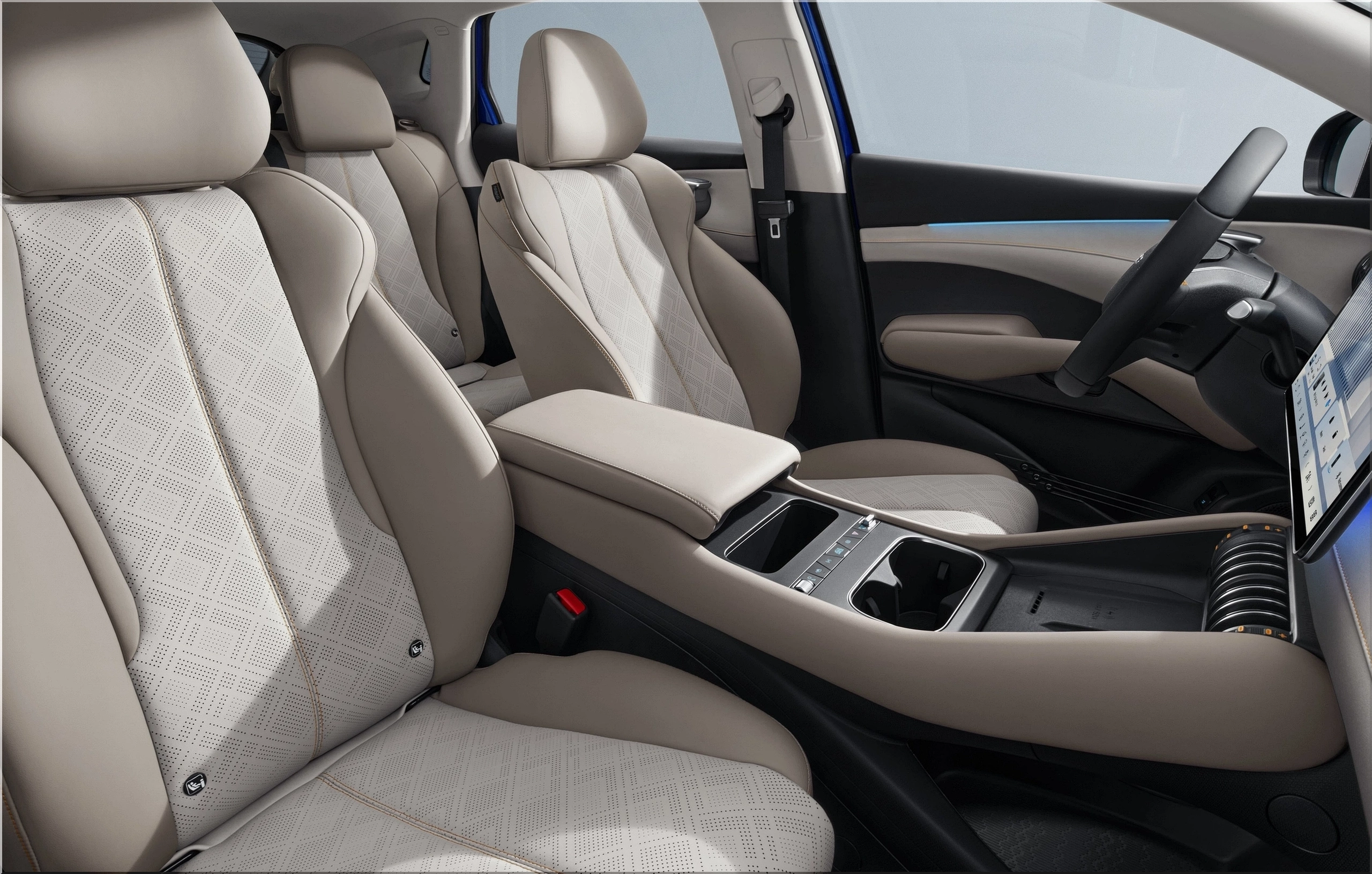
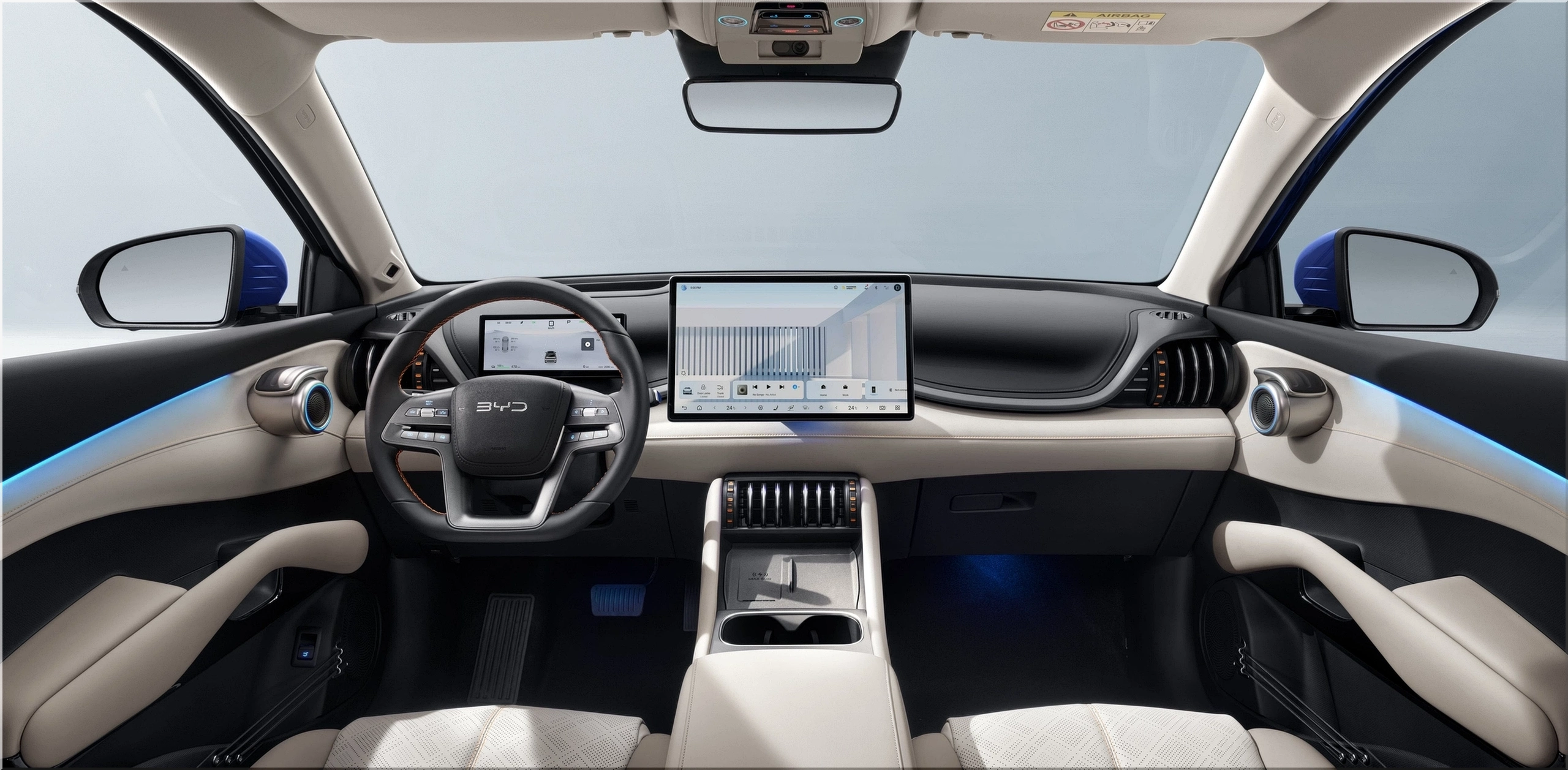
BYD revised the interior layout with a steering-column-mounted shifter, which frees the center console and opens more usable storage space in the front cabin. That looks small on paper. In daily use, it changes where phones, keys, and bags go.
The EVO electric family SUV also gets a fresh 8.8-inch digital instrument panel and a large 15.6-inch central touchscreen. BYD adds deeper Google integration, including Google Maps, Google Play Store, and Google Assistant, along with an AI voice assistant that supports natural speech commands.
Key cabin and tech features (trim-dependent)
- 15.6-inch touchscreen infotainment
- 8.8-inch digital driver display
- Google services integration
- Wireless phone charging with cooling
- NFC access via phone or wearable
- Ambient cabin lighting
- 360-degree camera
- Front and rear parking sensors
- Heated front seats
- Heat pump (standard)
- V2L power output
- Head-up display (Excellence)
- Heated rear seats (Excellence)
- Panoramic sunroof with electric shade (Excellence)
BYD keeps Vehicle-to-Load (V2L) as standard equipment. BYD references up to 3 kW in one part of the release and a 3.3 kW V2L function in the technical specs, which likely reflects regional rounding or rated versus continuous output language.
Safety and Driver Assistance Package
BYD loads the Atto 3 EVO with a long ADAS list and a seven-airbag setup. The safety package includes features that buyers now expect in this segment, but BYD's play here centers on delivering them as standard or near-standard rather than forcing expensive option packs.
Safety and ADAS features listed by BYD
- Seven airbags (including front center and curtain airbags)
- Adaptive Cruise Control (ACC)
- Intelligent Cruise Control (ICC)
- Front Cross Traffic Alert
- Rear Cross Traffic Alert
- Blind Spot Detection
- Lane Departure Assist
- Front Collision Warning
- Rear Collision Warning
- Traffic Sign Recognition
- Intelligent Speed Limit Control
Looking at the data, BYD combines software-based safety features with its CTB structural approach. That mix gives the Atto 3 EVO a stronger pitch to family buyers who compare passive safety structure and active driver assistance as a single package.
Position in the Compact Electric Family SUV Segment
BYD built the Atto 3 EVO to attack three buying triggers at once: range, charging speed, and feature value. That strategy targets buyers cross-shopping mainstream compact electric SUVs in Europe, where many rivals force trade-offs between charging performance and trim content.
By comparison, the Atto 3 EVO now posts a stronger charging claim than many mid-price rivals and adds a clear performance halo trim with the AWD Excellence. The RWD Design then covers the efficiency-led buyer with the 317-mile WLTP figure.
Segment-position table (BYD Atto 3 EVO vs class expectations)
| Metric | BYD Atto 3 EVO Design (RWD) | BYD Atto 3 EVO Excellence (AWD) | Typical compact EV SUV class pattern |
|---|---|---|---|
| WLTP combined range | 317 miles | 292 miles | Often around high-200s to low-300s |
| Peak DC charging | 220 kW | 220 kW | Many sit well below 220 kW |
| 0-62 mph | 5.5 sec | 3.9 sec | AWD performance trims often faster, but cost more |
| Battery chemistry | LFP Blade Battery | LFP Blade Battery | Mix of LFP and NMC depending on brand |
| Boot + frunk practicality | 490 L + 101 L frunk | 490 L + 101 L frunk | Frunk availability varies widely |
| Towing (braked) | 1,500 kg | 1,500 kg | Some rivals offer less or omit towing focus |
From an expert perspective, BYD's win condition here looks simple: keep pricing aggressive enough that buyers accept the badge shift in exchange for faster charging and a long standard-equipment list.
Pricing, Warranty, and Fleet Angle
BYD had not confirmed final pricing in the material reviewed here. However, outside reporting around the outgoing Atto 3 referenced a starting figure near GBP 37,730, which converts to about $47,163 USD (roughly $47,200 at a 1.25 conversion rate). The EVO pricing may move above that level due to the battery, drivetrain, and charging upgrades.
The warranty package remains a major sales tool:
- 6-year vehicle warranty
- 8-year / 155,350-mile battery coverage
- Battery State of Health floor: at least 70% (as stated by BYD)
Consequently, fleet buyers and cost-focused households will look at total operating cost, charging downtime, and warranty support together. The Atto 3 EVO now gives them a stronger spreadsheet case than the older model.
What Now?
If you are shopping this segment, start with use case, not trim names. The RWD Design fits drivers who want the best range figure, quick charging, and lower running-cost focus. The AWD Excellence fits drivers who want serious acceleration, stronger traction, and more premium cabin features.
- Pick RWD for range-first ownership
- Best WLTP combined number at 317 miles
- Still gets the same battery and charging hardware
- Pick AWD for performance-first ownership
- 449 PS / 560 Nm
- 0-62 mph in 3.9 sec
- Extra feature content in the Excellence trim
- Ask dealers for charging curve data
- Peak kW numbers sell cars
- Charging curve shape controls trip time
- Test cargo use with your gear
- The bigger boot and frunk look strong on paper
- Real bags, strollers, and charging cables tell the full story
- Watch final pricing against key rivals
- BYD's hardware package looks strong
- The transaction price will decide how hard this model hits
Pro-Tip: The smart test drive checklist
Bring a phone, charging cable, and one large bag to the test drive. Check cabin storage after the column shifter change, test rear-seat legroom, and ask to see the frunk in person. Those details decide daily ownership satisfaction faster than a spec sheet.
- Add new comment
- 234 views