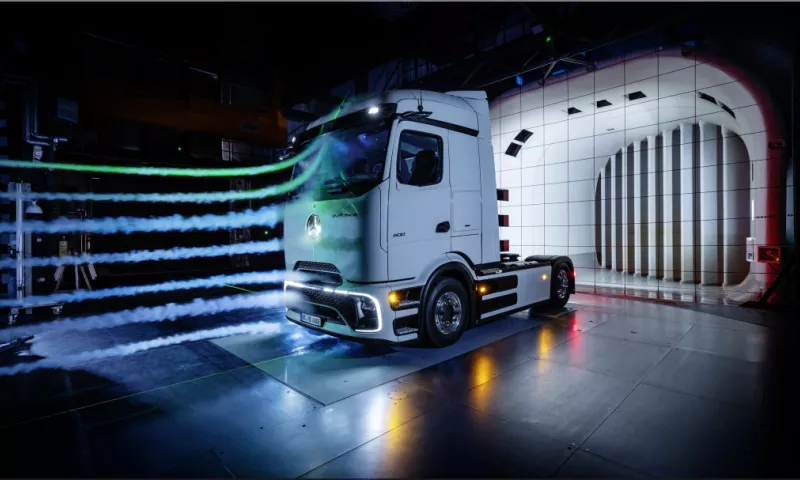
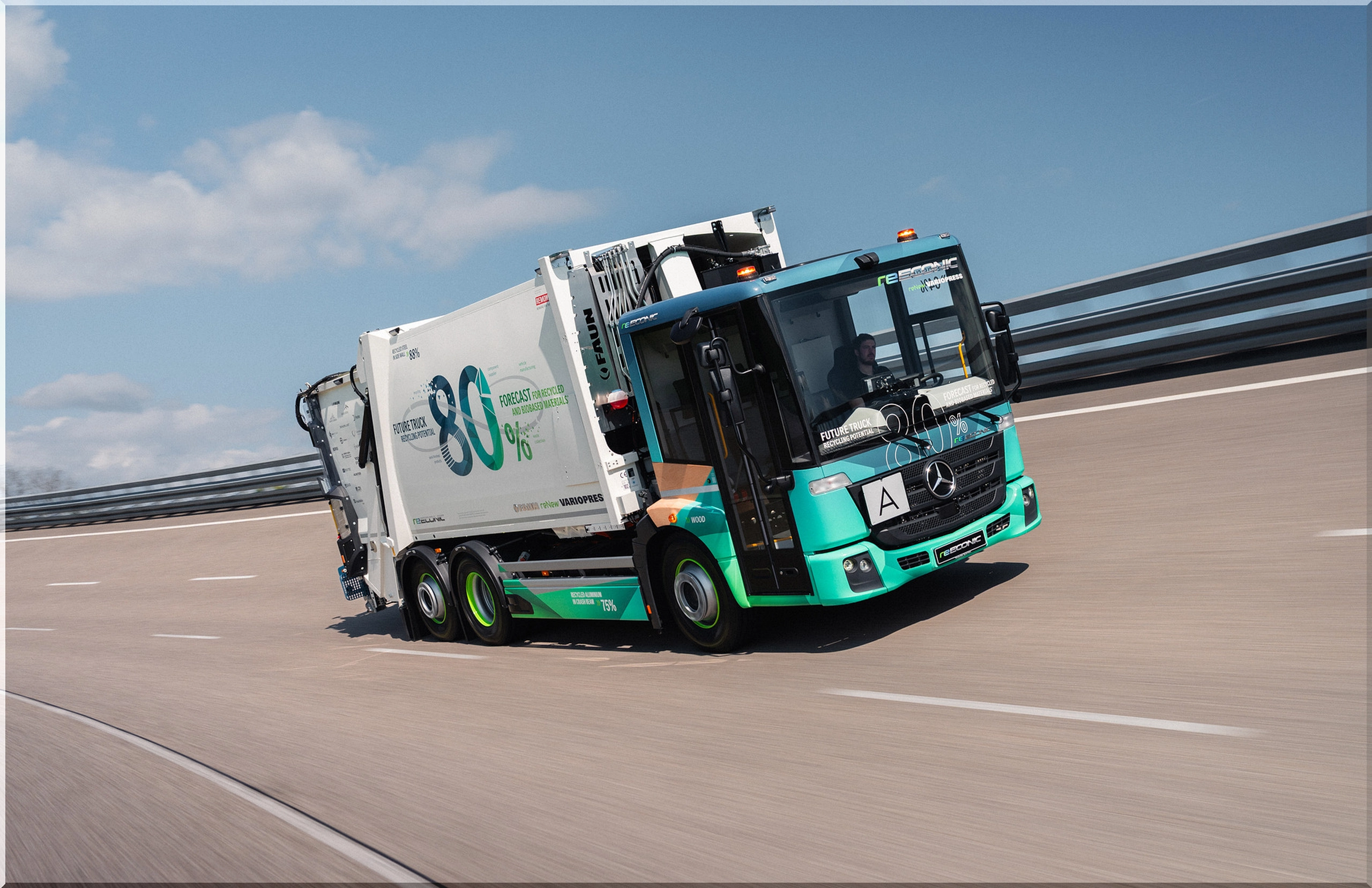
A garbage truck rarely gets invited to the innovation party. It usually shows up early, blocks your street, does the hard work, and leaves before coffee. The Mercedes-Benz reECONIC changes that script by turning a battery-electric refuse truck into a rolling lab for recycled materials, circular production, and real municipal fleet learning.
What Is The Mercedes-Benz reECONIC?
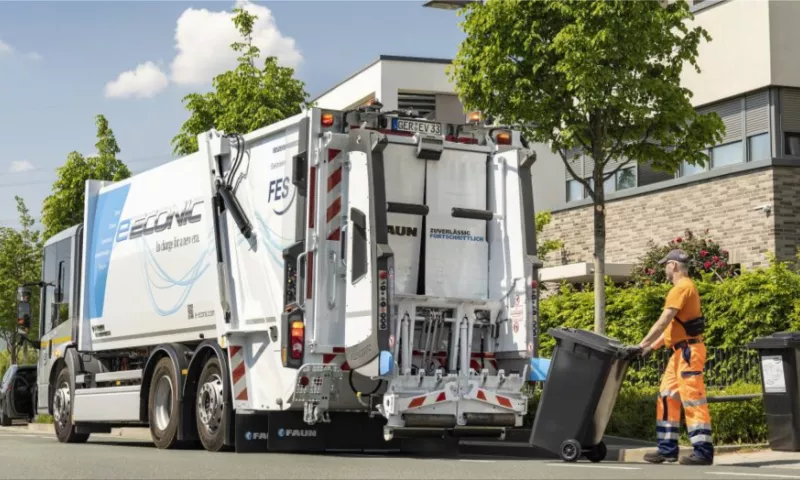
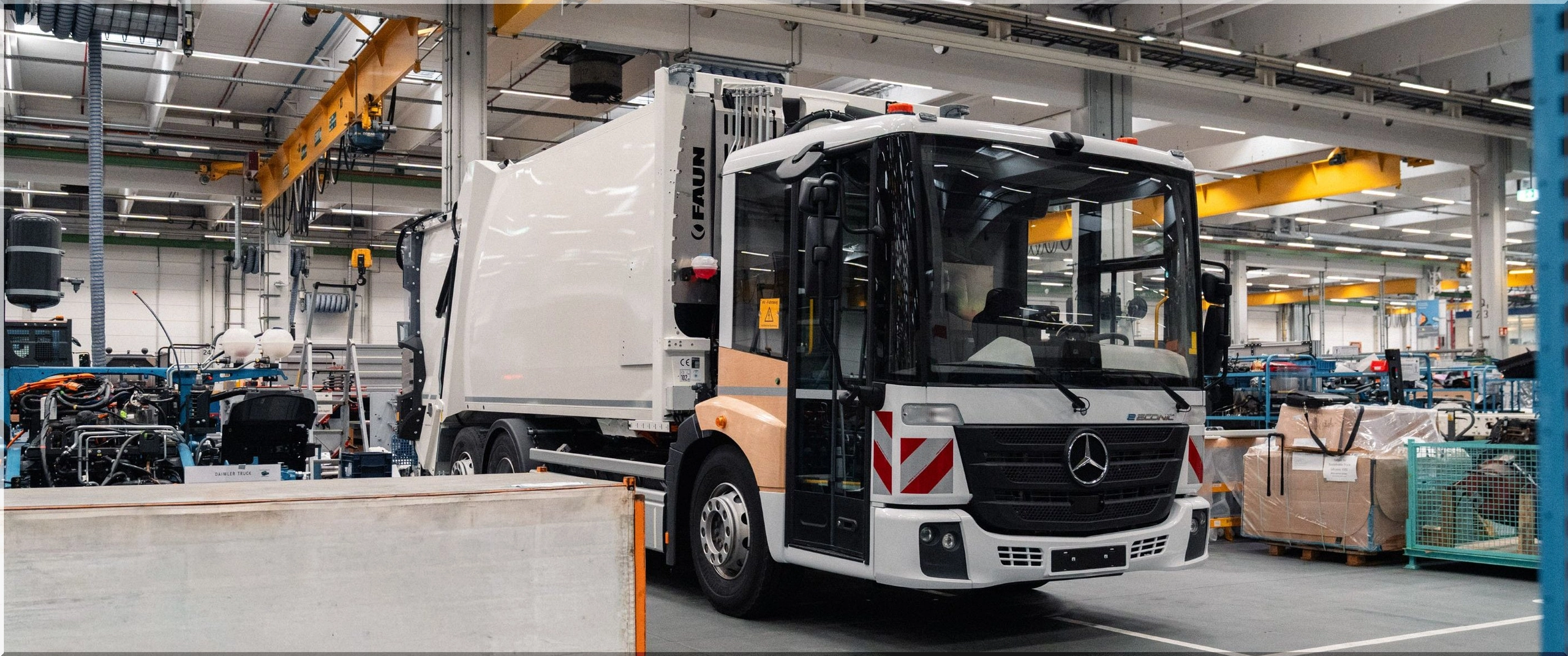
The Mercedes-Benz reECONIC is a battery-electric waste collection concept vehicle based on the Mercedes-Benz eEconic. Mercedes-Benz Trucks built it with FAUN Umwelttechnik, TSR Group, and a wide partner network to test recycled, natural, and bio-based materials in a demanding urban truck.
This truck has a wonderfully practical sense of humor. It collects recyclable waste while it also uses recycled content. That gives the project a tidy circular logic: the machine that gathers materials from cities also proves how those materials might return to commercial vehicle production.
Mercedes-Benz Trucks has not pitched the reECONIC as a normal production model. It has built it as a working electric waste collection vehicle for testing, study, and future manufacturing decisions. That difference counts. A clean concept on a stage tells one story. A road-approved truck that faces kerbs, tight turns, braking loads, driver shifts, and depot routines tells a much better one.
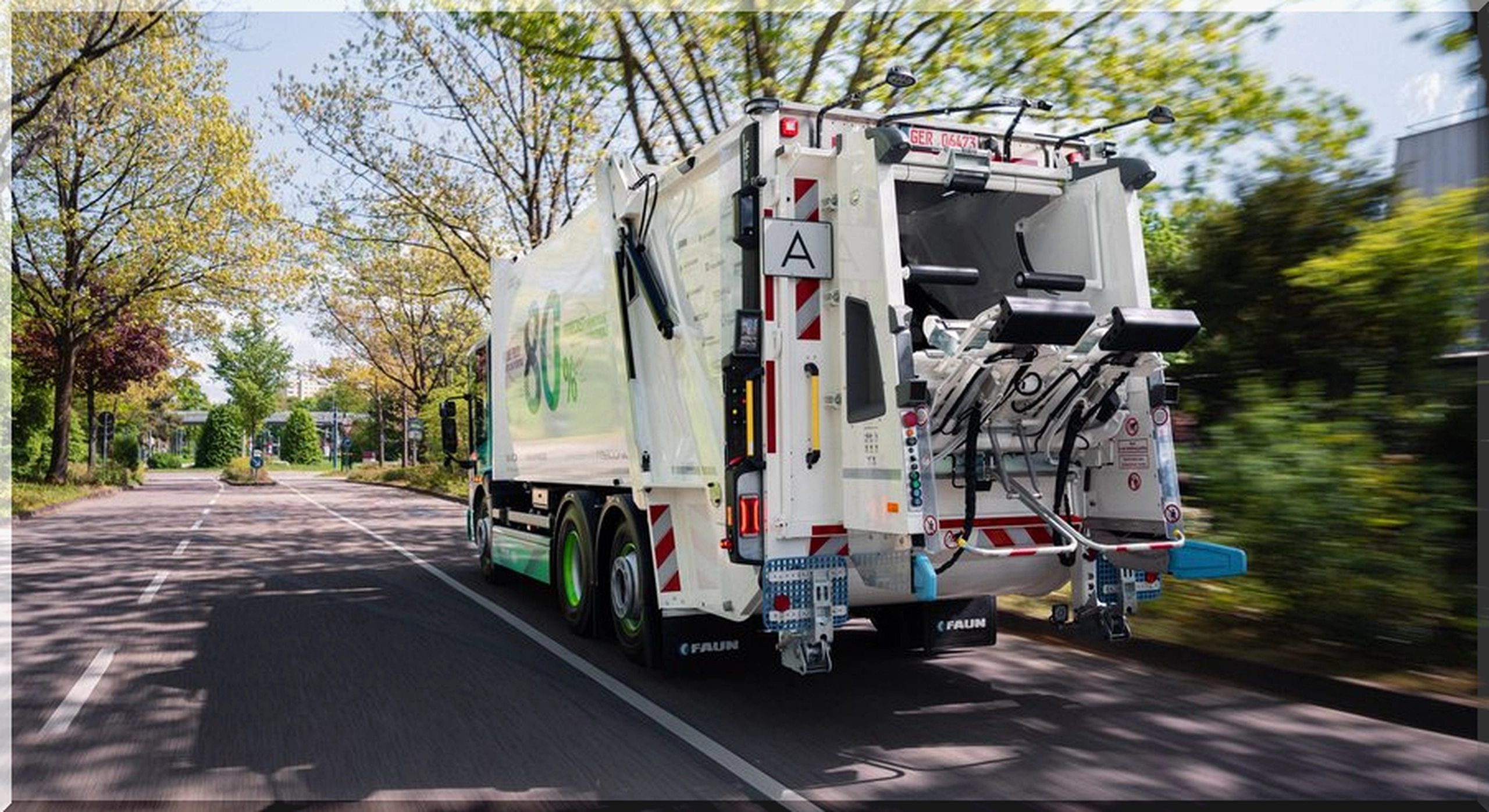
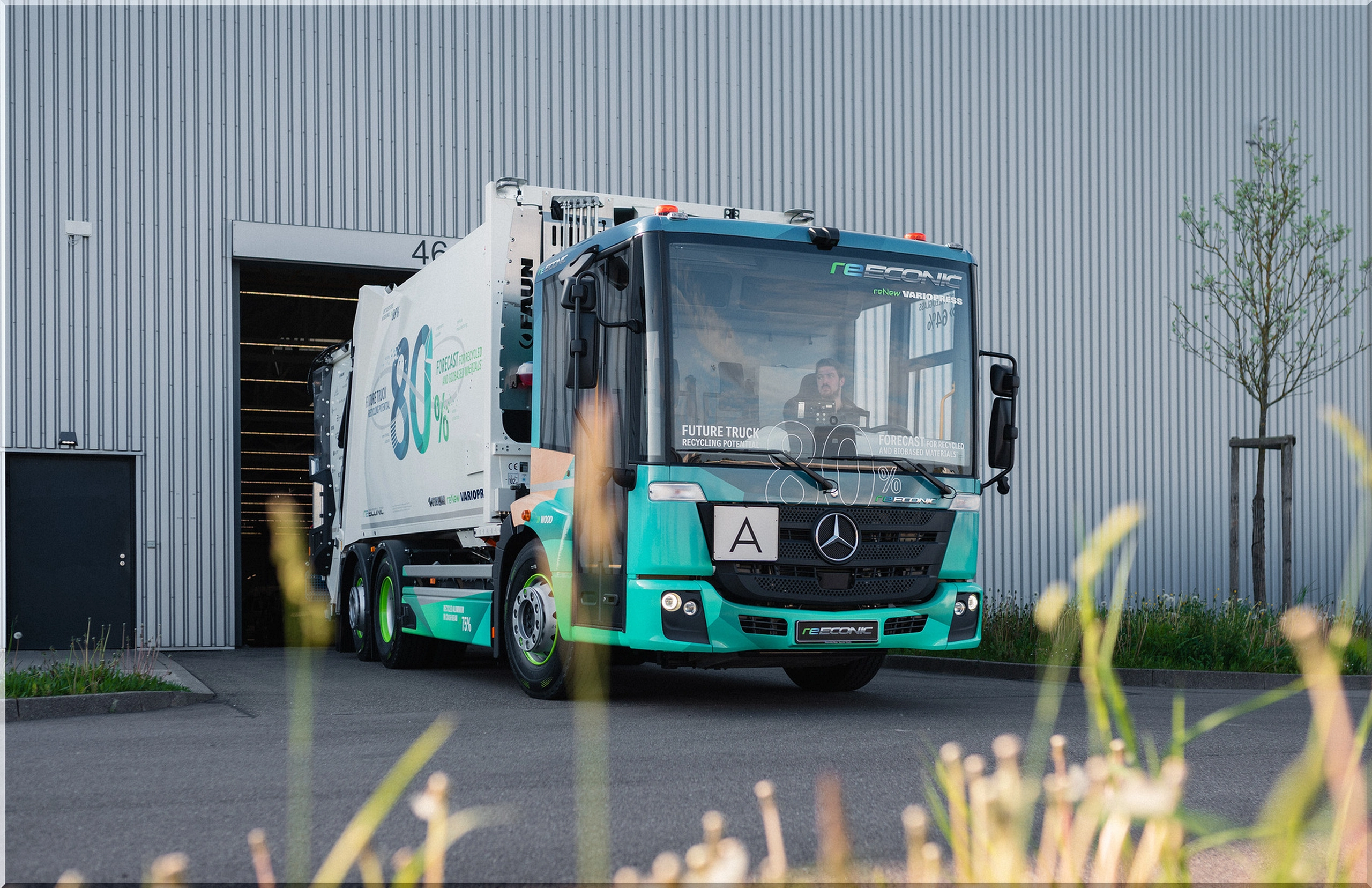
The base vehicle comes from the Mercedes-Benz eEconic, a battery-electric low-entry truck aimed at municipal duties. The reECONIC adds the FAUN reNew VARIOPRESS refuse body and a long list of alternative materials across the cab, chassis, glazing, tires, trim, and body structure.
Why Does A Circular Economy Truck Matter For Fleets?
Municipal fleets face pressure from two sides: cutting tailpipe emissions and reducing the hidden carbon tied to vehicle production. The reECONIC addresses both by pairing a battery-electric drivetrain with recycled and bio-based material trials across major truck assemblies.
A diesel refuse truck burns fuel in stop-start city work. An electric refuse truck cuts local exhaust emissions during that duty cycle. That already helps city air quality, depot noise planning, and low-emission zone compliance. But the reECONIC asks a harder question: what happens before the truck enters service?
That question matters because fleets buy physical assets, not press releases. Steel, aluminum, glass, plastic, tires, seats, trim, and bodywork carry their own production footprint. If a truck reduces local emissions but still relies heavily on newly extracted materials, the job remains half done.
The reECONIC gives procurement teams a more useful lens. It pushes the debate from 'electric or diesel' into 'electric, repairable, recyclable, and built with lower-impact materials.' That wider view suits cities that now link transport budgets with climate plans, waste policy, and resource security.
A practical fleet buyer should track these points:
- Battery-electric operation for dense urban refuse routes
- Recycled steel and aluminum in structural areas
- Recycled glass in cab glazing
- Bio-based plastics in interior applications
- Retreaded tires to reduce raw material demand
- End-of-life recyclability as a design target, not an afterthought
That list sounds less glamorous than a 0-60 mph sprint. Good. Garbage trucks do not need drama. They need uptime, safe visibility, predictable charging, and durable parts that do not throw a tantrum after a winter of potholes.
How Much Recycled Material Does The reECONIC Use?
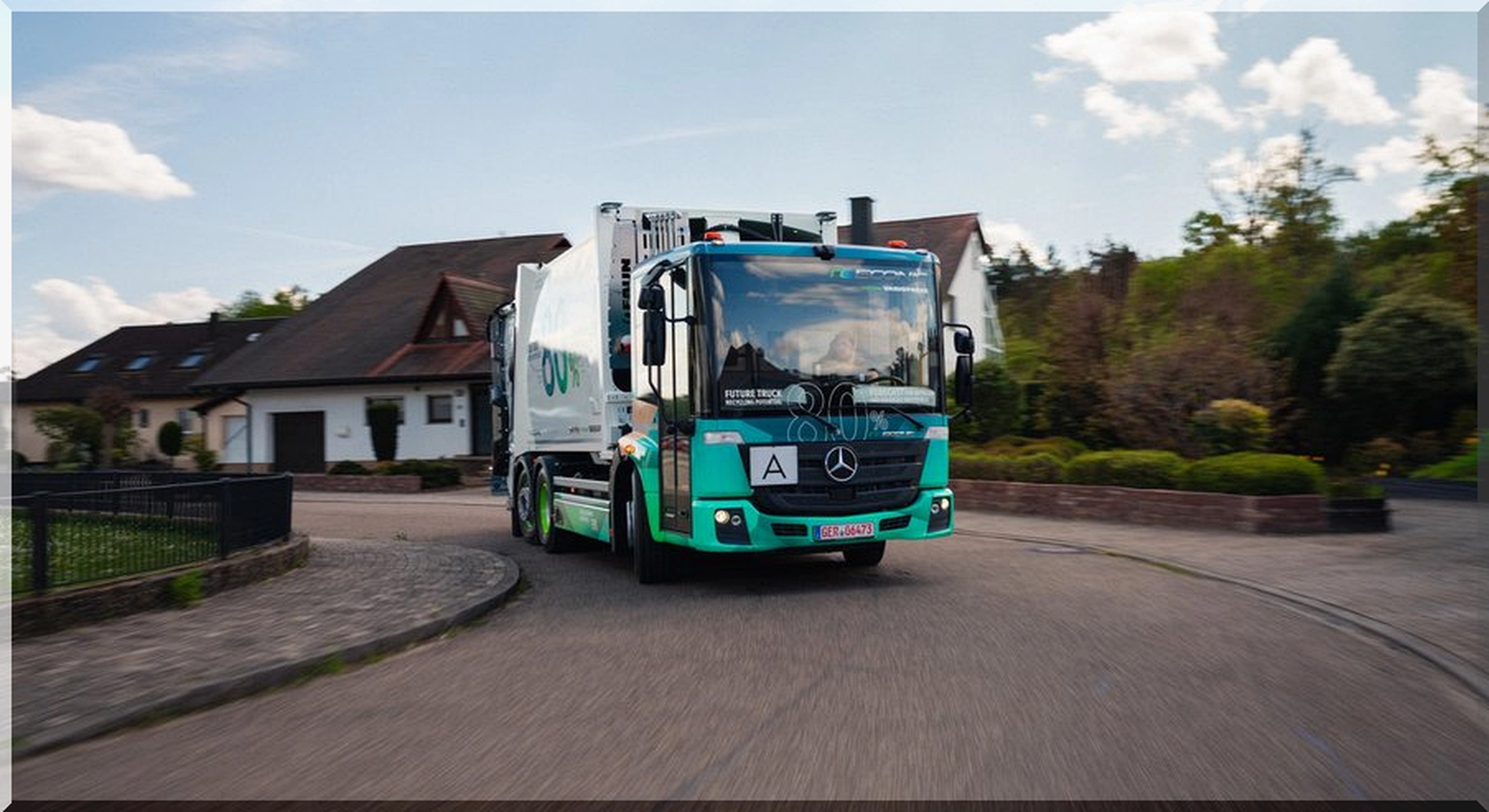
Mercedes-Benz Trucks says the reECONIC project shows that around 80 percent of key material groups in a comparable eEconic could theoretically use recycled, natural, or bio-based alternatives. Those material groups include steel, aluminum, glass, and plastic, with a possible substitution figure of up to 5.2 tons.
That 5.2-ton figure deserves attention because it moves the story from mood-board sustainability into actual truck mass. In the standard production eEconic, the main material groups studied weigh 6.5 tons, excluding the battery. The partners used installed parts, projections, and forecast work to assess future substitution potential.
The CO2e claim also matters. Mercedes-Benz Trucks says the partners found a theoretical reduction of up to 41 percent in vehicle manufacturing CO2e compared with a conventionally produced vehicle, using the studied recycled, natural, and bio-based materials. That figure does not make the reECONIC a finished product. It makes it a very useful engineering argument.
| Area | Material Strategy | Fleet Relevance |
|---|---|---|
| Chassis | Scrap-based steel and recycled aluminum | Targets high-mass areas with major production impact |
| Cab glazing | Recycled glass content | Cuts virgin raw material demand while retaining safety needs |
| Interior | Bio-based and recycled plastics | Tests comfort, durability, odor, surface quality, and emissions |
| Seats | Recycled polyamide from carpet waste and fishing nets | Turns waste streams into high-touch cabin parts |
| Tires | Retreaded commercial tires | Lowers raw material use in a routine fleet wear item |
| Refuse body | FAUN reNew VARIOPRESS with recycled content | Links circular production to the actual waste collection mission |
The table shows the real lesson: circular production works best when engineers attack heavy, repeated, and service-intensive parts first. A recycled badge looks cute. Recycled structural material, glass, tires, and bodywork can change the business case.
Which Materials Make The Mercedes-Benz reECONIC Different?
The reECONIC uses a broad mix of recycled and natural materials, including scrap-based steel, recycled aluminum, recycled glass, recycled polyamide, lignin-based plastics, sunflower-oil byproduct fillers, beech wood, and recycled thermoset plastics from applications such as wind turbine rotor blades.
The front axle and side members use CO2e-reduced steel. Some flat steel uses electric arc furnace production and high recycled content. Forged steel parts also show high recycled content in key examples. For a heavy-duty vehicle, that makes sense. Start with the big stuff. A truck frame has more climate relevance than a recycled cup holder, although the cup holder may get better dinner-table conversation.
The cab frame and battery protection structure use recycled aluminum. Aluminum can carry a large production footprint, so recycled content can make a real difference when engineers keep strength, crash behavior, and fit under control.
The glass work may interest city fleet operators more than they expect. The reECONIC uses glazing with average recycled content of 64 percent. Refuse truck drivers need sightlines, not guesswork. A low-entry cab with large glass areas helps drivers see cyclists, pedestrians, parked cars, and street furniture. Using recycled glass in that safety-critical setting gives the project added weight.
Inside the cab, the project gets almost charming. Seat upholstery uses recycled polyamide from old fishing nets and carpet waste. The dashboard uses lignin-based plastics. A display mount uses a bio-based filler made from sunflower oil production residue. Beech wood appears in selected floor, wheel arch, fender, seat shell, and roof areas.
Definition: Circular economy means materials stay in productive use through reuse, repair, recycling, and smart design. It aims to cut waste and reduce dependence on virgin raw materials.
bility, repair access, battery service paths, and route energy assumptions before signing any large electric refuse truck order.
Why Does The Battery Still Need A Different Discussion?
The battery sits at the center of electric truck sustainability, yet Mercedes-Benz Trucks did not simply swap it for an experimental pack. The company points to certification, safety, repair, second-life use, disassembly, and future recycling as the real work behind battery circularity.
That restraint matters. Batteries carry high technical and legal requirements. A truck battery must handle vibration, charging, thermal control, safety systems, maintenance planning, and warranty risk. A flashy replacement would make nice photos and poor engineering sense.
The reECONIC uses a highly modular battery design that supports easier disassembly. Mercedes-Benz Trucks also points to limited use of adhesives and fillers as a recycling aid. That sounds small until a recycler starts taking apart a battery pack. Adhesives that save time in assembly can punish recyclers later.
Battery recycling still faces cost, energy, volume, and infrastructure barriers. Fleets should not wave those away. A municipal depot that buys electric trucks today should ask what happens after the first service life, who handles pack repair, and how the supplier plans second-life or material recovery.
A useful battery procurement checklist looks like this:
- Ask for pack repair options, not only replacement pricing.
- Request battery warranty terms in writing.
- Check second-life and recycling pathways.
- Review depot charging loads against route energy use.
- Ask how battery health data will reach the fleet manager.
- Price downtime risk, not only electricity cost.
That is the boring list that saves money. Boring often wins in fleet operations.
What Will Real-World Testing Prove?
The reECONIC will gain value only when it runs in daily waste collection work. Real routes will test material durability, driver comfort, maintenance access, energy use, refuse body integration, and the gap between promising lab work and street-level abuse.
Waste collection punishes vehicles in a special way. The truck stops constantly. It turns tightly. It deals with uneven loads, bin lifts, narrow streets, impatient traffic, and long workdays at modest speeds. If recycled parts survive there, they earn respect.
Testing with REMONDIS in the second half of 2026 should give Mercedes-Benz Trucks and its partners the feedback that paper studies can not. Drivers may spot squeaks, scuffs, odors, glare, heat retention, surface wear, and ergonomic issues long before a spreadsheet notices anything unusual.
Based on field data from urban fleet operations, refuse trucks make strong electric candidates because their routes often return to base, run predictable mileage, and use regenerative braking in stop-start work. Yet the refuse body adds major energy demand, and winter duty can cut usable range. A circular electric truck still needs boring depot math.
Pro-Tip: Fleet managers should treat the reECONIC as a procurement signal, not a purchase shortcut. Ask suppliers to document recycled content, recycla
What Should Fleet Buyers Watch Next?
Fleet buyers should watch which reECONIC materials move into series production, how Mercedes-Benz Trucks scales supplier capacity, and how the circular material claims perform under daily service. The strongest outcome would link lower production CO2e with no loss in durability, safety, uptime, or driver acceptance.
The reECONIC points toward a smarter tender process. Cities should stop asking only for electric range and purchase price. They should also score vehicles on material origin, repairability, recycled content, recyclability, tire strategy, battery reuse, and verified production data.
That does not mean every future refuse truck needs wood parts and fishing-net seats. It means every future refuse truck needs better material accounting. Procurement teams already ask about payload, lifting equipment, cab access, and service intervals. Adding circular material data simply updates the checklist for the electric age.
Fleet operators can act now:
- Add recycled content reporting to tender documents.
- Request third-party verified CO2e data where available.
- Ask suppliers to explain end-of-life material pathways.
- Compare retreaded tire programs against new tire purchasing.
- Train maintenance teams on new materials before service starts.
- Link charging plans with refuse body power demand.
The most useful part of the reECONIC may not be one component. It may be the way 33 companies worked on material streams, production steps, supply chains, and recycling loops at the same time. That is messy work. It also looks a lot like the future of municipal fleet buying.
Practical Next Steps For Municipal Fleet Teams
The Mercedes-Benz reECONIC gives city fleets a clear next move: ask better questions. Battery-electric trucks can cut local emissions, but circular materials can cut the production footprint too. The winning fleet plan will connect route data, depot charging, maintenance, recycled content, and end-of-life strategy.
Start with one refuse route. Map mileage, stops, body operation time, depot dwell time, payload pattern, and seasonal energy demand. Then ask truck suppliers to show how their vehicle handles the route and what material data supports the build.
That approach will not make a garbage truck glamorous. It will make it accountable. For municipal fleets, that beats glamour every working day.
- Add new comment
- 23 views