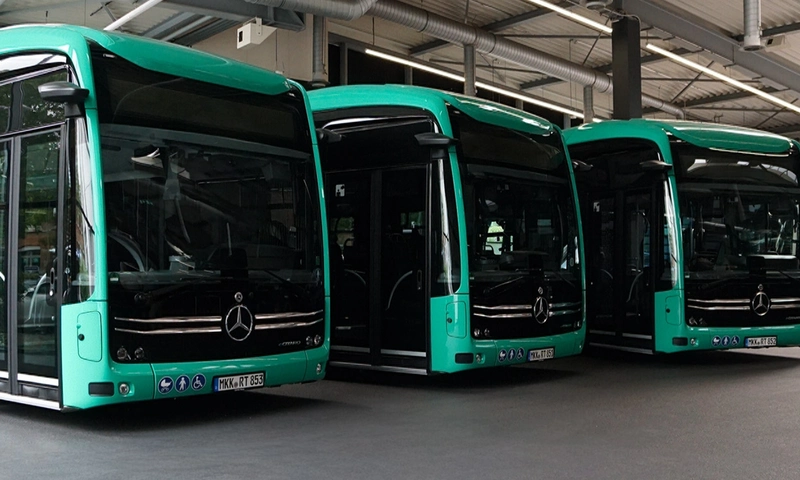
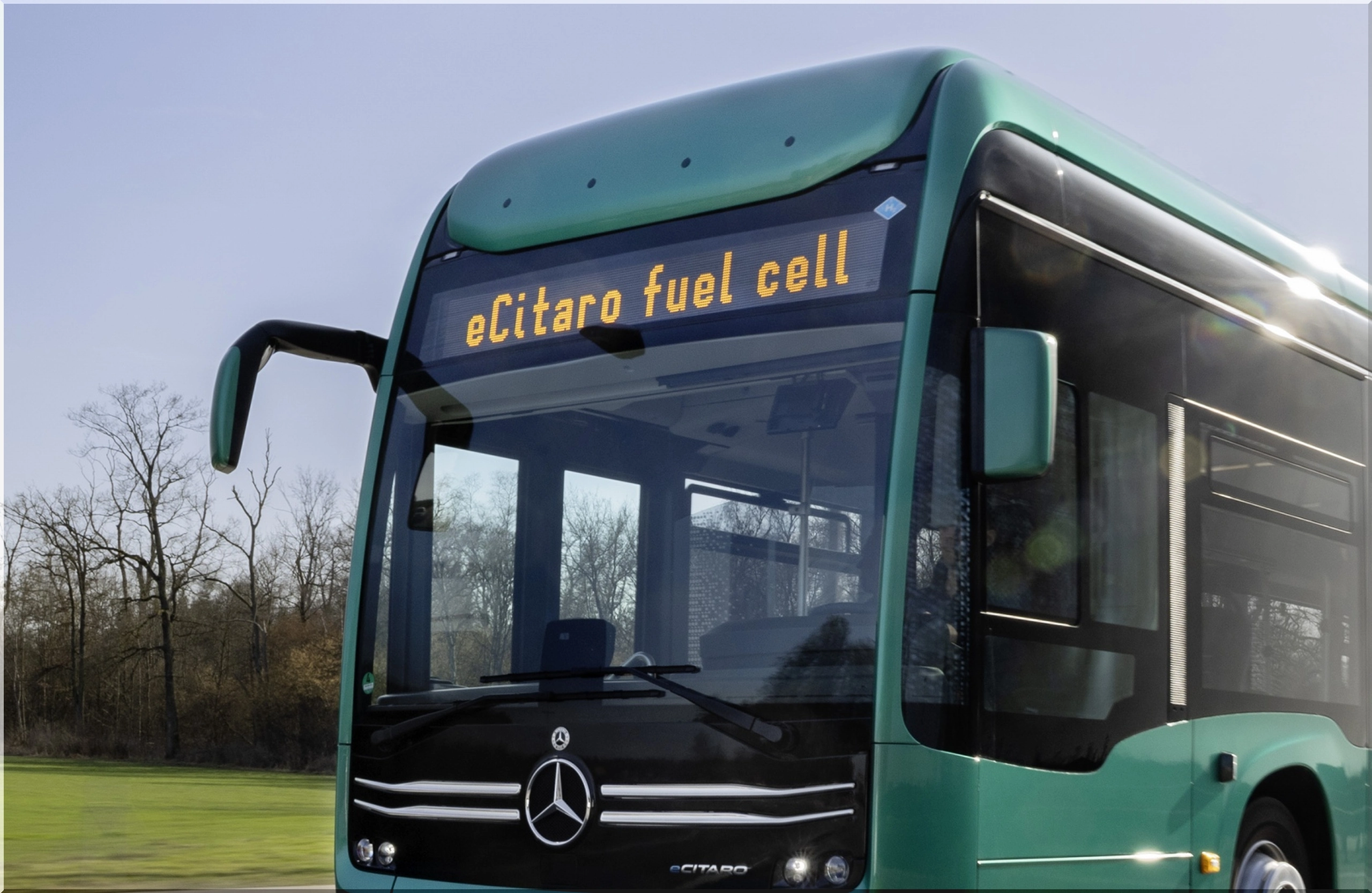
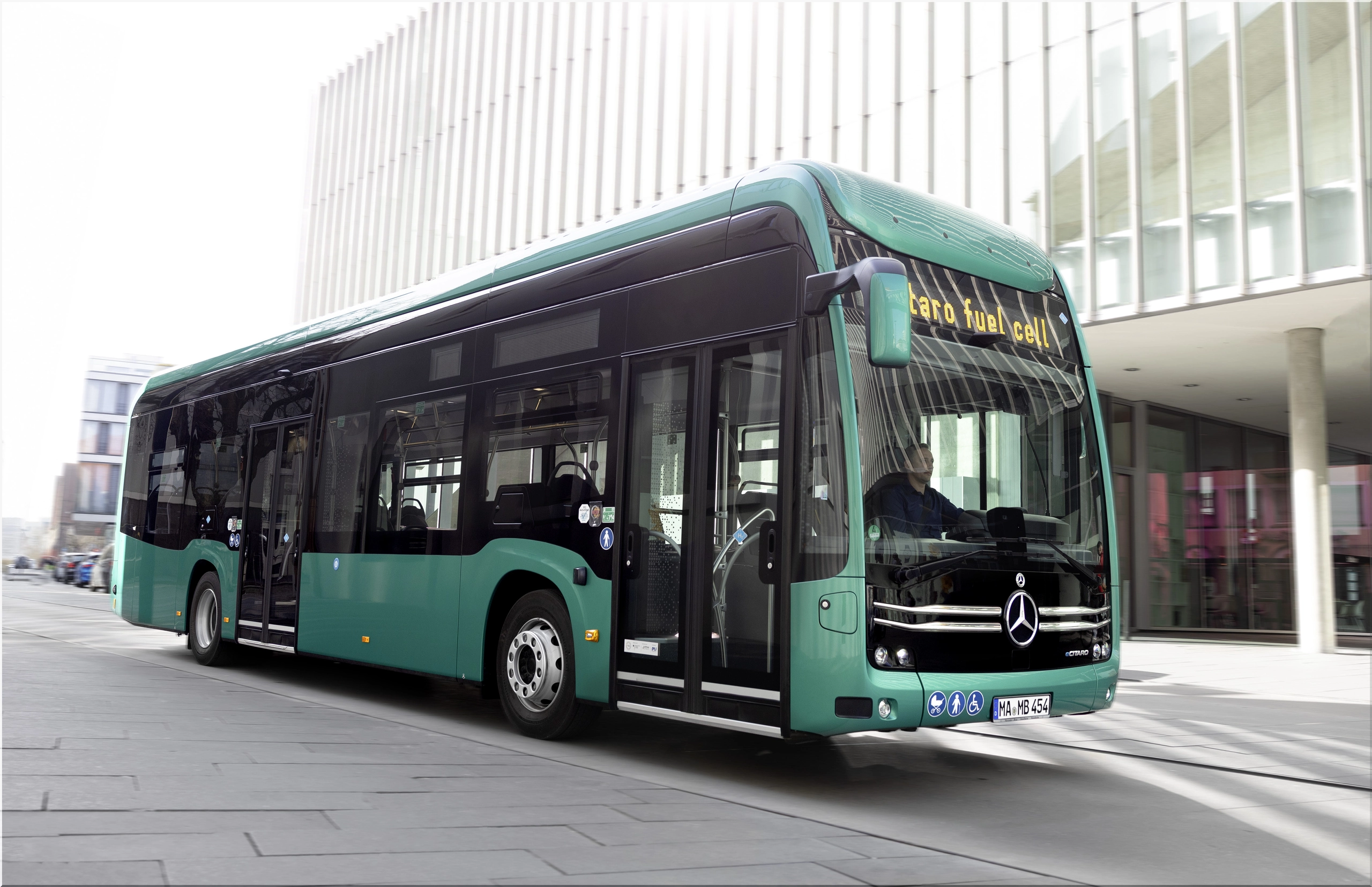
The Mercedes-Benz eCitaro fuel cell has taken the title Electric Fuel Cell Bus Champion 2026, giving Daimler Buses a third straight win in Omnibusspiegel's electric bus comparison program. This one carries extra weight. For the first time, fuel-cell buses competed directly against one another, and the eCitaro fuel cell won against four rival hydrogen-electric entries.
That result matters because city bus operators do not buy press-release technology. They buy uptime, range, depot simplicity, passenger capacity, and predictable daily scheduling. Looking at the data, the eCitaro fuel cell attacks the core pain point of battery-electric transit buses: long duty cycles that strain range without forcing operators into route-side charging.
Why the eCitaro Fuel Cell Won the 2026 Award
The eCitaro fuel cell uses a battery-electric drivetrain as its base, then adds a 60 kW fuel cell as a range extender. That strategy changes the operating math. The bus still drives electrically, but the fuel cell feeds energy into the high-voltage system while the bus runs, stretching the vehicle's usable route window.
In addition, Daimler Buses positions the system for routes where operators want locally CO2-free public transport without redesigning every shift around chargers. The solo bus can cover around 600 kilometers, while a Busworld 2025 vehicle profile cites up to around 700 kilometers under specific internal conditions with maximum battery and hydrogen capacity. Those figures make the bus more relevant for dense, long-service urban networks.
Key Award Context
| Item | Detail |
|---|---|
| Award | Electric Fuel Cell Bus Champion 2026 |
| Organizer | Omnibusspiegel electric bus comparison test |
| Presentation venue | Bus2Bus trade fair in Berlin |
| Competitor field | 5 fuel-cell buses |
| Daimler Buses streak | Wins in 2023, 2024, and 2026 |
| Previous winners | eCitaro solo bus, eCitaro G articulated bus |
Specifically, the award signals confidence from trade media, public transport operators, and association officials. That jury mix matters because these evaluators judge buses through real operating logic, not showroom metrics.
The Engineering Case: Battery First, Fuel Cell Second
The Mercedes-Benz eCitaro fuel cell bus does not use hydrogen as its main propulsion source. The battery does the heavy work. The fuel cell acts as an onboard generator, which lets Daimler run the stack in a controlled efficiency band rather than forcing it to chase every acceleration demand.
That decision helps durability. Daimler states the heavy-duty fuel cell can reach around 40,000 operating hours when used as a range extender, which translates to roughly seven to ten years depending on duty cycle. From an expert perspective, that operating model suits a transit bus because stop-start city use produces sharp load swings, and batteries handle those swings better than fuel-cell stacks.
Technical Specifications: Mercedes-Benz eCitaro Fuel Cell
| Specification | Data |
|---|---|
| Length | 12,135 mm / 477.8 in |
| Width | 2,550 mm / 100.4 in |
| Height | 3,400 mm / 133.9 in |
| Wheelbase | 5,900 mm / 232.3 in |
| Front/rear overhang | 2,805 / 3,430 mm |
| Turning circle | Approx. 21,214 mm / 835.2 in |
| Standing height, center aisle | 2,313 mm / 91.1 in |
| Center aisle height above road | 370 mm / 14.6 in |
| Gross vehicle weight | 19,500 kg / 42,990 lb |
| Tire size | 275/70 R 22.5 |
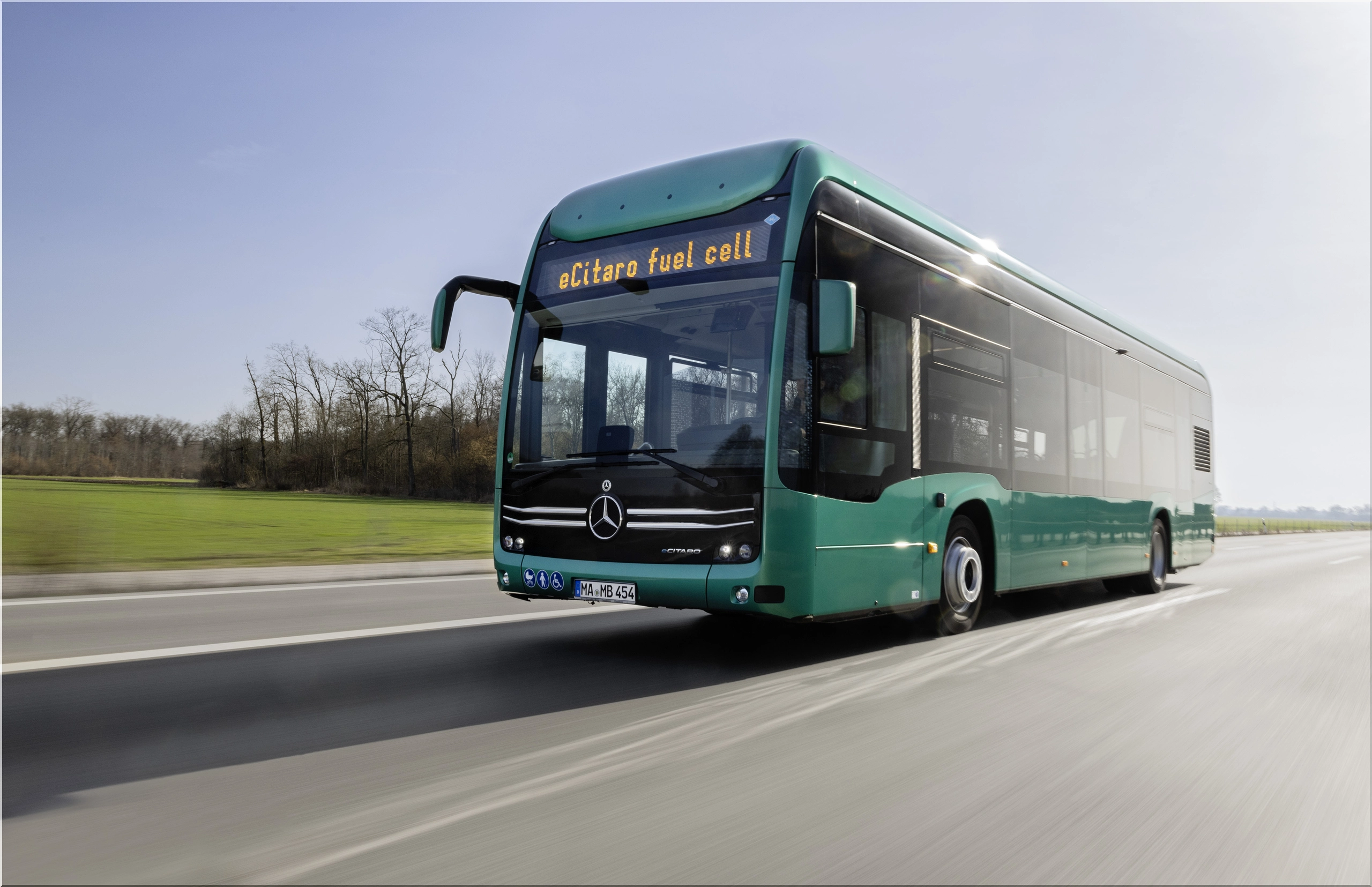
The packaging tells the story. Daimler places the fuel-cell module on the roof behind the front axle in the solo bus, while Type 4 hydrogen tanks sit on the roof above the front axle and front overhang. Consequently, the floor can stay low, the passenger layout remains familiar, and the drivetrain does not consume cabin space.
Powertrain, Battery, and Hydrogen System
The eCitaro fuel cell uses NMC3 lithium-ion batteries with three packs rated at about 294 to 295 kWh. Each 98 kWh pack contains nine modules, and each pack contains 5,400 cells. Daimler integrates the cells into a cooling circuit that targets roughly 25 degrees Celsius, which protects service life and stabilizes charging behavior.
Power reaches the road through the ZF AVE 130 low-floor portal axle. Each electric hub motor produces 125 kW and 485 Nm, and the fixed gear ratio multiplies torque to a claimed 11,000 Nm per wheel. That setup gives the bus strong launch control without a conventional gearbox.
| System Area | eCitaro Fuel Cell Data |
|---|---|
| Battery type | NMC3 lithium-ion |
| Battery capacity | 294-295 kWh |
| Charging power | Max. 150 kW |
| Fuel-cell output | Max. 60 kW |
| Hydrogen storage | 5 x 5 kg tanks |
| Hydrogen pressure | 350 bar |
| Optional solo-bus tank | Sixth tank available |
| Refueling time | Around 10 minutes under optimal conditions |
| Passenger capacity | Up to 88 passengers |
By comparison, a purely battery-electric city bus can deliver strong efficiency, but range can fall under cold weather, heavy passenger loads, and high accessory demand. The eCitaro fuel cell counters that problem by using fuel-cell waste heat for cabin heating and battery temperature management. That saves battery energy during winter operation, when HVAC demand can punish electric-bus range.
Operating Modes Give Transit Agencies More Control
Daimler gives operators three software-defined strategies: maximum range, minimum hydrogen consumption, and maintain state of charge. The first mode uses battery and hydrogen capacity to stretch distance. The second mode lets the battery carry more of the load while the fuel cell supplies enough energy to hit a route target.
The third mode changes the depot equation. In maintain state of charge, the fuel cell supplies enough energy during operation to keep the battery from dropping below a defined level. That can reduce dependence on plug-in charging for certain duty cycles, although Daimler still supports depot charging at up to 150 kW.
Pro-Tip: How Should Transit Agencies Evaluate the eCitaro Fuel Cell?
Start with route data, not badge appeal. Agencies should compare average daily mileage, cold-weather HVAC demand, layover time, depot grid capacity, hydrogen availability, and peak passenger load before choosing a battery-electric, hydrogen-electric, or mixed fleet strategy.
Use this quick procurement filter:
- Choose battery-electric eCitaro routes when depot charging fits the schedule.
- Choose eCitaro fuel cell routes when long duty cycles leave little charging margin.
- Prioritize hydrogen range extension when route-side chargers would add civil-work cost or scheduling complexity.
- Check axle loads, passenger counts, and roof equipment weight before final specification.
Safety and Driver Familiarity Matter Too
The award win does not rest only on range. The eCitaro fuel cell also brings Sideguard Assist 2, Frontguard Assist, Preventive Brake Assist 2, Traffic Sign Assist, tire-pressure monitoring, and an available 360-degree camera system. Those systems support the driver in the exact zones where city buses face the highest risk: turns, stops, lane changes, and low-speed urban traffic.
In addition, drivers do not need a new cockpit routine. The layout largely matches the standard eCitaro, with the key fuel-cell-specific addition being hydrogen fill-level information. That cuts training friction and supports fast driver changes during scheduled service.
What Now?
The Mercedes-Benz eCitaro fuel cell wins because it answers a practical fleet question: how can a city run electric buses all day without making charging the center of every route plan? Daimler's answer combines a large battery, a roof-mounted hydrogen range extender, modular tanks, high passenger capacity, and proven low-floor bus packaging.
For operators, the next step looks clear. Audit the routes that break the battery-electric comfort zone first. Those are the routes where the Electric Fuel Cell Bus Champion 2026 makes its strongest business case.
- Add new comment
- 67 views