Hailstorms across Idaho can leave vehicles covered in dents and dings, making prompt hail dent repair essential—especially during peak seasons in spring and early summer. This article explores why paintless dent repair (PDR) has become the preferred solution for auto hail damage, offering a faster, more cost-effective alternative to traditional bodywork while preserving the vehicle’s original factory finish.
From understanding common damage patterns and severity levels to learning how the PDR process works and what it costs, this guide provides a complete overview to help car owners make informed decisions. Whether dealing with light surface dents or more extensive hail impact, choosing the right repair method—and a reputable local specialist—ensures high-quality restoration, improved resale value, and a smoother insurance claims experience.
Hail in Idaho: where storms hit, common damage patterns, and risk timing
Hotspots and storm tracks
Idaho’s spring and early-summer hail storm risk ramps up from late April through July, with a secondary spike in early fall. The Treasure Valley—covering Boise, Idaho, Garden City, Meridian, and Eagle—sees fast-moving cells that produce pea- to marble-size hail. Eastern Idaho corridors around Idaho Falls, Rexburg, Blackfoot, and Pocatello are frequent targets when cold fronts run off the Tetons, and storms also sweep through Ashton and Arco on their way toward West Yellowstone MT and Jackson Hole WY. When a hail storm hits parking lots and residential streets, vehicle hail damage typically concentrates on horizontal panels.
What hail does to vehicles
Hail impact damage is most evident on roofs, hoods, and trunk lids, with secondary dings and dents on upper door rails and quarter panels. Aluminum hoods and roofs can show slightly softer but numerous impressions, while steel panels can hold sharper points. A proper hail damage assessment maps dent counts, measures diameters, and checks for paint stress. That assessment determines whether paintless dent repair or conventional auto body repair is the right path to hail damage repair. Note: hail damage roof repair for homes is a different trade; for vehicles, specialized PDR is the standard for auto hail repair and hail dent removal.
Common severity patterns
- Light: 20–60 small dents across hood/roof
- Moderate: 60–150 dents plus a few sharper creases
- Heavy: 150+ dents, cracked paint in isolated areas, potential glass damage
Why patterns matter
Severity and panel material drive the damage estimate, feasibility of paintless dent removal, and expected turnaround.
Why paintless dent repair (PDR) is the smart choice over traditional bodywork
Advantages of PDR for auto hail repair
Paintless dent repair restores panels from the underside without fillers or repainting, preserving original paint and the factory finish. By avoiding putty and color matching, PDR typically offers a cost-effective repair with a quick turnaround and better resale value. Because the factory finish remains intact, long-term durability and gloss retention outperform many repaints associated with conventional auto body repair. For hail damage repair specifically, paintless dent removal is cleaner, faster, and more precise than sanding and repainting large sections.
Key benefits explained
- Preservation of original paint and texture for maximum resale value
- No blend into adjacent panels, avoiding mismatched tones
- Less downtime: faster hail dent removal means less rental expense
- Environmentally friendly vs. solvent-based auto body repair
When conventional auto body repair is still needed
While PDR covers most vehicle hail damage, cracked paint, torn metal, sharp edge creases, or inaccessible double-wall areas may require traditional dent repair or limited repainting. Certified technicians often blend methods: paintless dent removal where possible and panel refinishing where necessary. Reputable shops will explain limits upfront, include both methods in a detailed hail damage assessment, and still prioritize PDR to maintain the factory finish.
Situations that may exceed PDR
- Fractured paint from severe hail impact damage
- Stretched metal with sharp crowns along panel edges
- Prior body filler or corrosion under the dent
How PDR for hail damage works: inspection, access, tools, and turnaround
Step-by-step hail dent removal workflow
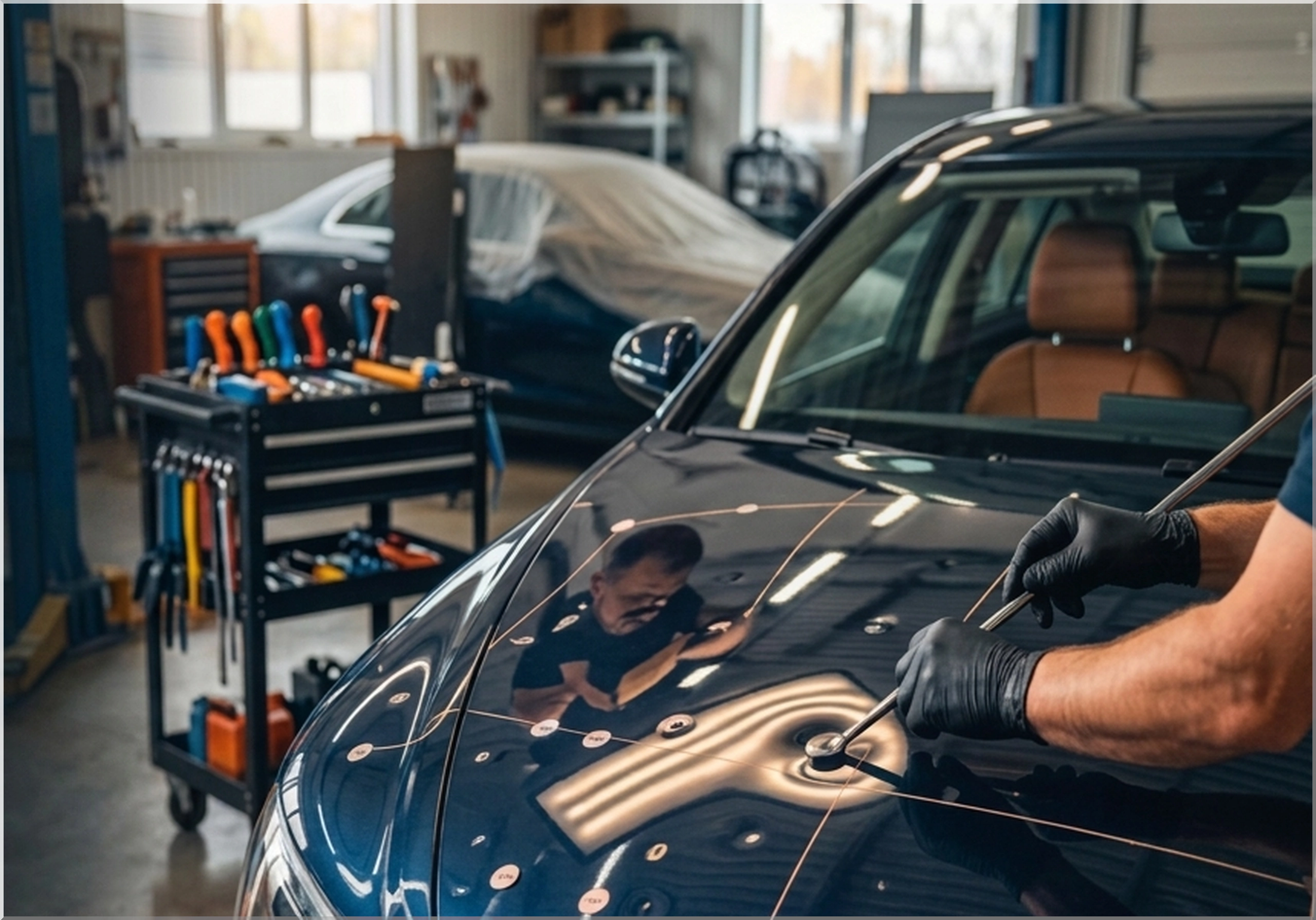
A quality auto hail repair begins with lighted mapping and a thorough hail damage assessment. Technicians count dents by size on each panel, then produce an estimate calibrated to insurer guidelines. Next, they gain access behind panels, perform controlled dent removal with PDR equipment, and finish with precision blending.
Inspection and damage estimate
- LED line boards reveal even the tiniest dings and dents
- A written damage estimate notes panel counts, sizes, and any cracked paint
- Insurers review and may supplement; this is normal on a hail damage insurance claim
Access and manipulation
- Trims and liners are carefully removed to reach the backside
- Technicians use metal rods, picks, and leverage points to massage dents out
- Glue-pulling techniques handle areas without direct backside access
Finishing, QC, and guarantee
- High-precision blending removes micro-highs/lows under lights
- Final panel checks verify contours against manufacturer spec
- Shops typically back work with a hail repair warranty and satisfaction guarantee
Tools and access strategies
PDR equipment includes specialized metal rods, tips, knockdowns, and LED or fog lights for crisp reflection control. For aluminum panels, heat management and softer tips reduce paint stress. Skilled specialists combine push techniques with glue-pull tabs to complete paintless dent repair even on tight roof rails. This meticulous process explains why paintless dent removal consistently delivers factory-level restoration in hail damage repair.
Typical turnaround times
- Light damage: 1–2 days
- Moderate: 2–4 days
- Heavy (PDR only): 4–7 days, depending on parts access and insurance approvals
What it costs in Idaho: estimates, insurance claims, deductibles, and rental cars
Typical hail repair cost ranges and factors
Hail repair cost depends on dent count, sizes, panel material, and access. Light vehicle hail damage may fall in the lower thousands, while dense storms climb higher—especially if a mix of PDR and auto body repair is needed. Aluminum panels can add labor time. The best path is an in-person estimate after a full hail damage assessment.
Cost drivers to consider
- Dent count and diameters per panel
- Aluminum vs. steel and roof-rail access
- Presence of cracked paint requiring spot refinishing
- Rental needs during repair and desired quick turnaround
Documenting for the adjuster
Photograph panels under angled light after the hail storm and note the date/time. This speeds your insurance claim and helps align the shop’s estimate with insurer guidelines.
Insurance coverage and claims in Idaho
Comprehensive insurance coverage typically applies to auto hail repair. Most insurers—such as State Farm Insurance, Esurance, and Owners Insurance—accept PDR as the preferred method for dent removal because it preserves original paint. Start with a claim number, schedule a shop inspection, and expect possible supplements once certified technicians uncover hidden dents under brighter lights. Be cautious with offers to “cover your deductible”; laws and policy terms vary. Instead, ask about efficient scheduling, accurate documentation, and whether the shop can coordinate a rental car to keep your out-of-pocket predictable during dent repair.
Coordinated claims handling
Many Idaho repair shops submit electronic estimates, communicate supplements directly to adjusters, and keep you updated. This streamlines the hail damage insurance claim and speeds approval for paintless dent repair.
Picking a reputable Idaho PDR shop and preparing for/after your repair
How to vet hail damage experts and repair shops
Look for experienced hail damage experts with certified technicians, proven photo galleries, and strong customer satisfaction scores. In the Treasure Valley, consumers often compare Gem State PDR, Dr. Ding PDR, HailTech Paintless Dent Repair, Dent Wizard, Service King Collision Repair, Gerber Collision & Glass, and Saltzer Auto Body.
In Eastern Idaho and Idaho Falls areas, reputable specialists and mobile teams sometimes coordinate with shops in Rexburg, Blackfoot, and Pocatello—and even travel to Jackson Hole WY or West Yellowstone MT after large hail events. Auto Dent Repair Idaho can be a useful resource for locating specialists. Idaho Auto Salvage becomes relevant only when a vehicle is declared a total loss, not for standard hail damage repair.
What to demand in writing
- A clear estimate tied to a thorough hail damage assessment
- A transferable hail repair warranty on paintless dent removal
- A process explanation for any conventional auto body repair if required
Shop capabilities checklist
- Dedicated PDR equipment, proper lighting, and manufacturer-safe access methods
- Ability to work directly with your insurer on the hail damage insurance claim
- Indoor storage to protect vehicles awaiting restoration
Preparing your vehicle and what to expect after restoration
Remove roof racks and personal items so technicians can access liners and headliners quickly. Confirm drop-off timing to minimize rental days and enable a quick turnaround. After paintless dent repair, inspect panels under different lighting and ask the specialist to walk you through results. Quality paintless dent removal should leave reflections glass-smooth and contours true to the factory.
Aftercare tips
- Hand-wash for the first week; avoid harsh automated brushes that can mar a pristine factory finish
- Recheck panels at sunrise/sunset lighting; if any missed dings and dents are seen, contact the shop promptly—most offer a guarantee
- Keep documentation of the restoration for resale value records and future insurance claim reference
By understanding where and when Idaho hail storms strike, choosing paintless dent repair for most auto hail repair scenarios, and partnering with proven specialists, you’ll get efficient, high-standard hail dent removal that preserves original paint and delivers long-term value.
- 73 views