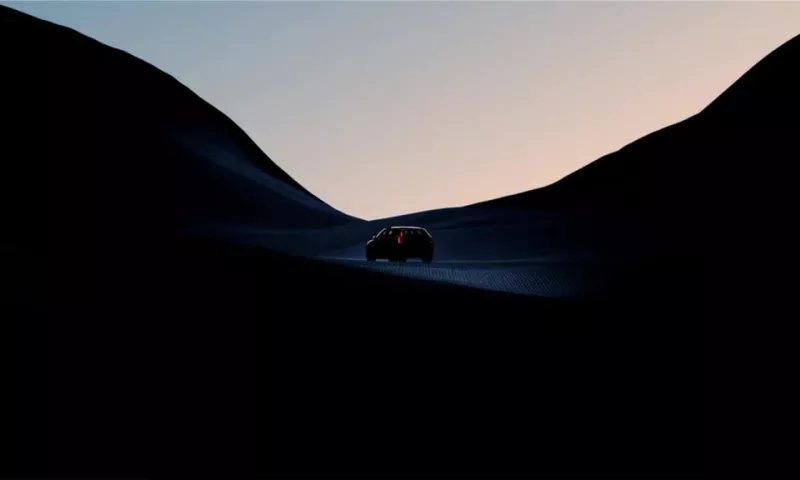
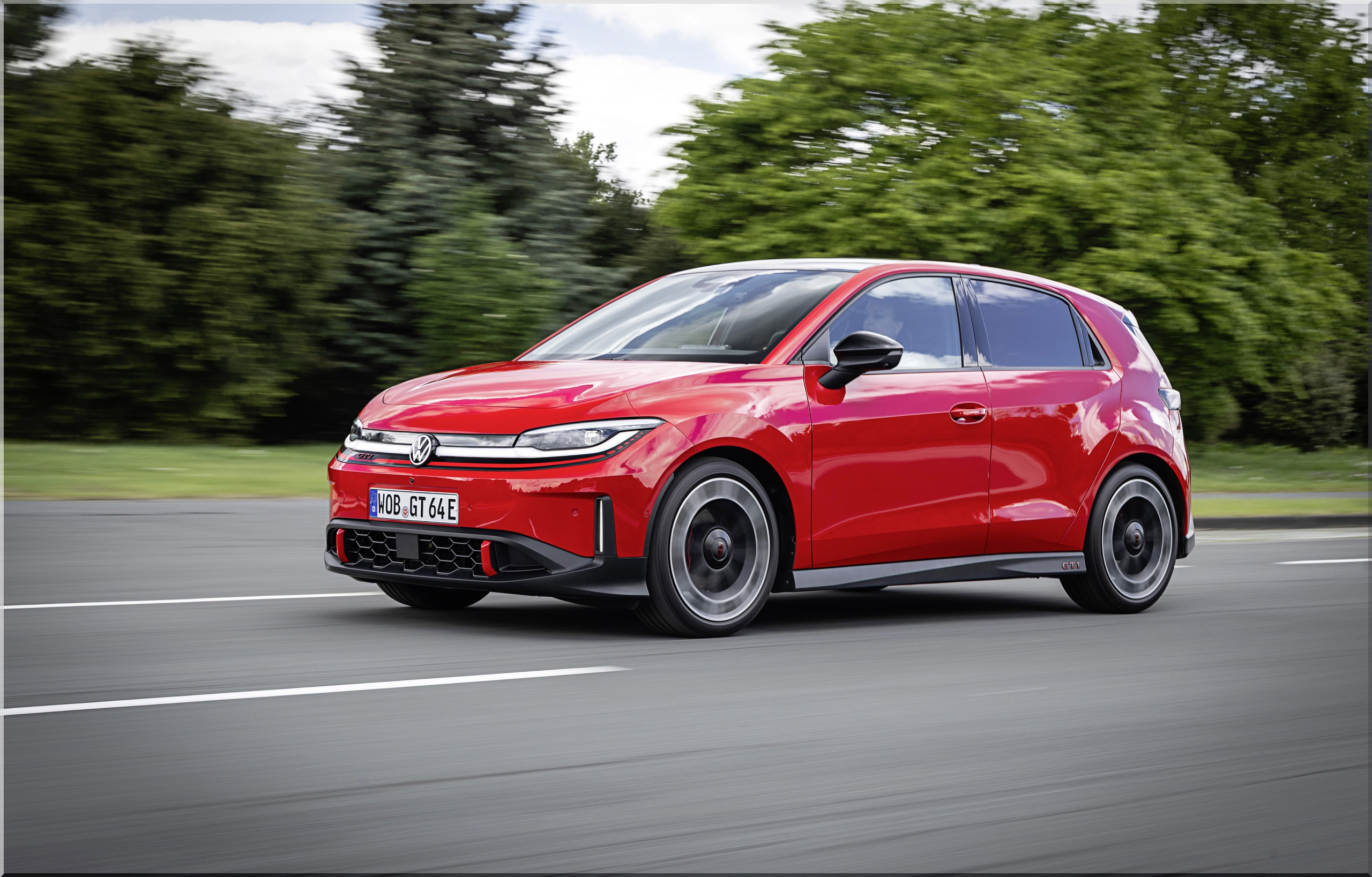
Volkswagen has finally put the GTI badge on an electric car, and it picked the right template: a compact, front-drive hatchback with usable power, a mechanical mindset, and enough practicality to work outside a Sunday morning blast. The new Volkswagen ID. Polo GTI arrives as a near-production electric hot hatch with 166 kW, or 223 hp, a 52 kWh net battery, and a claimed WLTP range of up to 424 km, equal to about 263 miles.
That combination matters. Volkswagen could have chased headline horsepower. Instead, it built the ID. Polo GTI around traditional GTI logic: moderate weight, front-axle punch, quick response, sharp chassis control, and cabin details that reference the first Golf GTI without turning nostalgia into theater.
Pre-sales start in autumn 2026, and European pricing should sit near $45,000 based on current conversion estimates. The bad news for U.S. buyers lands quickly: this electric Volkswagen GTI has no confirmed American launch.
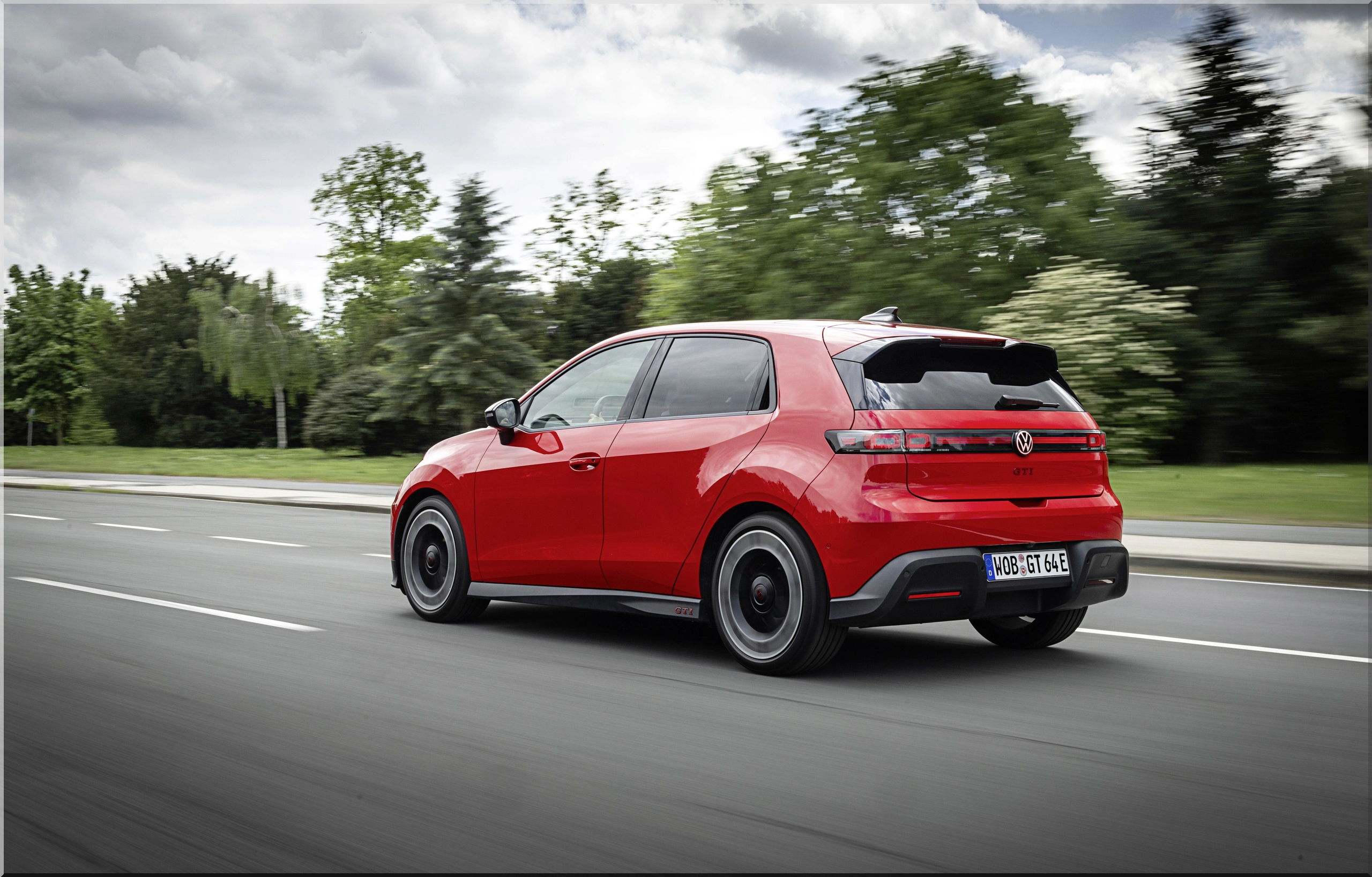
Volkswagen ID. Polo GTI Specs: The Numbers That Define the First Electric GTI
The ID. Polo GTI specs position it directly in the European electric hot hatch class, where cars like the Alpine A290 and Mini John Cooper Works Electric already fight for buyers who want compact size with real pace.
| Specification | Volkswagen ID. Polo GTI |
|---|---|
| Platform | MEB+ |
| Drive layout | Front-wheel drive |
| Electric motor | APP290 |
| Power | 166 kW / 226 PS / 223 hp |
| Torque | 290 Nm / 214 lb-ft |
| 0-100 km/h | 6.8 seconds |
| Top speed | 175 km/h / 109 mph |
| Battery | 52 kWh net NMC |
| WLTP range | Up to 424 km / 263 miles |
| DC fast charging | Up to 105 kW |
| 10-80 percent DC charge | About 24 minutes |
| WLTP consumption | 16.4-14.4 kWh/100 km |
| Kerb weight | From 1,540 kg / 3,395 lb |
| Wheels | Standard 19-inch alloys |
Looking at the data, Volkswagen aimed for balance rather than shock value. The 6.8-second sprint time will not scare a dual-motor performance EV, but it fits the GTI brief. This car needs to feel eager, repeatable, and controllable on a narrow road, not violent for one traffic-light launch.
Why Front-Wheel Drive Still Makes Sense for an Electric GTI
Volkswagen kept the ID. Polo GTI front-wheel drive, and that decision carries engineering logic. GTI history started with a front-driven Golf in 1976, and the layout still gives Volkswagen packaging, cost, and traction-control advantages in a small hatchback.
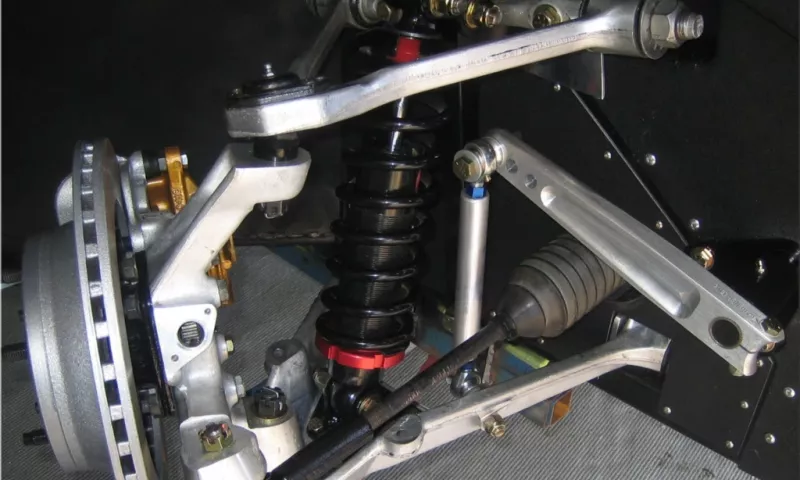
Specifically, the APP290 motor sends 290 Nm to the front axle almost instantly. That creates a challenge. Instant EV torque can overwhelm the inside front tire during corner exit, so Volkswagen adds an electronically controlled front differential lock as standard equipment.
That hardware matters more than raw power. A basic open differential wastes torque when one tire unloads. The electronically controlled locking unit manages torque delivery across the front axle, helping the car pull itself out of tighter bends with less wheelspin and cleaner steering response.
Pro-Tip: Why The Differential Matters More Than Another 50 HP
For buyers comparing electric hot hatches, do not judge the car by horsepower alone. In a compact front-drive EV, the tire contact patch sets the real limit. A well-calibrated front differential, adaptive damping, and predictable torque mapping can deliver faster, cleaner road pace than a more powerful car with clumsy front-end traction.
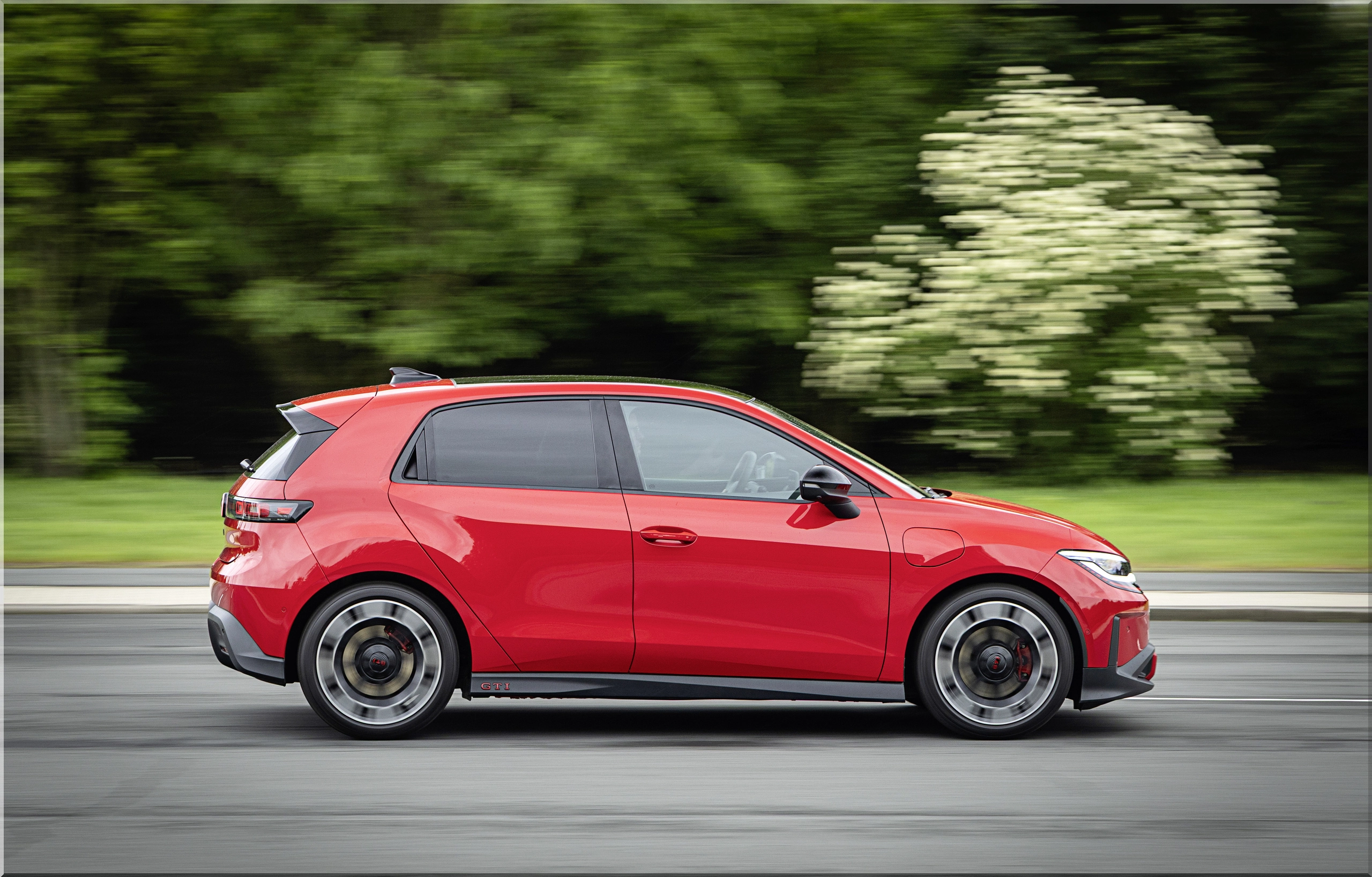
Battery, Charging, and Range: The 52 kWh Pack Fits the GTI Mission
The Volkswagen ID. Polo GTI battery uses a 52 kWh net NMC pack with Volkswagen Group's unified cell in a cell-to-pack layout. That design reduces packaging waste, helps keep the car compact, and supports a useful WLTP range without pushing weight too high.
The claimed 424 km WLTP figure equals about 263 miles. In real European mixed driving, that should make the car comfortable for commuting, short trips, and weekend use, though sustained motorway speeds will cut into range. The consumption rating of 16.4-14.4 kWh/100 km also suggests Volkswagen tuned this car for efficiency as well as response.
Charging does not chase 200 kW bragging rights. The ID. Polo GTI peaks at 105 kW DC, but Volkswagen points to a stable charging curve and a 10-80 percent charge time of roughly 24 minutes. Consequently, the car could spend less time dropping from a brief peak rate and more time holding a useful rate through the middle of the session.
| Charging And Efficiency Metric | Value | Practical Meaning |
|---|---|---|
| Net battery capacity | 52 kWh | Sensible size for weight and range |
| WLTP range | 424 km / 263 miles | Strong for a small performance EV |
| Max DC rate | 105 kW | Not class-leading, but usable |
| 10-80 percent charge | About 24 minutes | Quick enough for regional travel |
| WLTP consumption | 16.4-14.4 kWh/100 km | Efficient for a sporty hatch |
| Vehicle-to-Load | Available | Can power e-bikes or external devices |
Dimensions and Practicality: A Small EV With More Space Than the Old Polo GTI
The ID. Polo GTI dimensions confirm its compact European footprint. It measures 4,096 mm long, 1,816 mm wide, and 1,513 mm tall, with a 2,599 mm wheelbase. In U.S. terms, that equals 161.3 inches long, 71.5 inches wide, 59.6 inches tall, and 102.3 inches between the axles.
That wheelbase tells the real story. MEB+ places compact drive hardware low and frees cabin space, so Volkswagen claims 19 mm more interior room than the previous combustion Polo GTI. Cargo volume rises from 351 liters to 441 liters, or from 12.4 cubic feet to 15.6 cubic feet.
Fold the rear seats and the load area reaches 1,240 liters, or 43.8 cubic feet. That beats the previous MQB Polo figure of 1,125 liters. In addition, the detachable ball coupling supports a 75 kg drawbar load, enough for a two-e-bike carrier, while braked trailer capacity reaches 1.2 tonnes on a 12 percent gradient.
Chassis Hardware: Adaptive DCC Comes Standard
Volkswagen gives the ID. Polo GTI adaptive DCC suspension as standard, not as a costly add-on. That choice suits the car's mission. A small EV carries battery mass low in the structure, but it still needs careful damping control to avoid the flat but heavy feel that can make compact electric cars dull.
The DCC system can tighten body control for quick directional changes, then soften impacts during daily driving. The new GTI driving profile, activated by a steering-wheel button, switches the drive system, chassis tuning, displays, and cabin graphics into the sportiest calibration.
Key driver hardware includes:
- Adaptive DCC chassis as standard
- Electronically controlled front differential lock
- Steering-wheel GTI driving profile button
- Recuperation paddles for driver-adjusted regen
- One-pedal driving for stronger accelerator-based deceleration
- Connected Travel Assist with traffic-light recognition as optional equipment
From an expert perspective, the regen paddles deserve attention. Many EVs bury regenerative braking levels in screen menus. Volkswagen gives the driver physical control, which suits a performance hatch where road, speed, and corner spacing change constantly.
Exterior Design: GTI Codes Without Fake Exhaust Theater
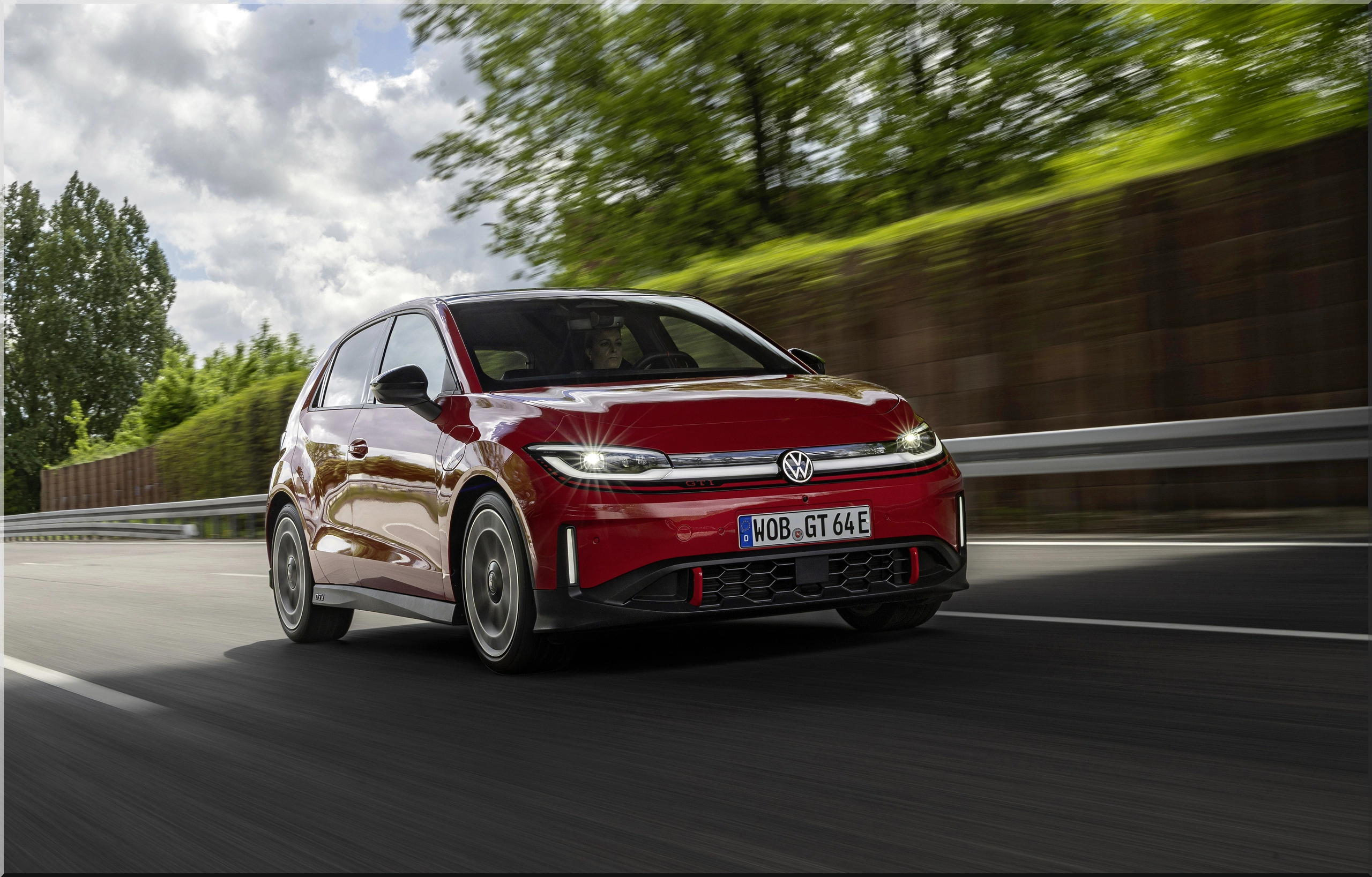
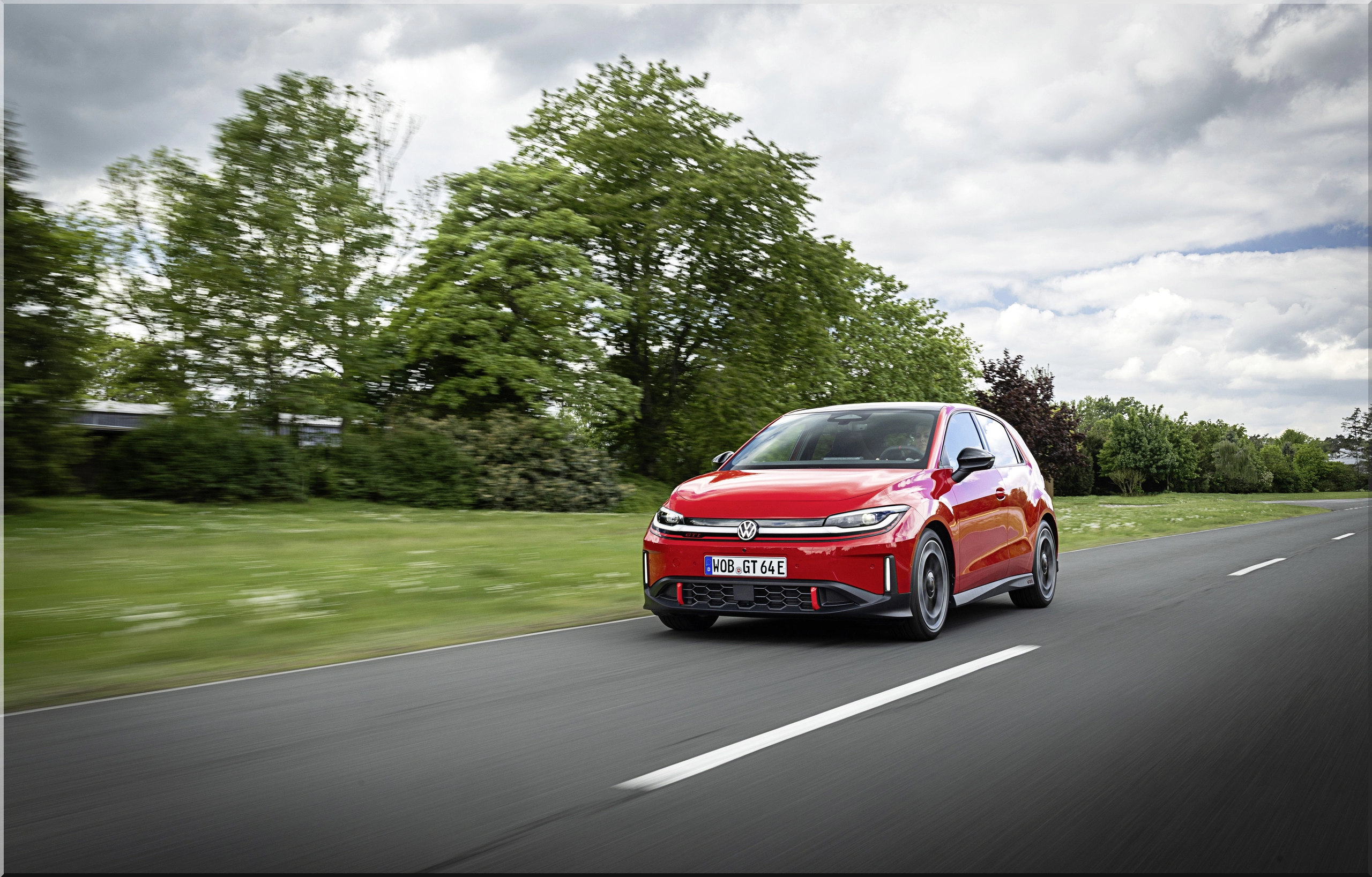
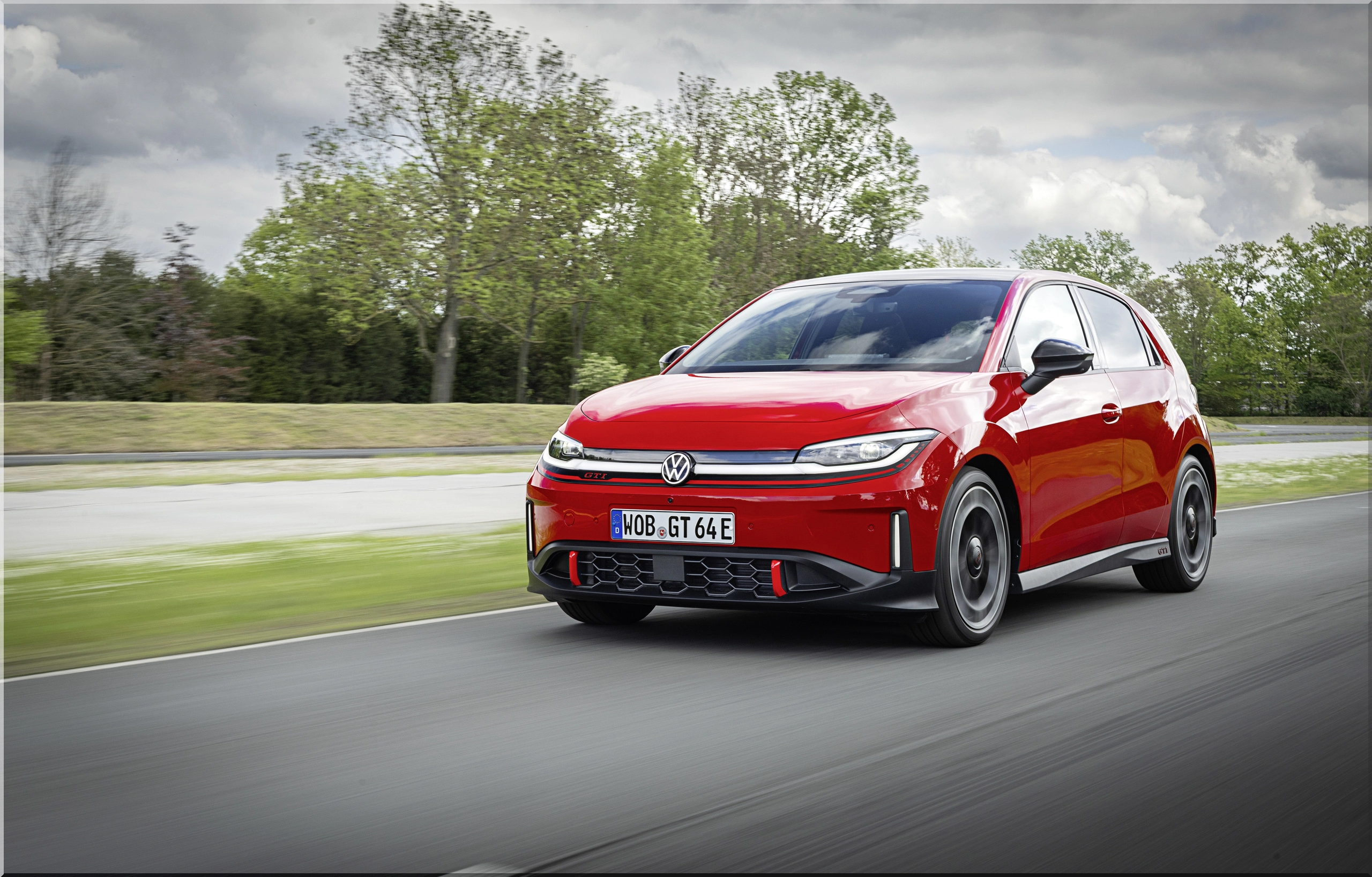
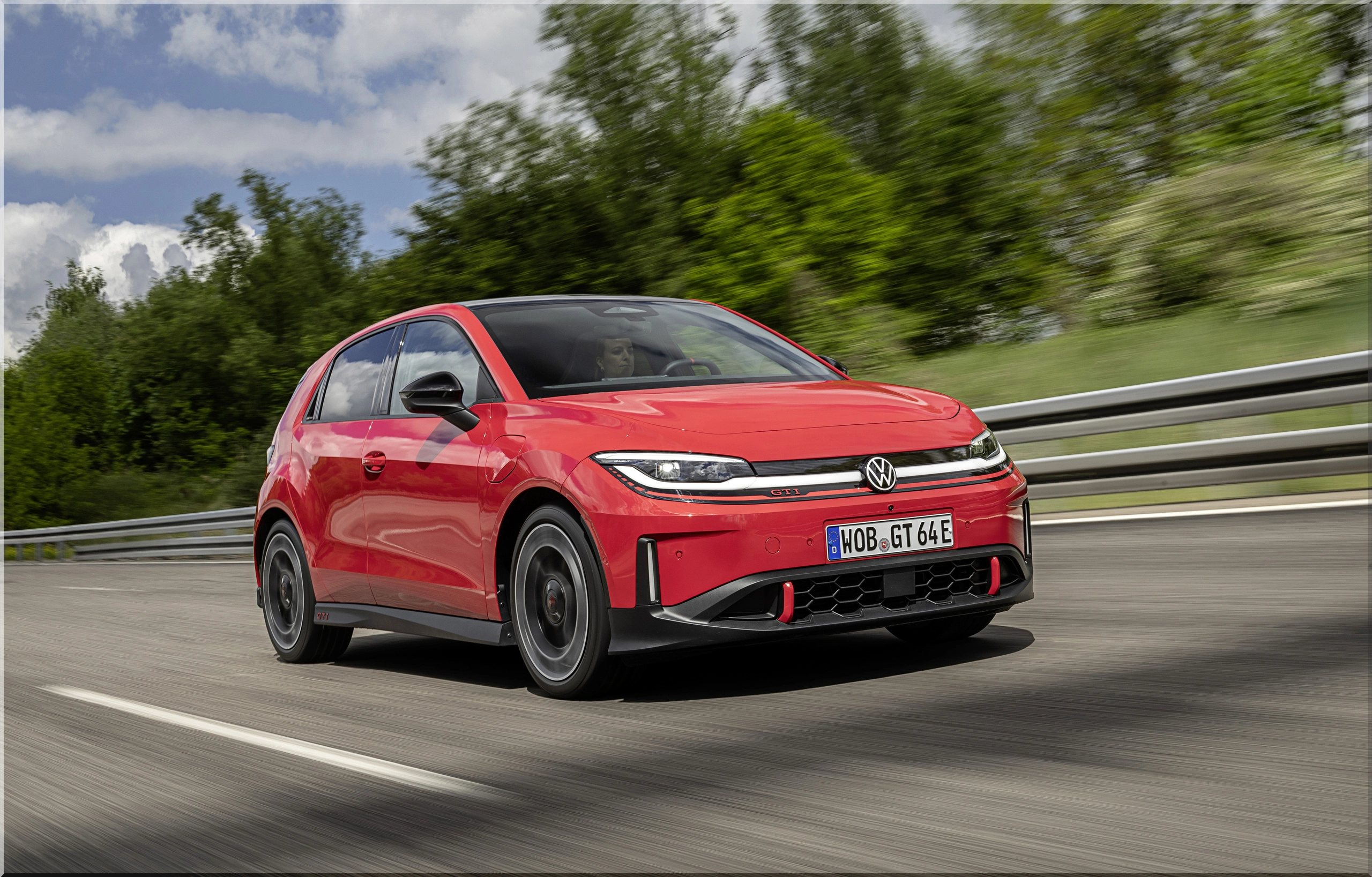
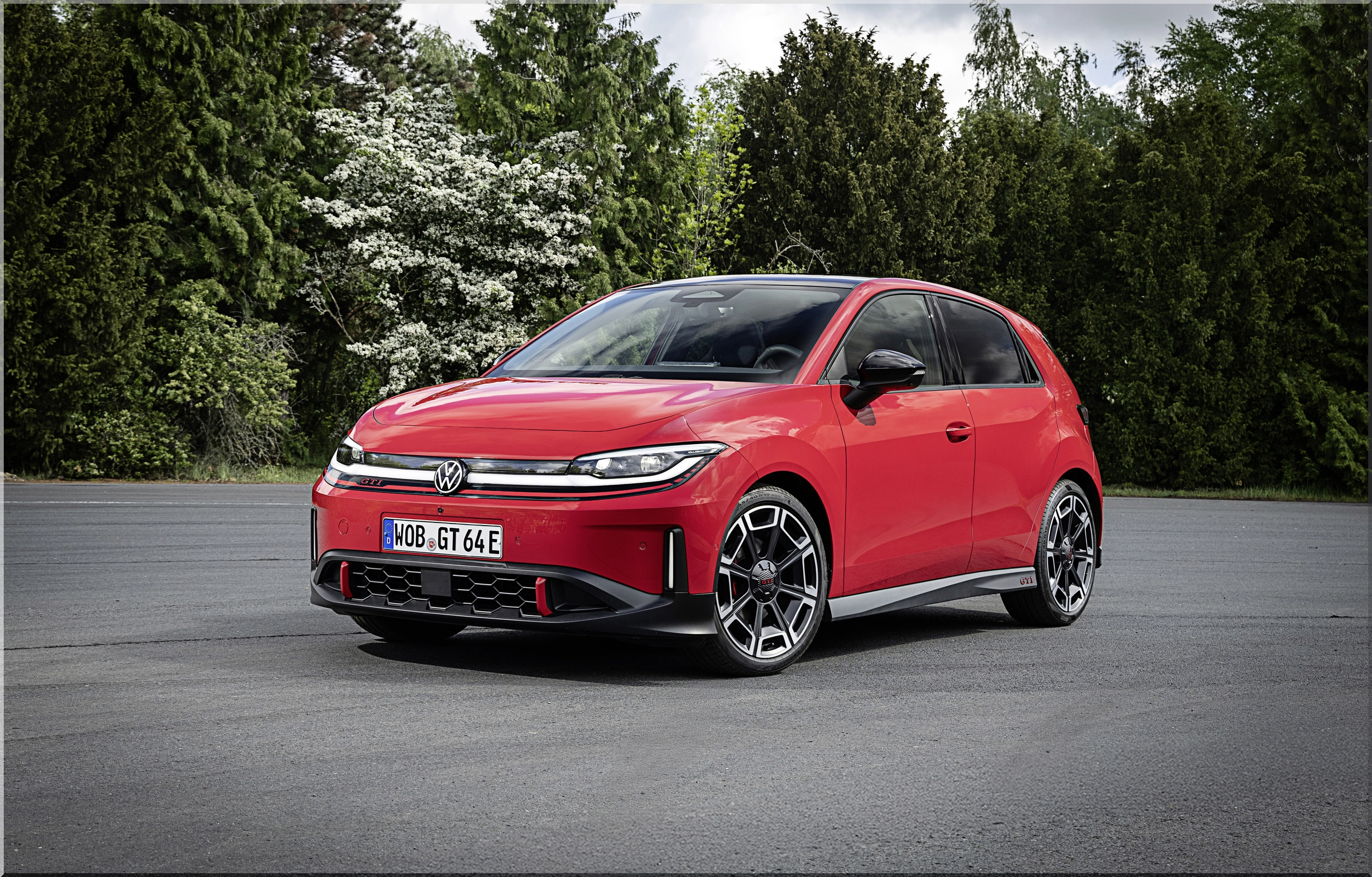
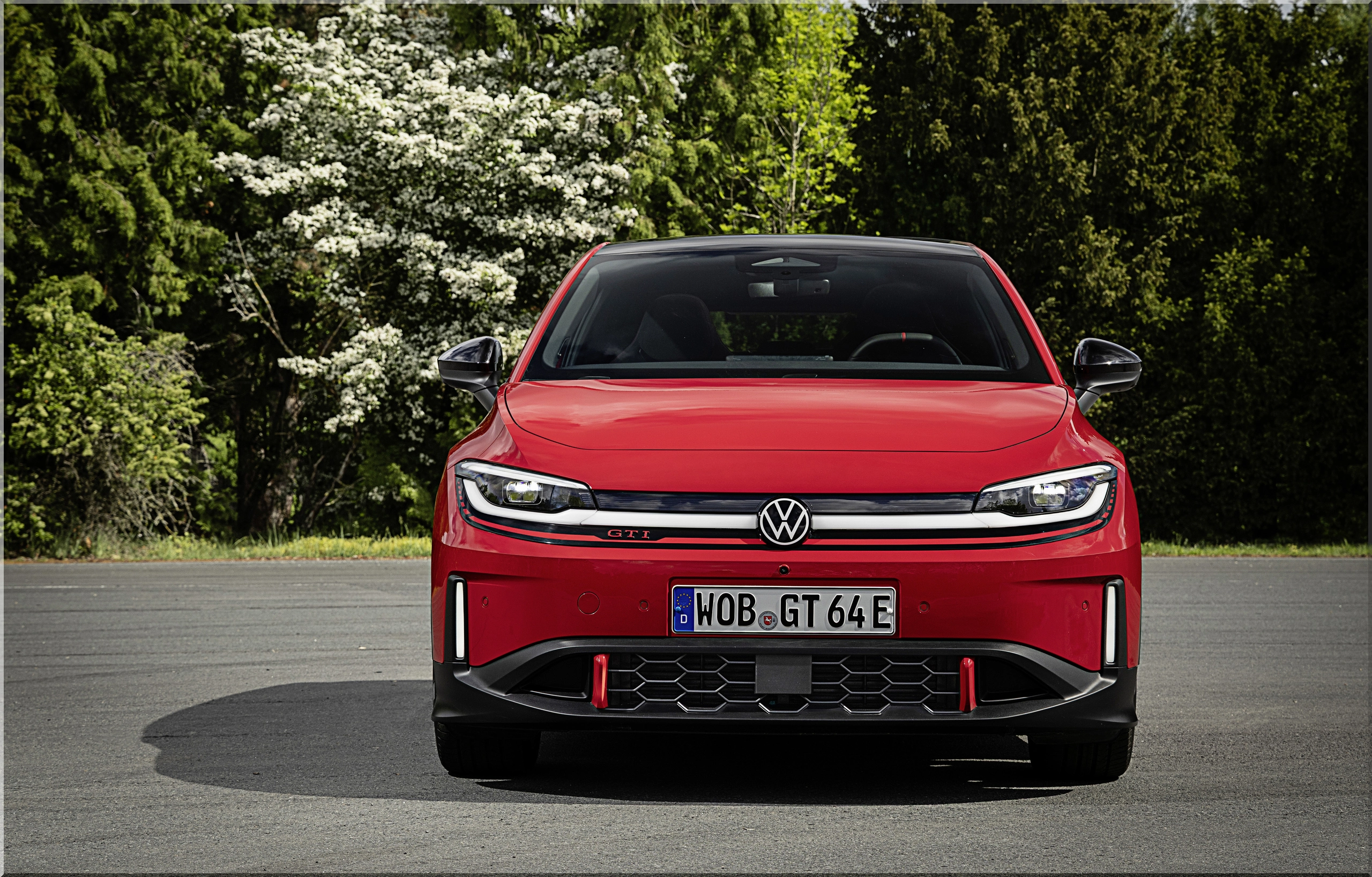
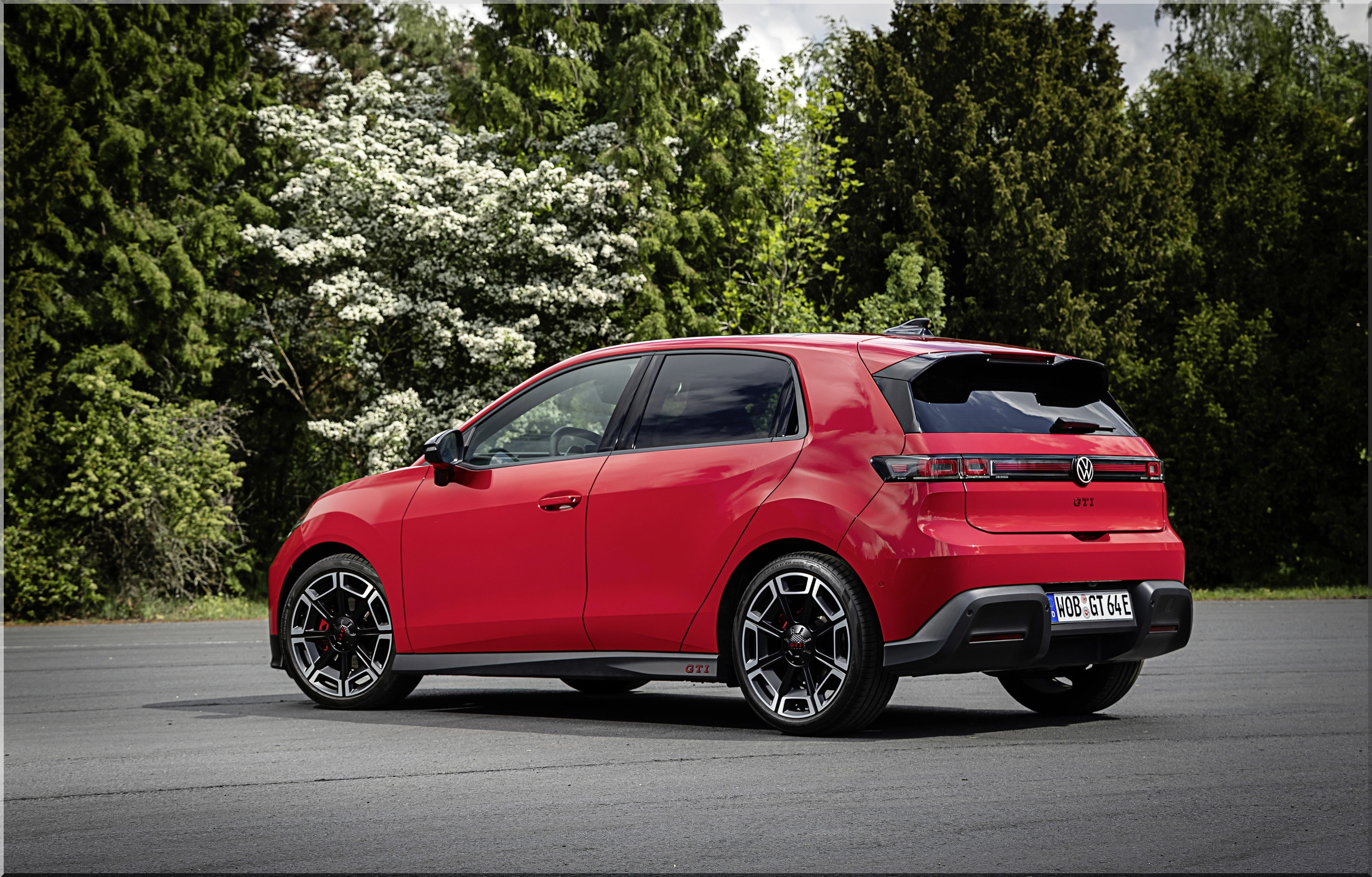
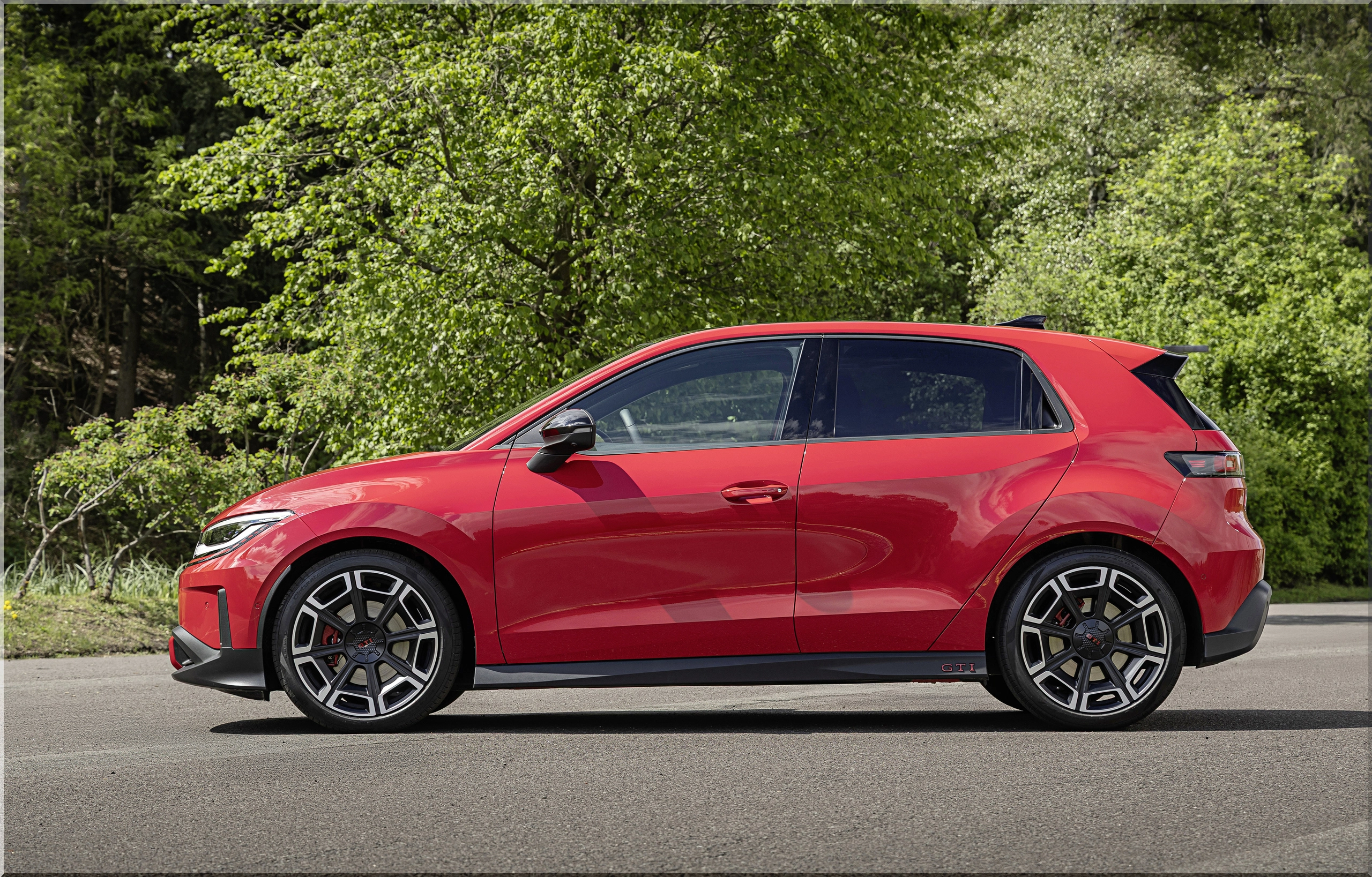
The electric GTI design keeps the classic red stripe, honeycomb lower intake, GTI logos, and strong wheel stance, but it avoids pretending that an EV needs tailpipes. Good. The front uses an LED light strip, illuminated VW badge, IQ.LIGHT LED matrix headlights, and a 3D GTI logo integrated into the red band.
The lower bumper adds vertical LED elements and red-painted pieces shaped like motorsport tow points. The standard 19-inch wheels use eight silver trapezoidal cutouts around a black inner area, giving the car a technical look without excess ornament.
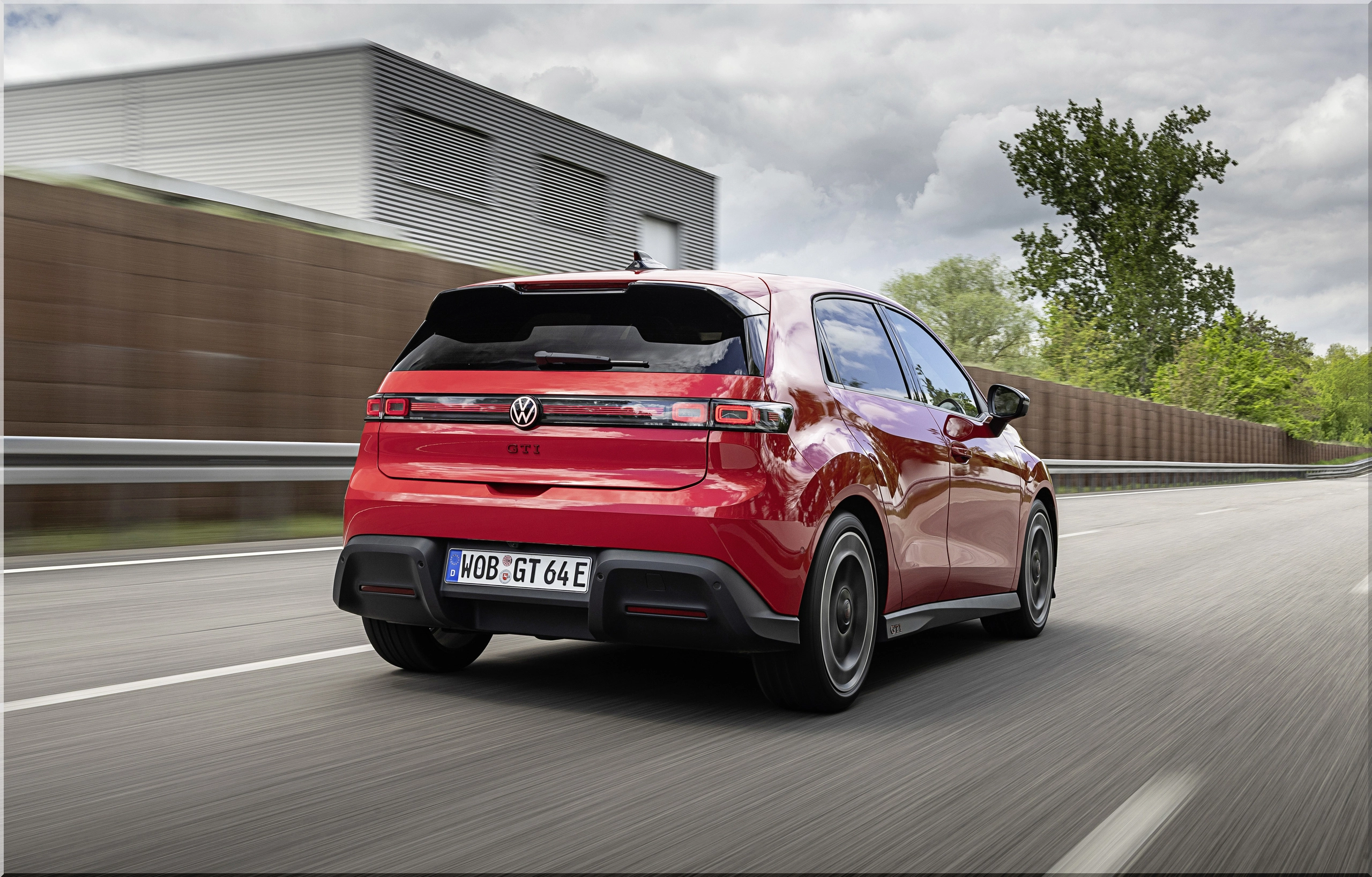
At the rear, Volkswagen fits a split roof spoiler, IQ.LIGHT tail lamps, a red-lit area around the VW badge, and a two-part black diffuser. By comparison, many compact EVs use soft, rounded shapes to signal efficiency. The ID. Polo GTI adds enough visual aggression to read as a performance car without bloating the body.
Interior: Retro GTI Cues Meet Modern EV Controls
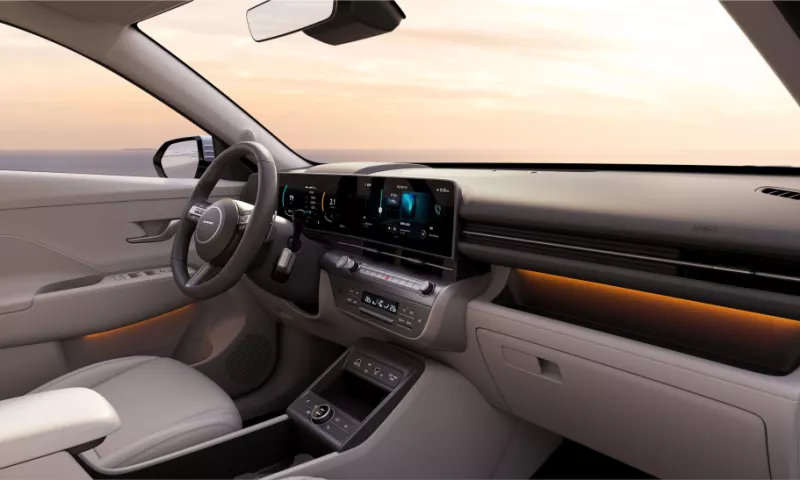
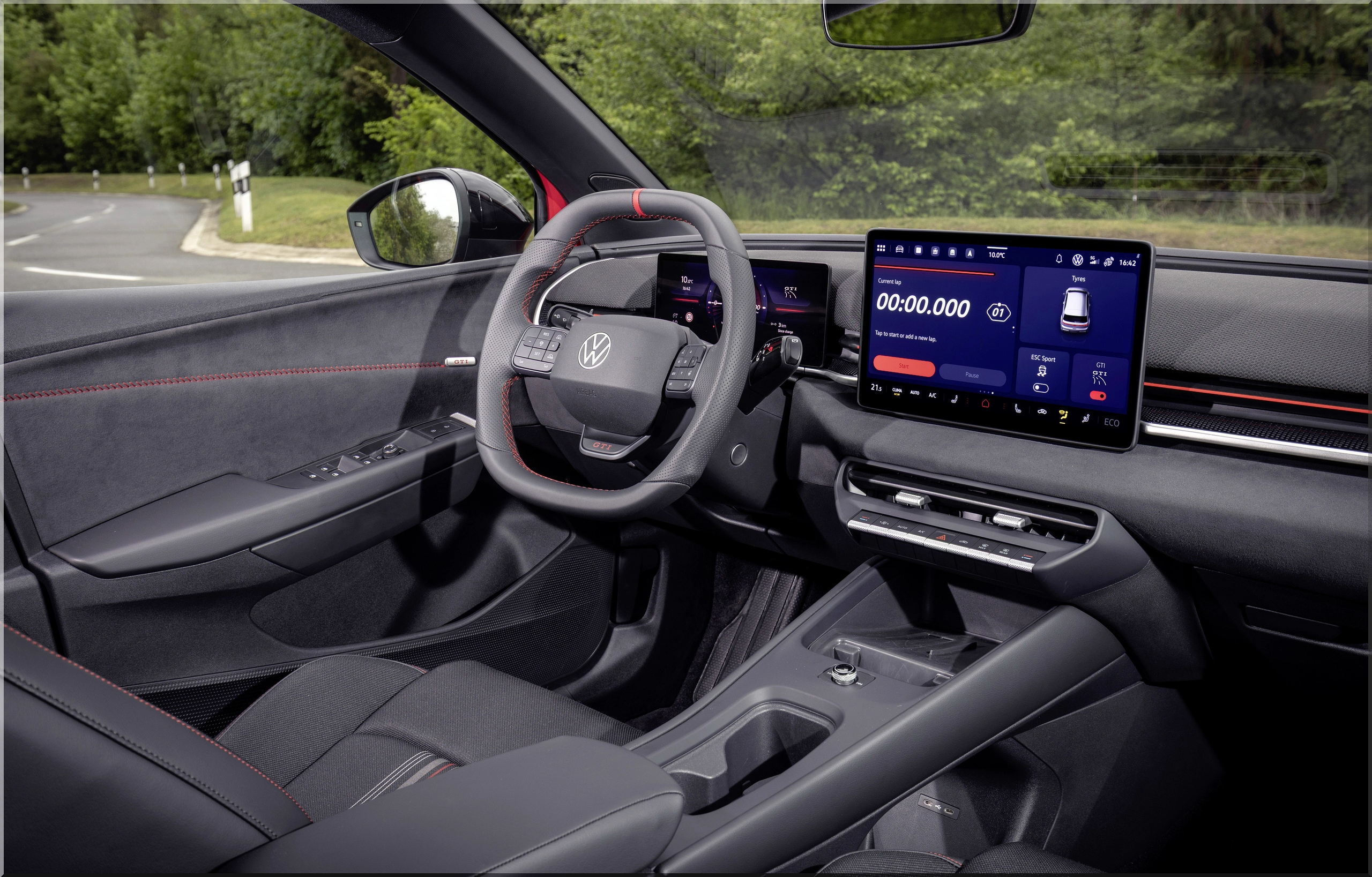
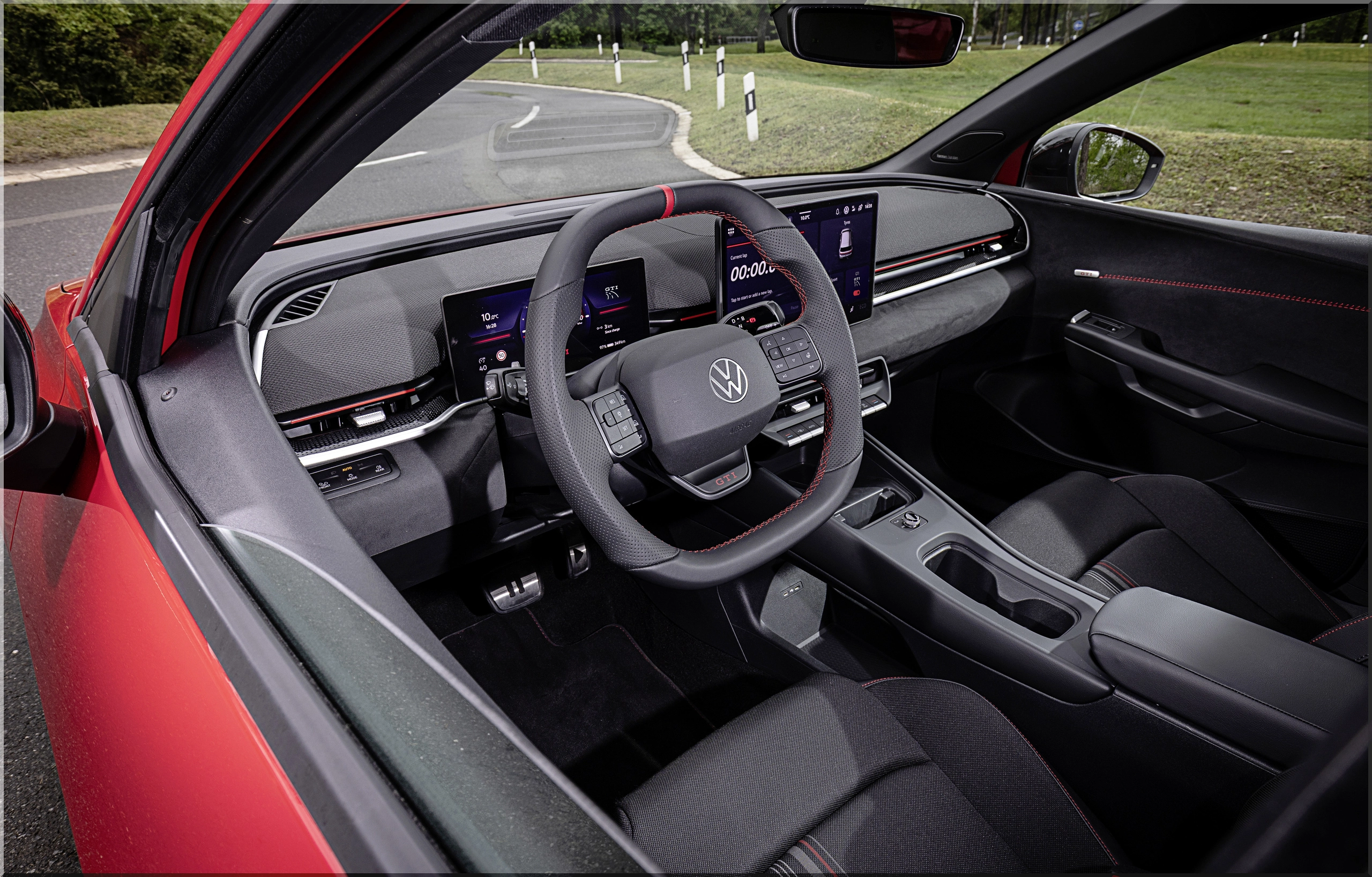
Inside, the ID. Polo GTI interior leans on red and black, sports seats, and tactile driver cues. The steering wheel gets red contrast stitching and a red 12 o'clock marker, while the dashboard carries a thin red strip across its full width.
Volkswagen uses ArtVelours Eco Soul microfleece on the upper seat surfaces and check-pattern fabric inserts that reference classic GTI tartan. The front sports seats also carry integrated GTI emblems in the head restraints, while the steering wheel adds an illuminated GTI mark.
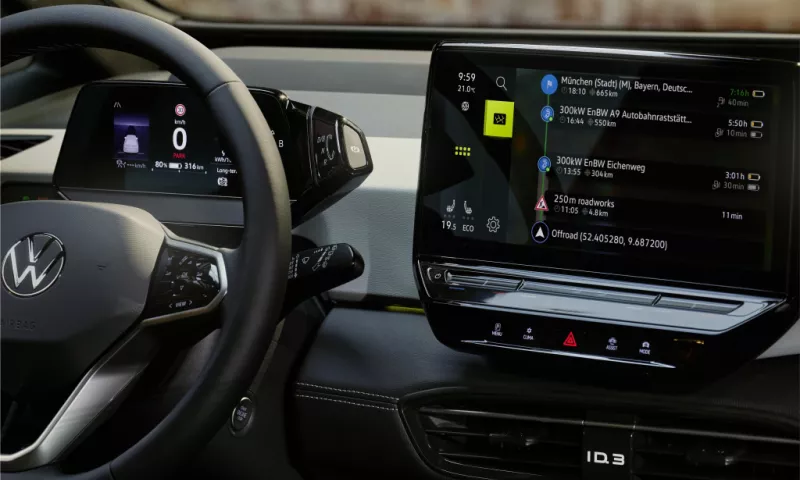
The digital layout includes a 10.25-inch Digital Cockpit and a 12.9-inch center touchscreen. The retro display mode converts the driver display into a late Golf I-style instrument layout, while the center screen can show music tracks as a cassette graphic. It sounds playful, but it also gives Volkswagen a brand-specific interface in a class full of generic tablet dashboards.
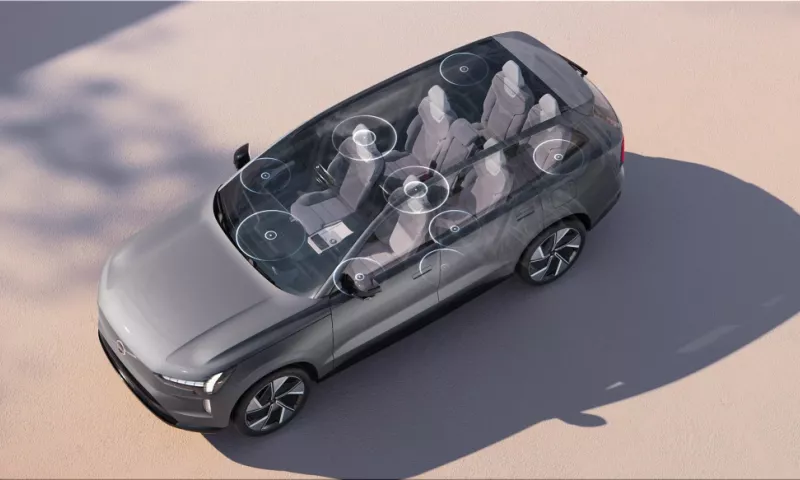
Optional equipment includes a 425-watt Harman Kardon sound system with 10 speakers, a center speaker, and a subwoofer. Volkswagen also offers a panoramic glass roof and a rare feature for this class: pneumatic massage in electrically adjustable 12-way front seats.
Market Comparison: ID. Polo GTI vs Alpine A290, Mini JCW Electric, and Abarth 500e
The Volkswagen ID. Polo GTI enters a narrow but growing class: small electric performance cars with front-drive layouts and urban-friendly dimensions. Its biggest win comes from range and practicality. Its biggest loss comes from outright acceleration against the Mini.
| Model | Power | Torque | 0-100 km/h | Range | Battery | Drive |
|---|---|---|---|---|---|---|
| Volkswagen ID. Polo GTI | 223 hp | 214 lb-ft | 6.8 sec | 263 miles WLTP | 52 kWh net | FWD |
| Alpine A290 GTS | 220 hp | 221 lb-ft | 6.4 sec | 226 miles WLTP | 52 kWh usable | FWD |
| Mini JCW Electric | 255 hp | 258 lb-ft | 5.9 sec | Up to 230 miles WLTP | 54.2 kWh gross | FWD |
| Abarth 500e | 155 hp | 173 lb-ft | 7.0 sec | About 164 miles WLTP | 42 kWh gross | FWD |
The Mini wins the acceleration column with 255 hp and a 5.9-second sprint. The Alpine counters with tighter French hot-hatch tuning and a strong 300 Nm torque figure. The Abarth plays the style card but trails badly on battery size, power, and range.
The ID. Polo GTI looks like the grown-up pick. It gives up a few tenths to the Alpine and nearly a second to the Mini, but it answers with a longer WLTP range, larger cargo space, standard performance chassis hardware, and a cabin that should suit daily use better than smaller lifestyle-first rivals.
What Should Buyers Watch Before Ordering?
Buyers should watch three things before pre-sales open: final pricing, real-world range tests, and tire specification. Tires will heavily shape the car's character because front-drive EV torque can expose weak rubber quickly.
A strong buying checklist should include:
- Check final wheel and tire size for your market.
- Compare standard equipment against options, mainly massage seats, sound system, and glass roof.
- Ask about battery warranty terms and charging curve behavior.
- Test the GTI drive profile against the normal mode on poor pavement.
- Confirm towing and bike-carrier hardware availability before ordering.
Verdict: The Electric GTI Finally Has the Right Hardware
The Volkswagen ID. Polo GTI works because it does not chase the wrong target. It does not try to beat a Tesla from a stoplight or mimic a combustion engine through fake drama. It applies GTI fundamentals to an EV platform: front-drive traction hardware, compact size, firm chassis logic, smart packaging, and a driver-focused cockpit.
Volkswagen also gives it numbers that fit the badge. A 223 hp output, 214 lb-ft of instant torque, 6.8-second acceleration, 263 miles of WLTP range, and 24-minute DC charging create a credible everyday performance EV. Add 441 liters of cargo room and standard adaptive DCC, and the ID. Polo GTI starts to look like one of the most complete small electric hot hatches yet.
For Europe, this car could become the electric GTI buyers have been waiting for. For America, it may become another forbidden Volkswagen that enthusiasts admire from across the Atlantic.
- Add new comment
- 68 views