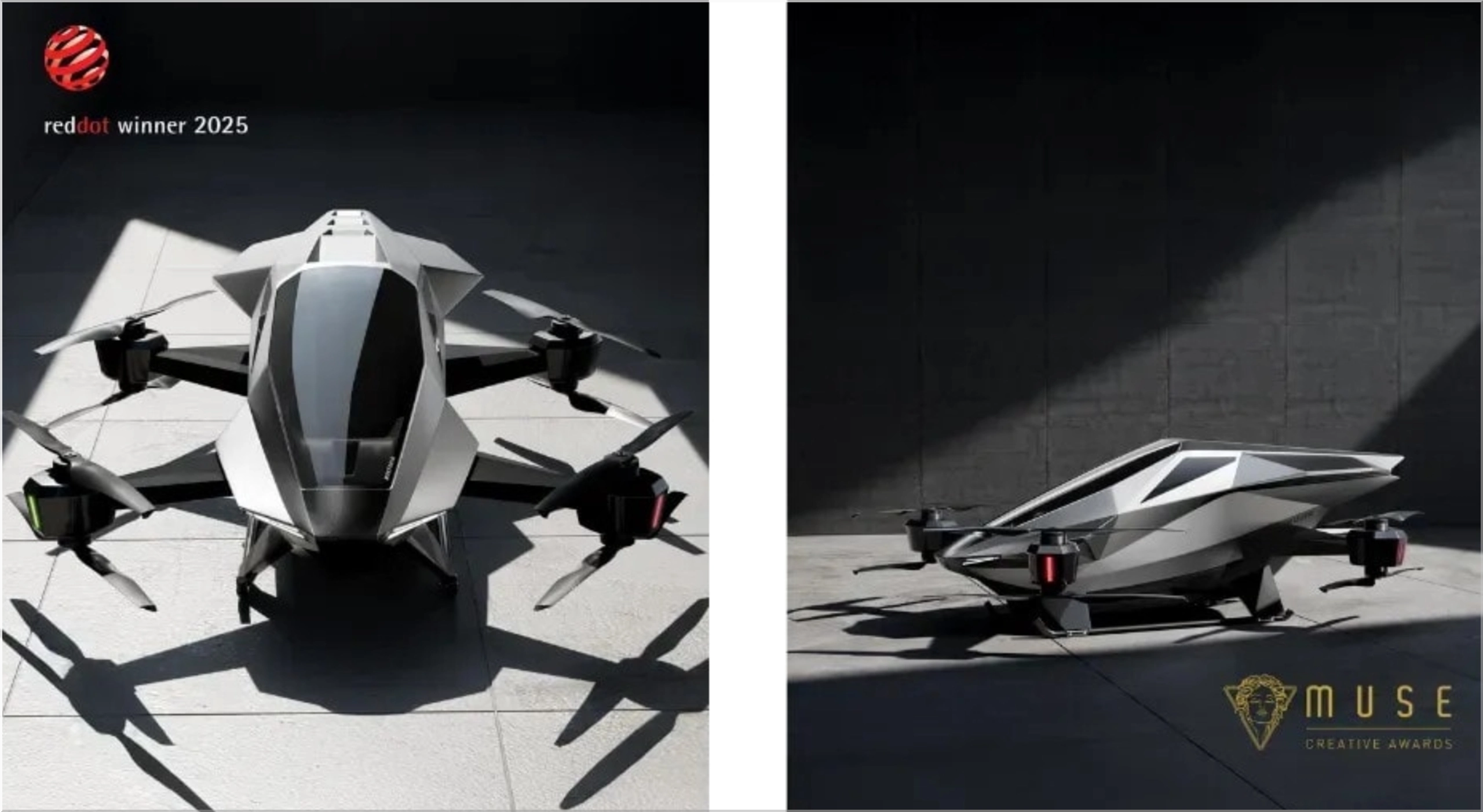
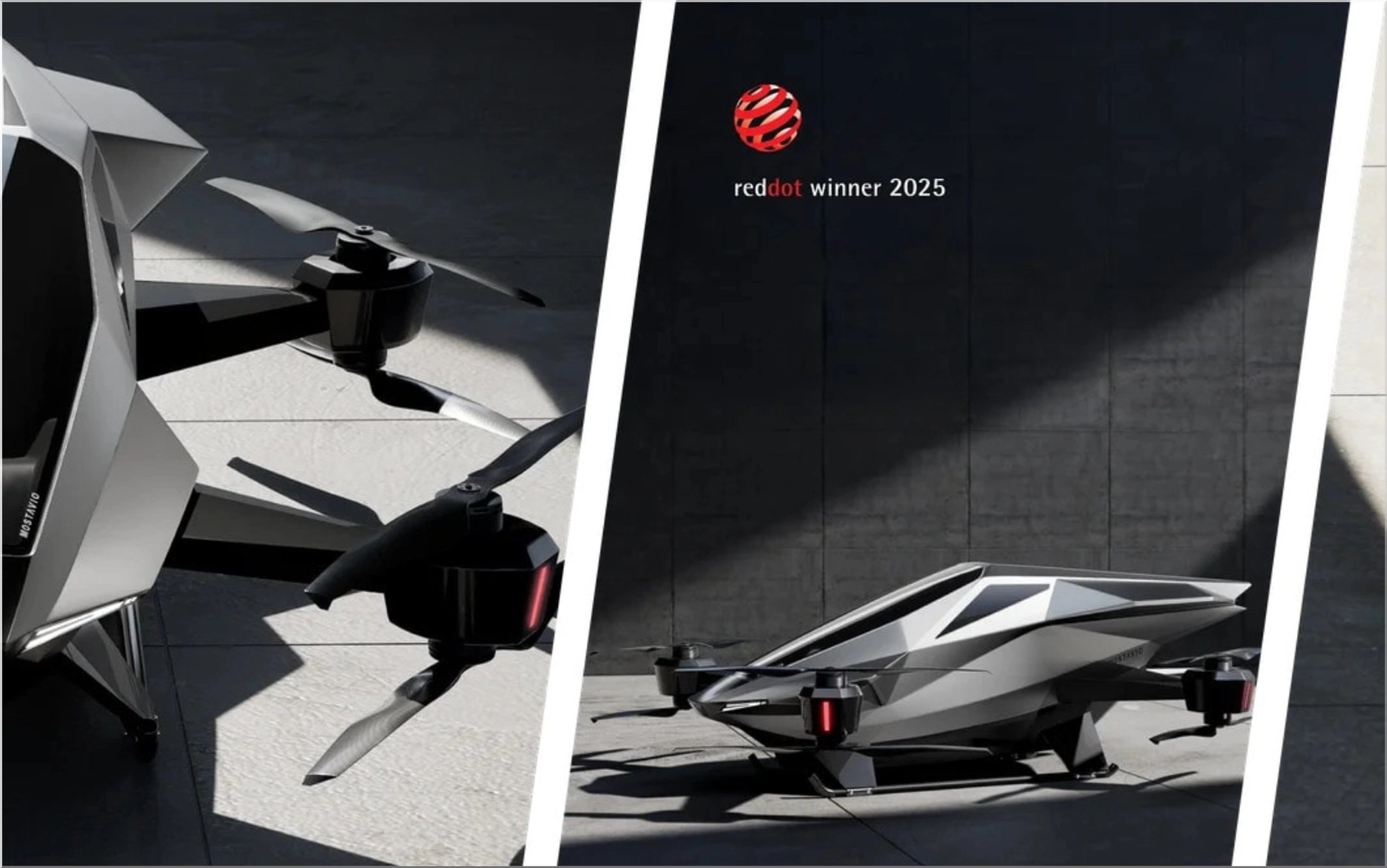
Personal electric flight keeps drawing bold concepts and louder promises. Few designs push into credible territory. MOSTAVIO MX1 eVTOL does, at least on paper. The Toronto-based startup targets private owners, not fleets, with a single-seat electric vertical takeoff and landing aircraft shaped by aerospace math and sports-car logic.
What the MOSTAVIO MX1 Aims to Solve
Urban air mobility focuses on air taxis and dense city routes. MX1 moves in the opposite direction. It targets individuals who value speed, autonomy, and short-range hops without airports.
That positioning matters.
Private eVTOL buyers want three things:
- Predictable flight range
- Straightforward flight controls
- Visual confidence that matches price expectations
MX1 speaks directly to that buyer profile.
MOSTAVIO MX1 Core Specifications
MOSTAVIO has released limited technical data. Still, enough exists to outline intent.
Key MX1 Performance Targets
- Configuration: Single-seat personal eVTOL
- Propulsion: Multi-motor electric drivetrain
- Flight Time: ~40 minutes
- Range: ~33.5 miles
- Payload Capacity: Up to 353 lbs
- Structure: Carbon fiber with Kevlar reinforcement
- Control System: AI-assisted navigation and autopilot
These figures place MX1 above hobby-grade ultralights and below commercial eVTOLs. That middle ground defines its value.
Why These Numbers Matter
A 40-minute flight window supports real point-to-point travel. Many personal aircraft stall under 20 minutes. MX1 clears that bar.
A 33.5-mile range fits suburban-to-urban hops or coastal routes. It does not chase intercity travel. That restraint keeps battery mass reasonable.
Payload supports the pilot plus equipment. That matters for emergency use cases and recreational utility.
Design Strategy: Why MX1 Looks the Way It Does
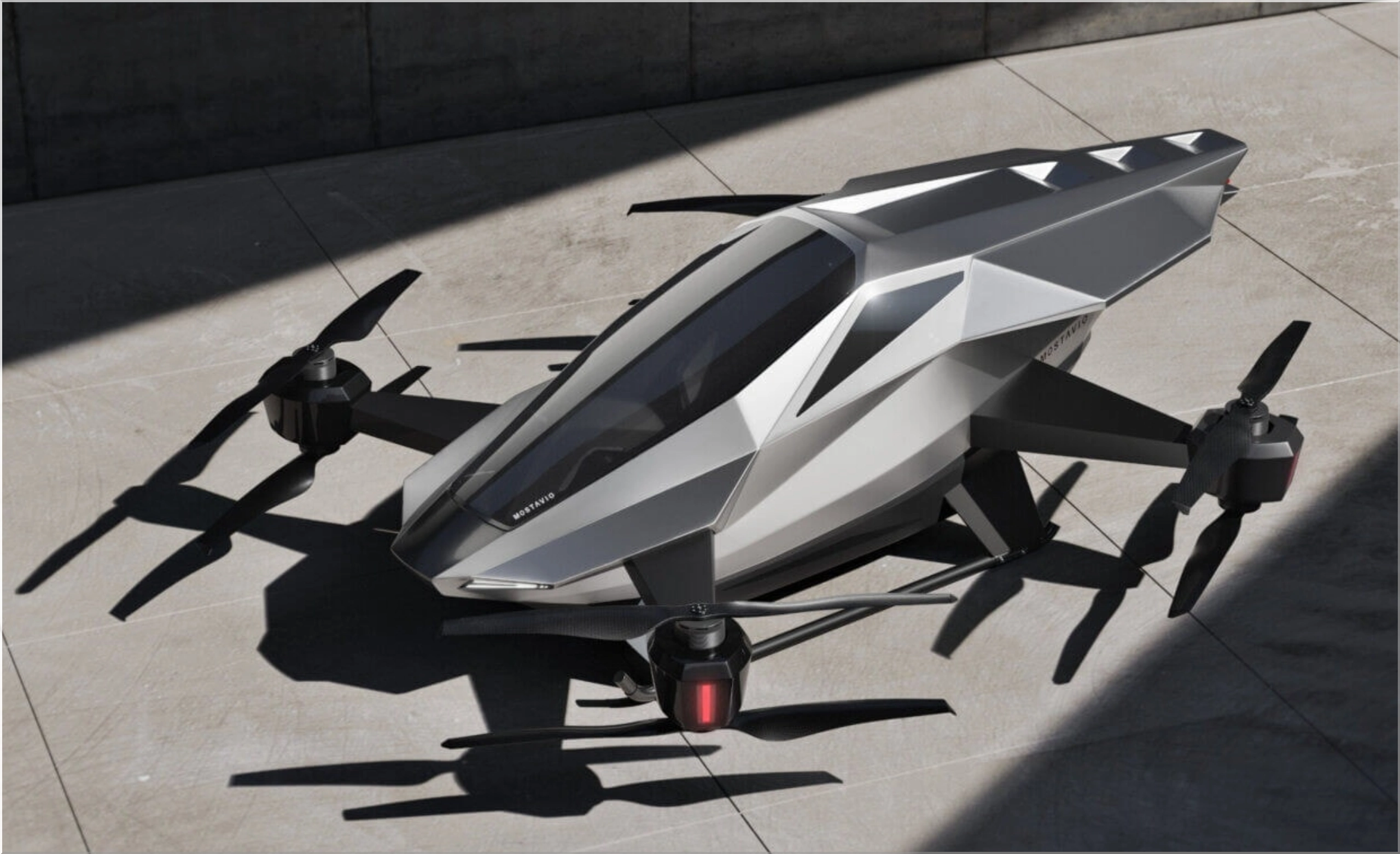
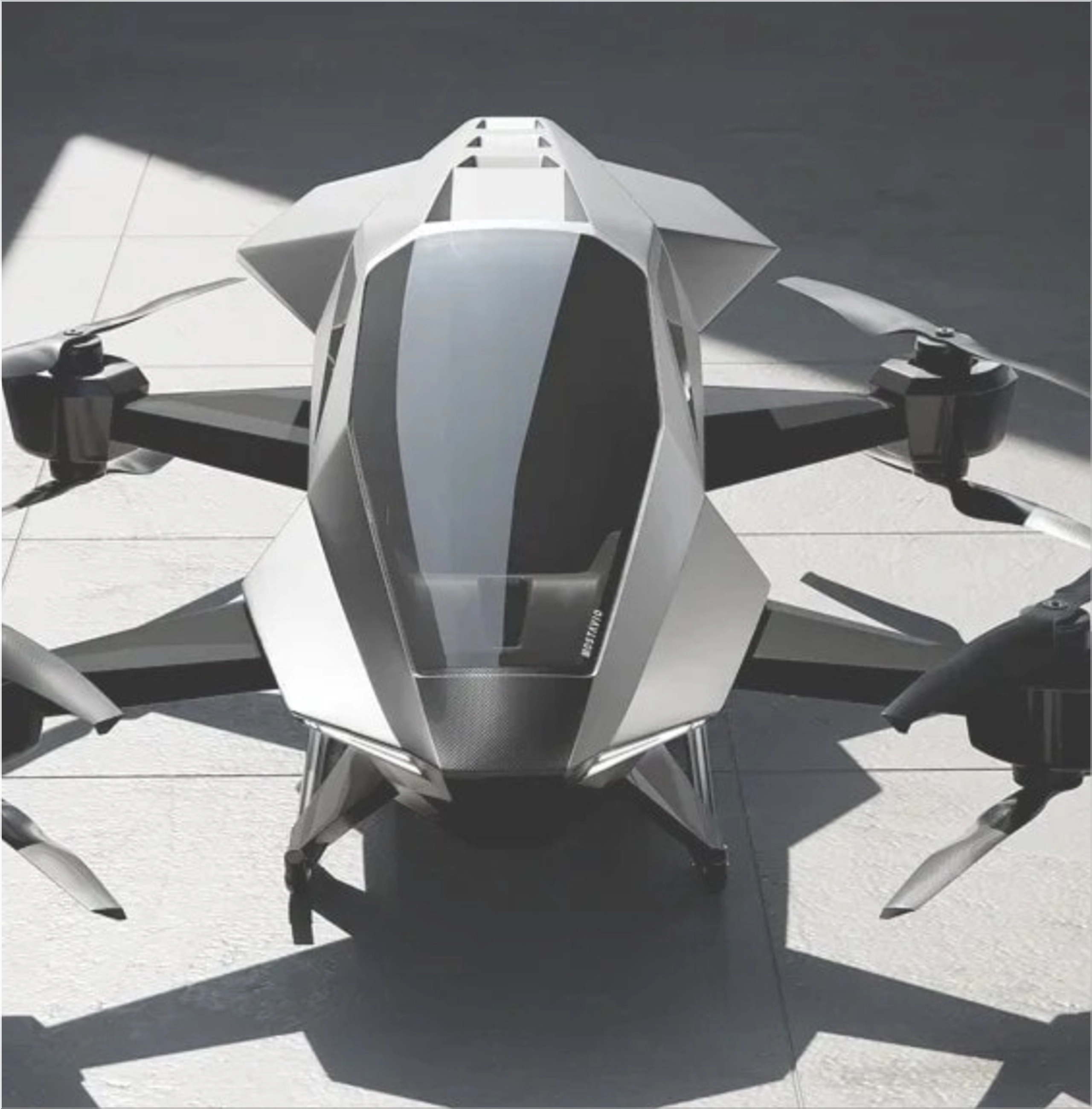
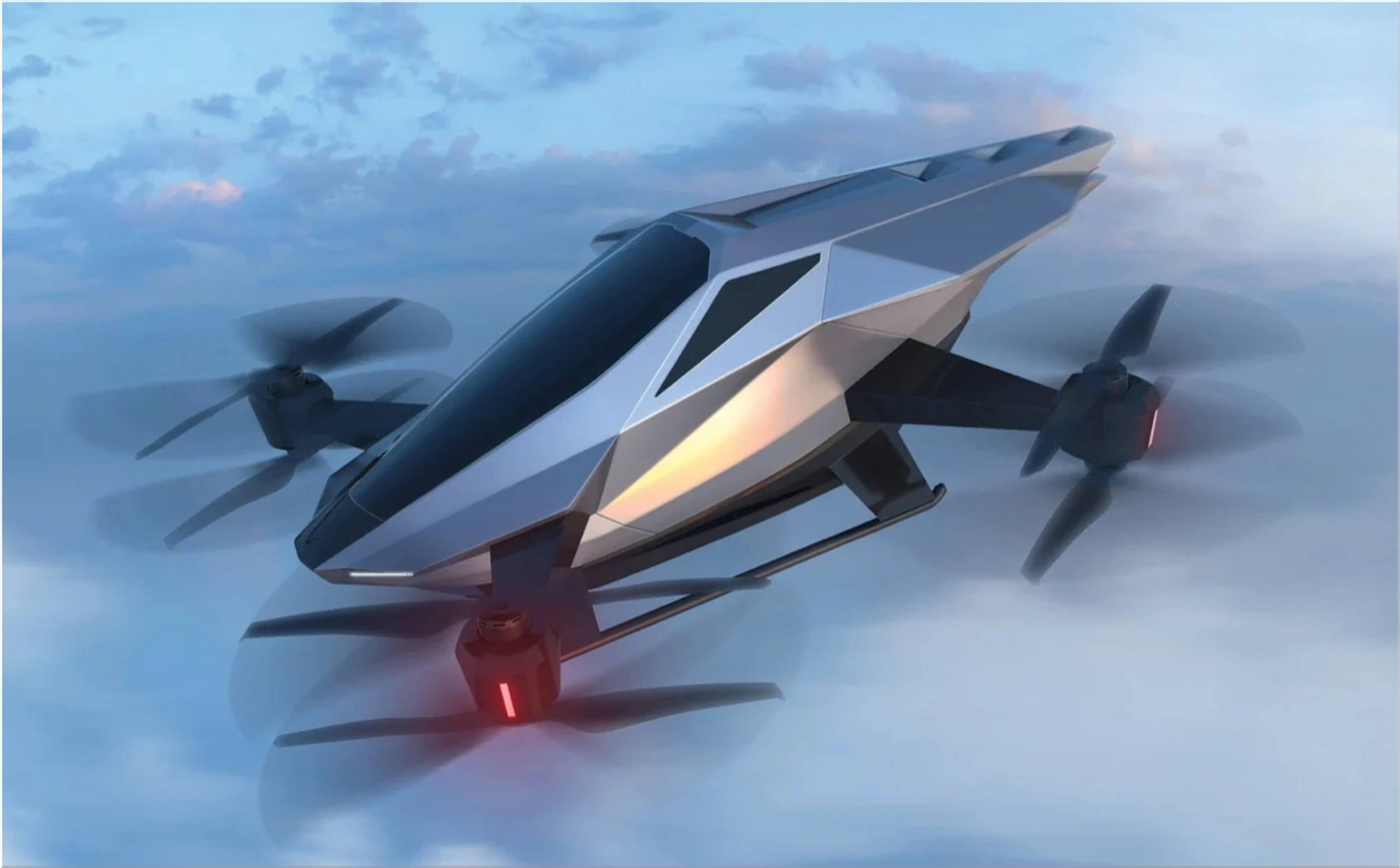
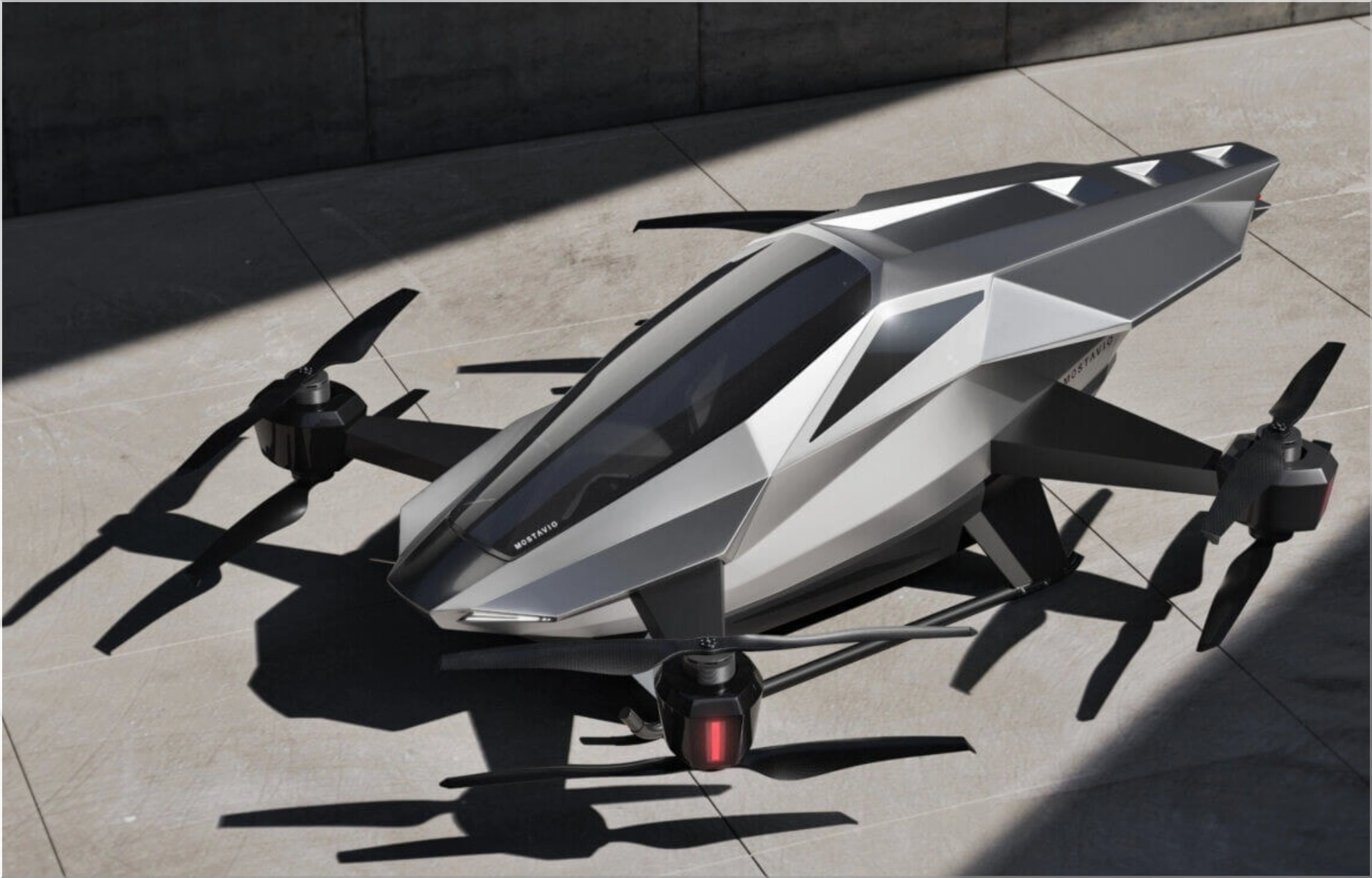
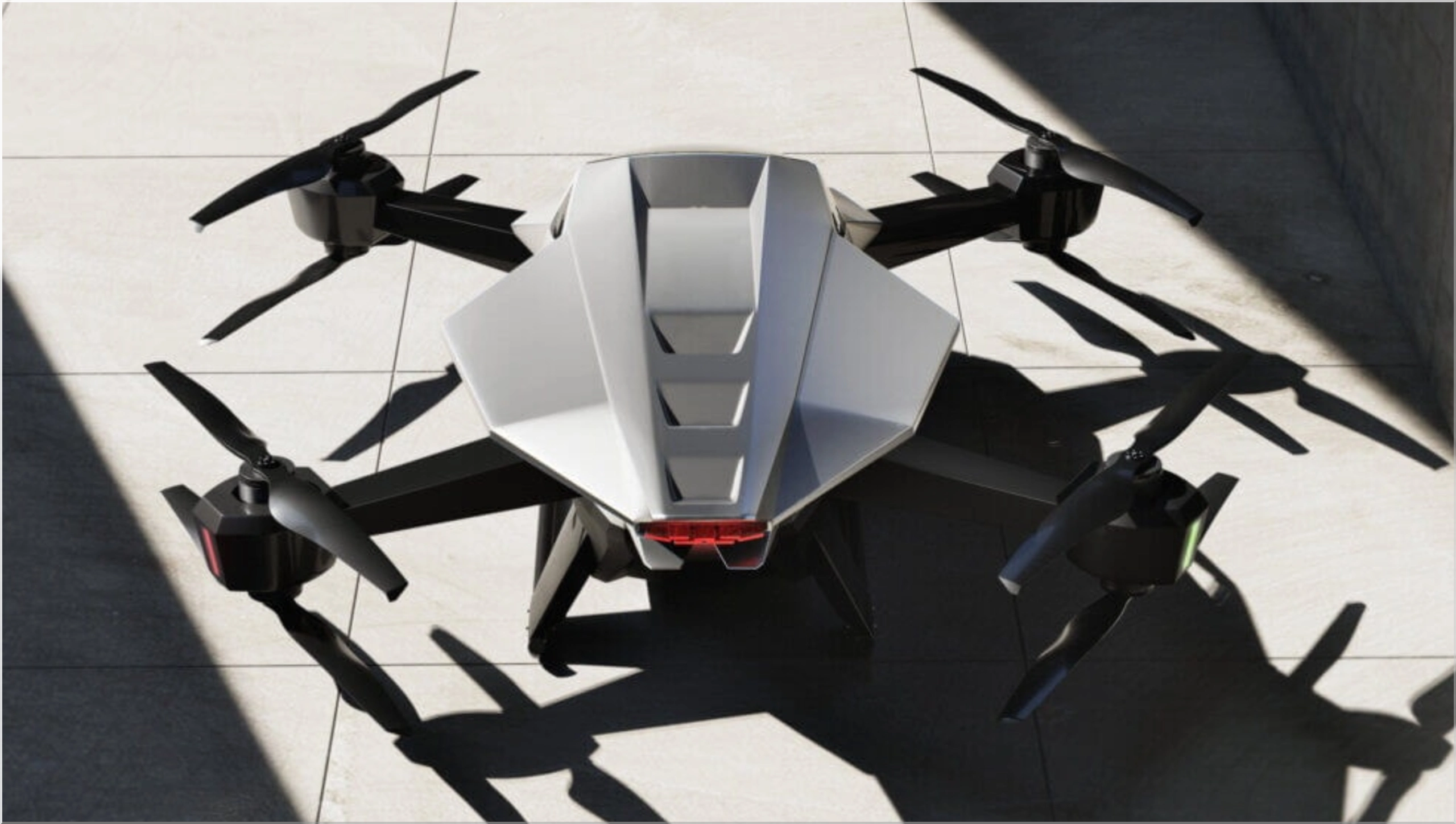
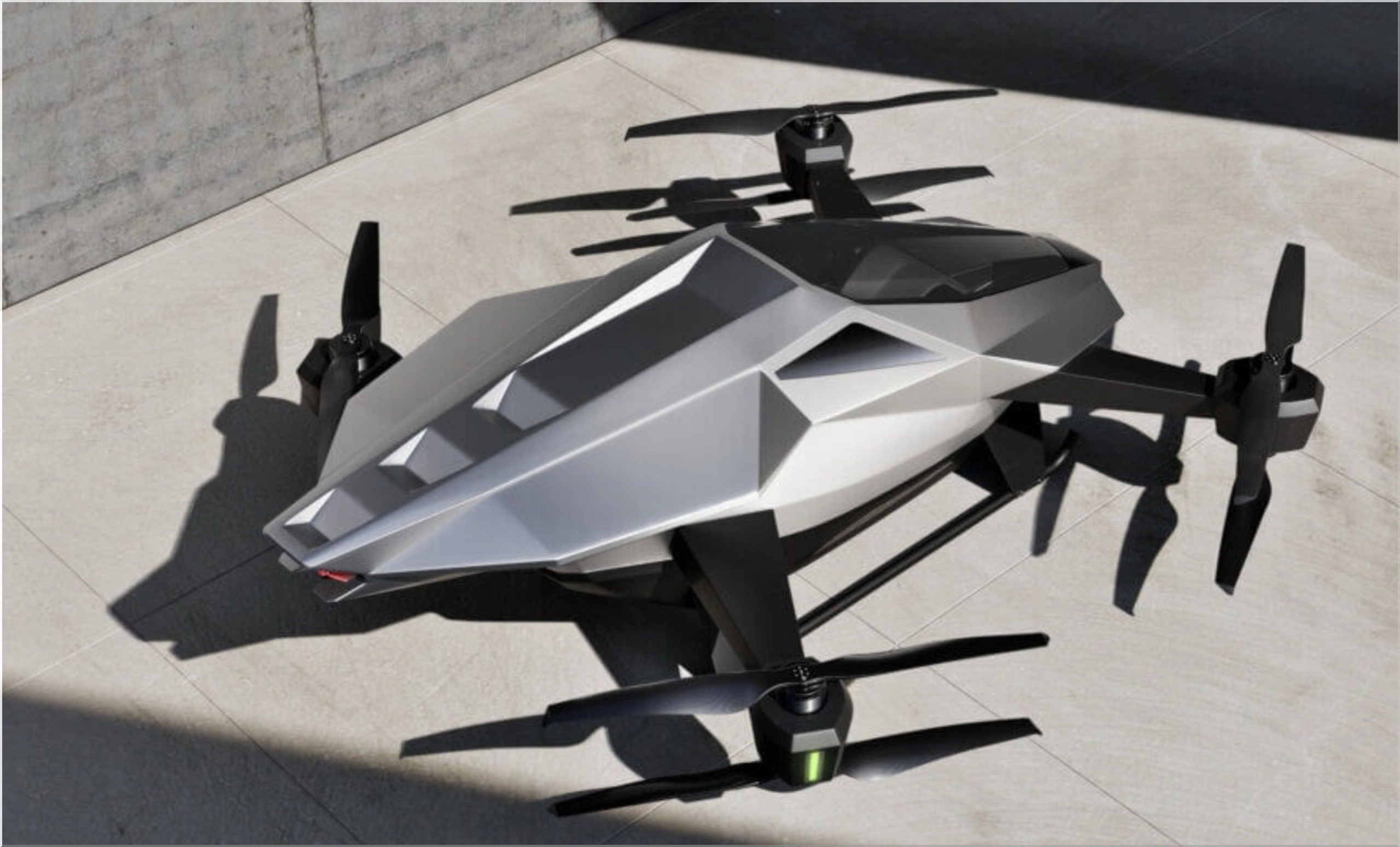
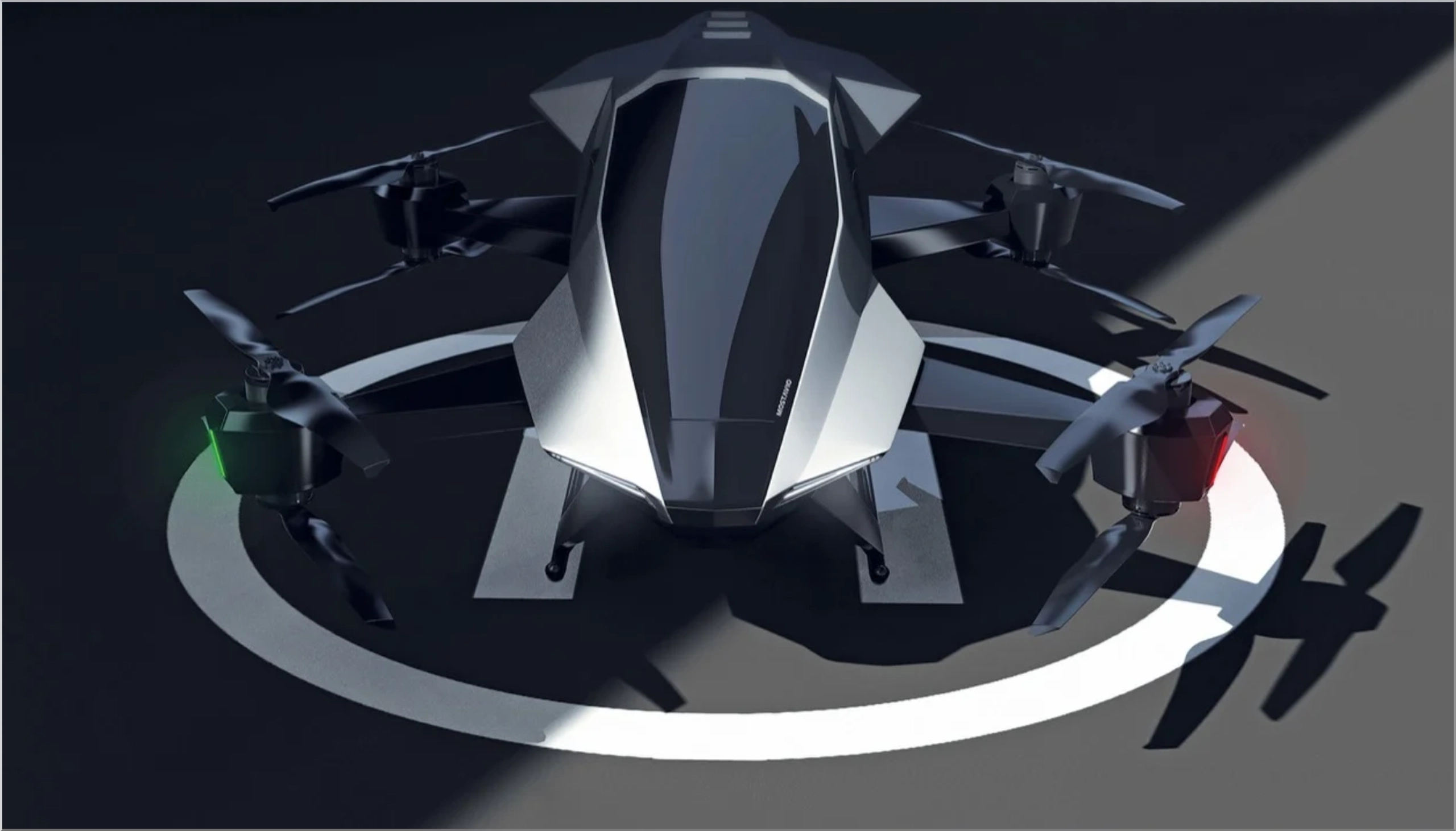
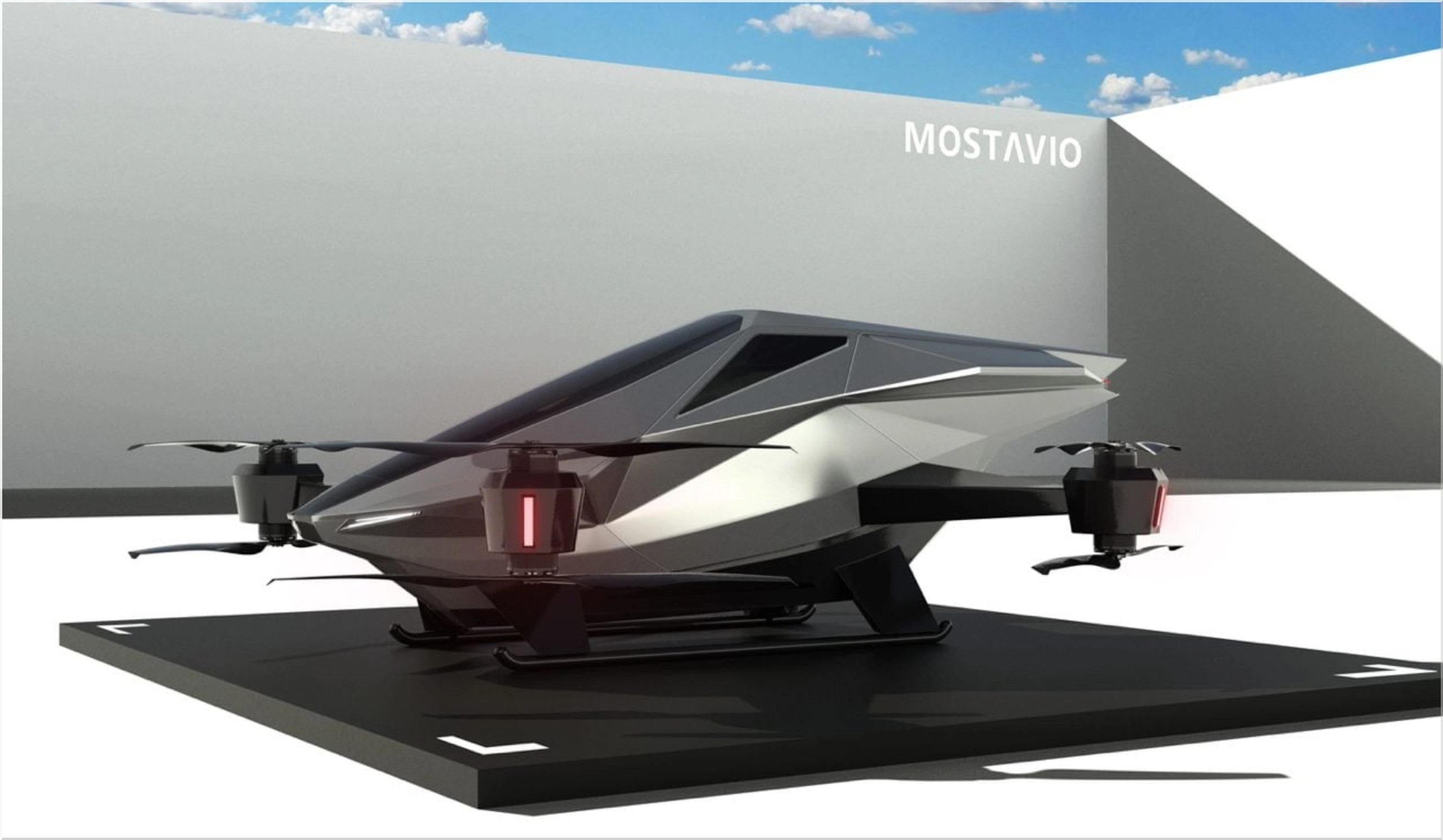
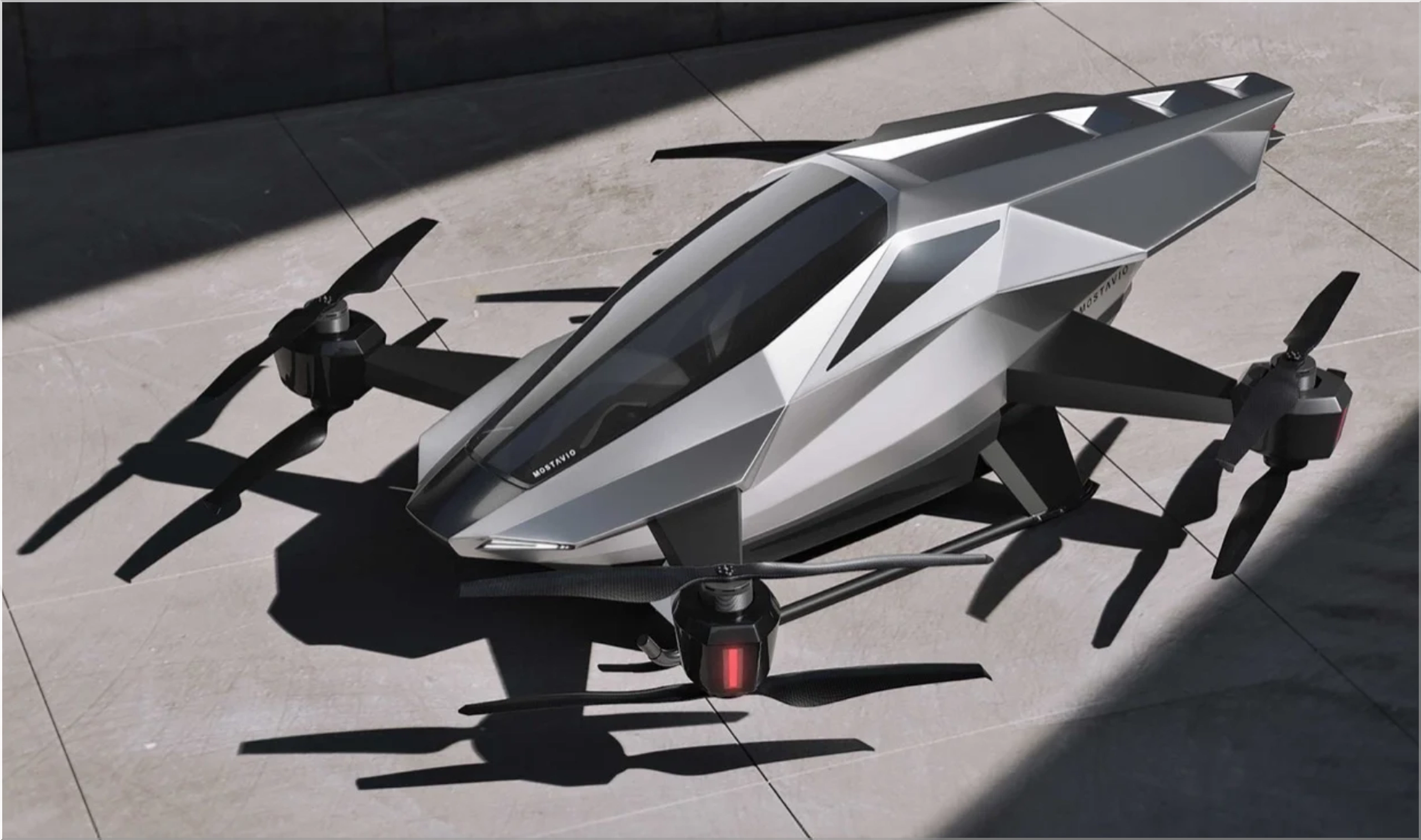
MX1 does not chase softness. Its angular body serves airflow control and weight efficiency.
Design choices reflect priorities:
- Reduced drag at cruise
- Structural rigidity for vertical lift
- Clear pilot sightlines
Cockpit and Access
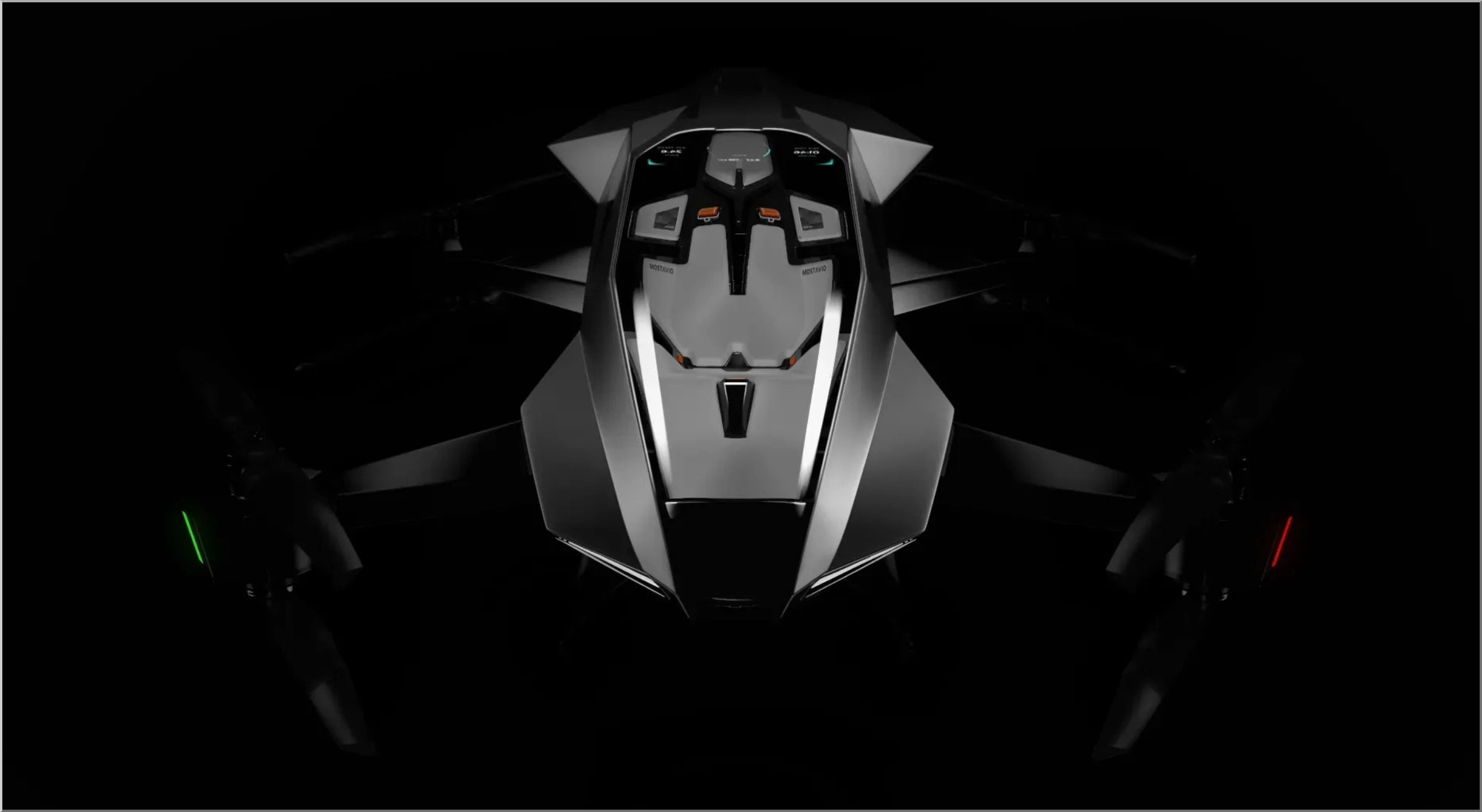
The canopy opens rearward as a single unit. That reduces hinge complexity and improves structural continuity.
Inside, seating places the pilot in a reclined posture. This posture lowers fatigue during hover and cruise. It also aligns with aircraft center-of-gravity targets.
A panoramic forward window dominates the cockpit. Visibility supports both situational awareness and confidence for new pilots.
Materials and Structural Decisions
MOSTAVIO uses carbon fiber exterior panels paired with Kevlar-reinforced interior sections. This mix balances stiffness, impact tolerance, and weight.
Carbon fiber handles load paths and aerodynamics. Kevlar supports energy absorption near the pilot cell.
This approach mirrors aerospace standards rather than automotive shortcuts.
AI Navigation and Flight Stability
MX1 integrates AI-supported flight architecture. The system manages:
- Hover stabilization
- Motor redundancy logic
- Assisted navigation paths
This matters for personal eVTOL adoption. Manual control scares regulators and buyers alike. Assisted flight narrows the skill gap.
MOSTAVIO also claims VR-based control support. That points toward simplified pilot interaction rather than complex avionics panels.
Redundancy and Safety Approach
MX1 runs multiple motors and battery modules. If one unit fails, others compensate.
That redundancy supports:
- Controlled descent
- Stable hover recovery
- Reduced single-point failure risk
No personal eVTOL reaches airline-grade redundancy. MX1 still pushes further than many concept-stage rivals.
MOSTAVIO MX1 vs Other Personal eVTOL Concepts
The personal eVTOL space remains crowded with renders and thin specs. MX1 separates itself through clarity.
Competitive Positioning Snapshot
| Feature | MOSTAVIO MX1 | Typical Concept eVTOL |
|---|---|---|
| Seat Count | 1 | 1-2 |
| Range | ~33.5 miles | 15-25 miles |
| Flight Time | ~40 minutes | 20-30 minutes |
| Material Strategy | Carbon fiber + Kevlar | Composite shells |
| Control System | AI-assisted | Manual or vague |
MOSTAVIO MX1 does not dominate every metric. It delivers balance.
Market Fit: Who Buys the MX1
This aircraft does not chase mass adoption. It targets early private adopters with aviation interest and disposable income.
Likely buyers include:
- Private pilots seeking electric options
- Emergency response operators
- Rural property owners
- Tech-forward recreational users
Pricing Expectations
MOSTAVIO has not confirmed pricing. Comparable personal eVTOL concepts land between $150,000 and $300,000 USD.
Given MX1 materials and systems, pricing likely trends toward the upper half of that range.
Certification and Regulatory Reality
Certification remains the hardest barrier. MX1 still sits in concept territory.
Key hurdles include:
- Airworthiness certification
- Noise compliance
- Pilot licensing standards
MOSTAVIO has referenced future certification paths but has not released timelines. That uncertainty defines risk for buyers and investors.
Why MX1 Matters in the Broader eVTOL Shift
Most eVTOL narratives focus on air taxis. Personal flight receives less attention.
MX1 brings attention back to ownership-driven aviation. That shift echoes early automotive adoption patterns.
Personal eVTOL aircraft succeed when they:
- Simplify control
- Limit scope
- Respect physics
MX1 checks those boxes better than many designs chasing scale too early.
What Comes Next for MOSTAVIO
MOSTAVIO plans additional variants. One adapts MX1 architecture for emergency response roles. Another targets lightweight off-grid use.
Those expansions depend on successful prototype validation.
For now, MX1 stands as a serious attempt at private electric flight, not a marketing exercise.
Pro-Tips for Evaluating Personal eVTOL Projects
- Focus on range-to-weight ratio, not top speed
- Look for redundant propulsion, not single-motor claims
- Watch certification progress, not render volume
- Value realistic mission profiles over exaggerated promises
Bottom Line
MOSTAVIO MX1 eVTOL does not promise to change transportation overnight. It targets a narrow use case and executes with discipline.
That restraint gives it credibility.
If MOSTAVIO converts concept into certified hardware, MX1 could become a reference point for personal electric aviation rather than another shelved idea.
- Add new comment
- 90 views