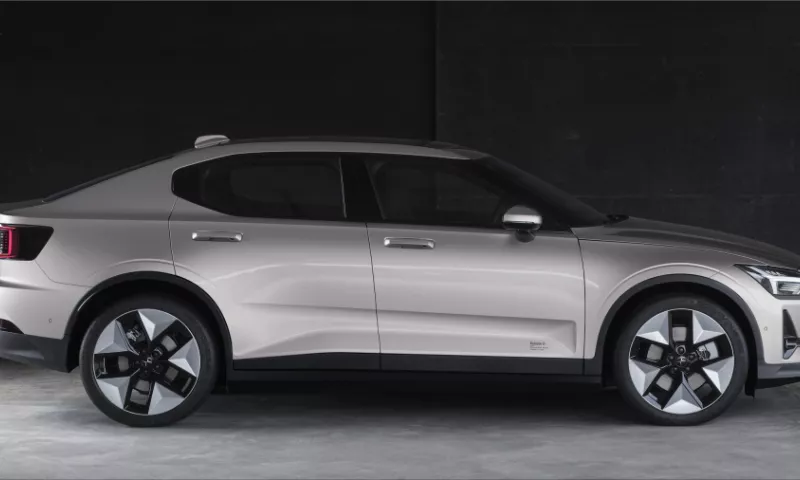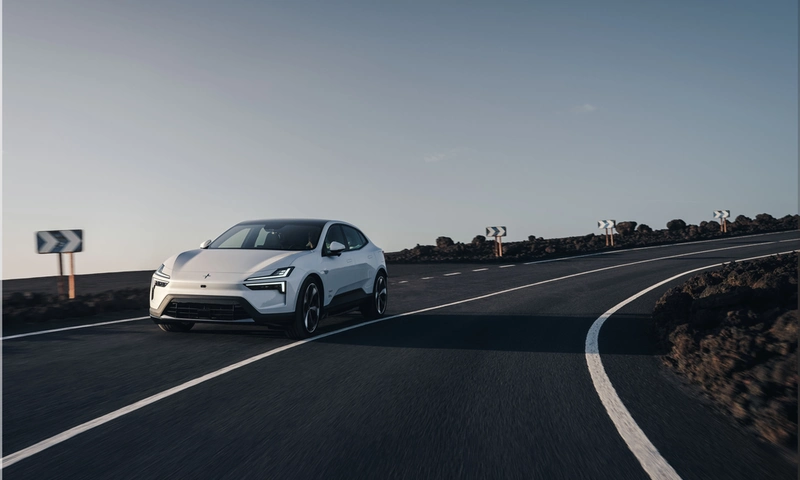
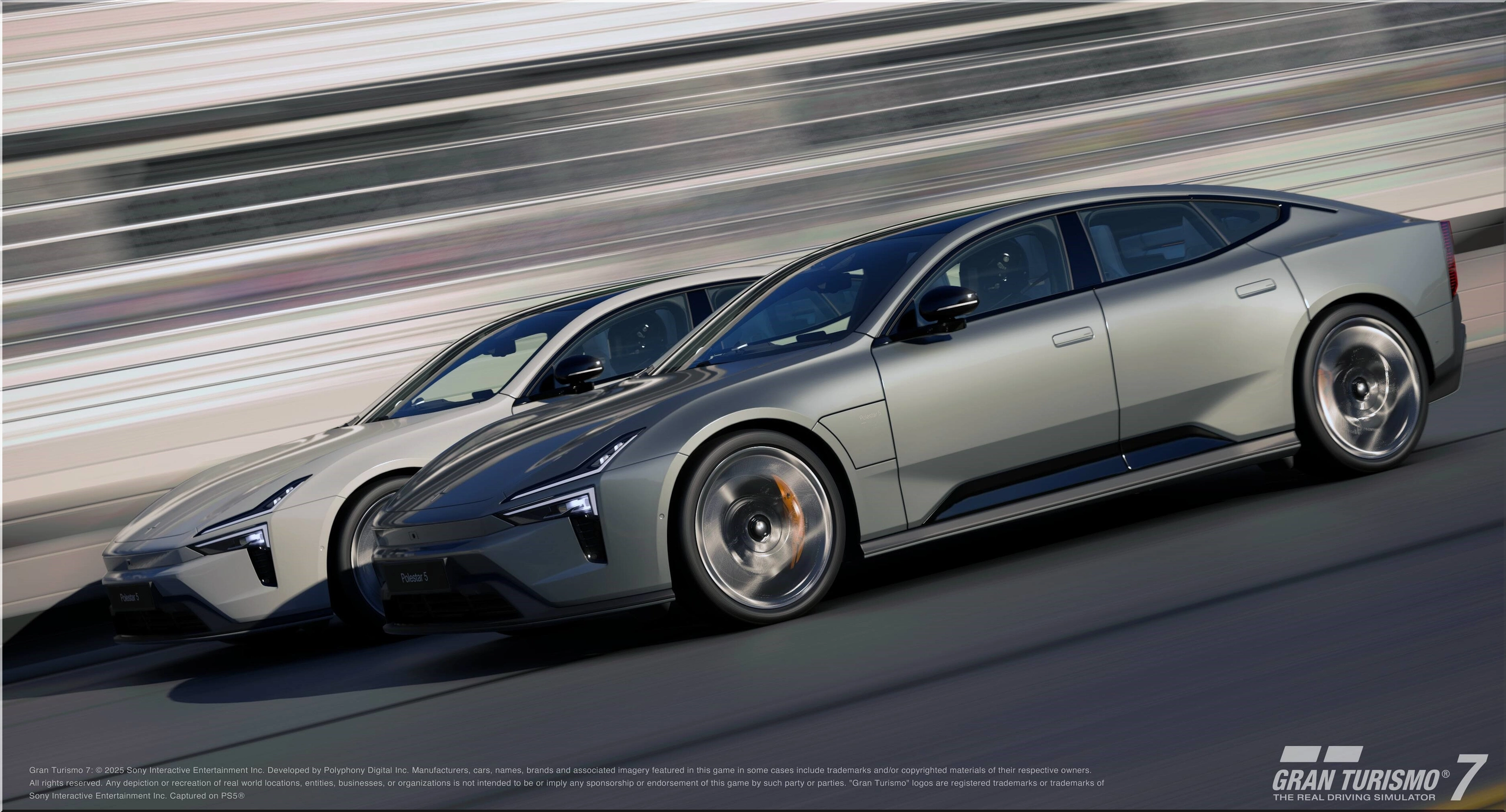
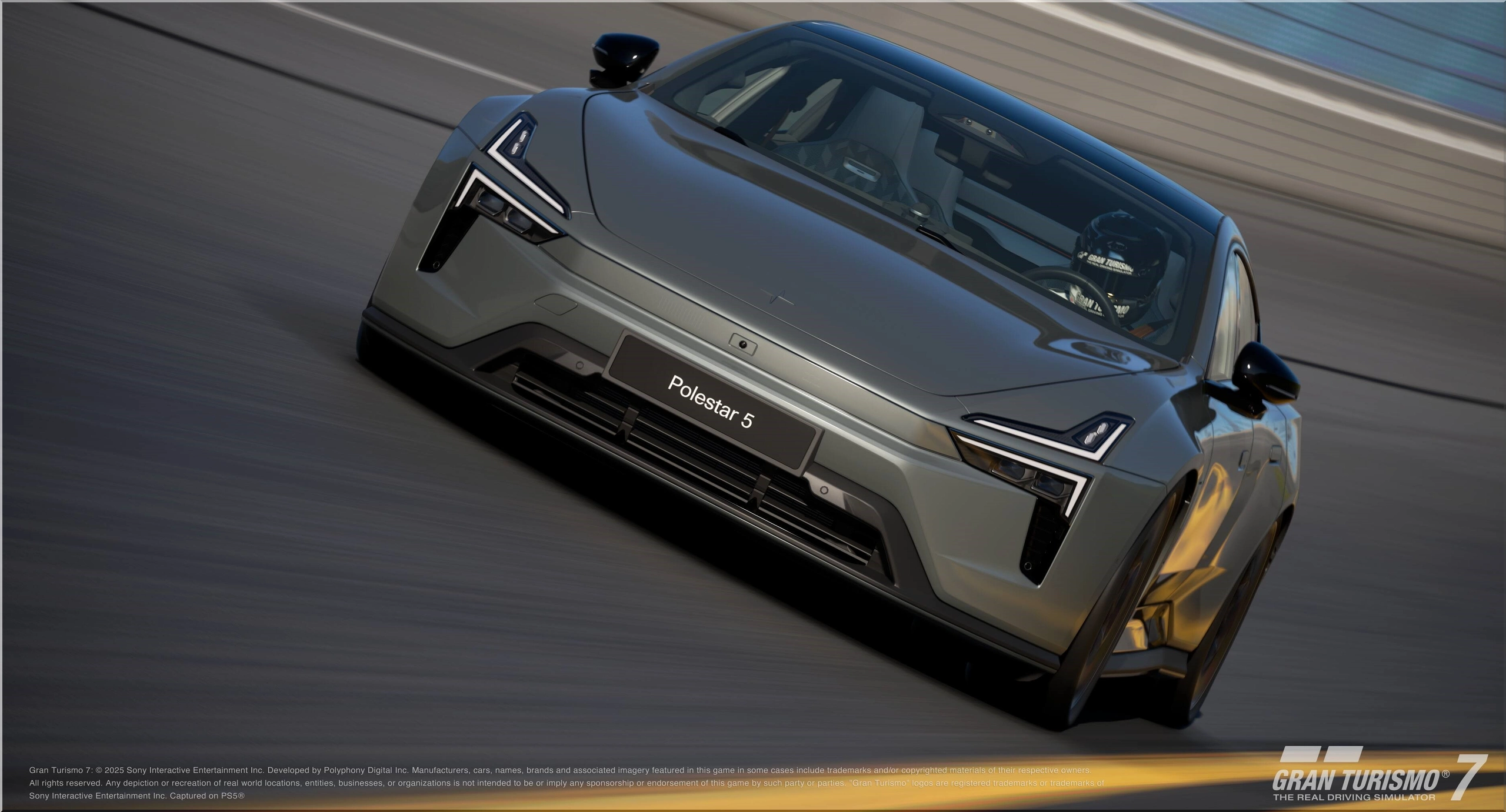
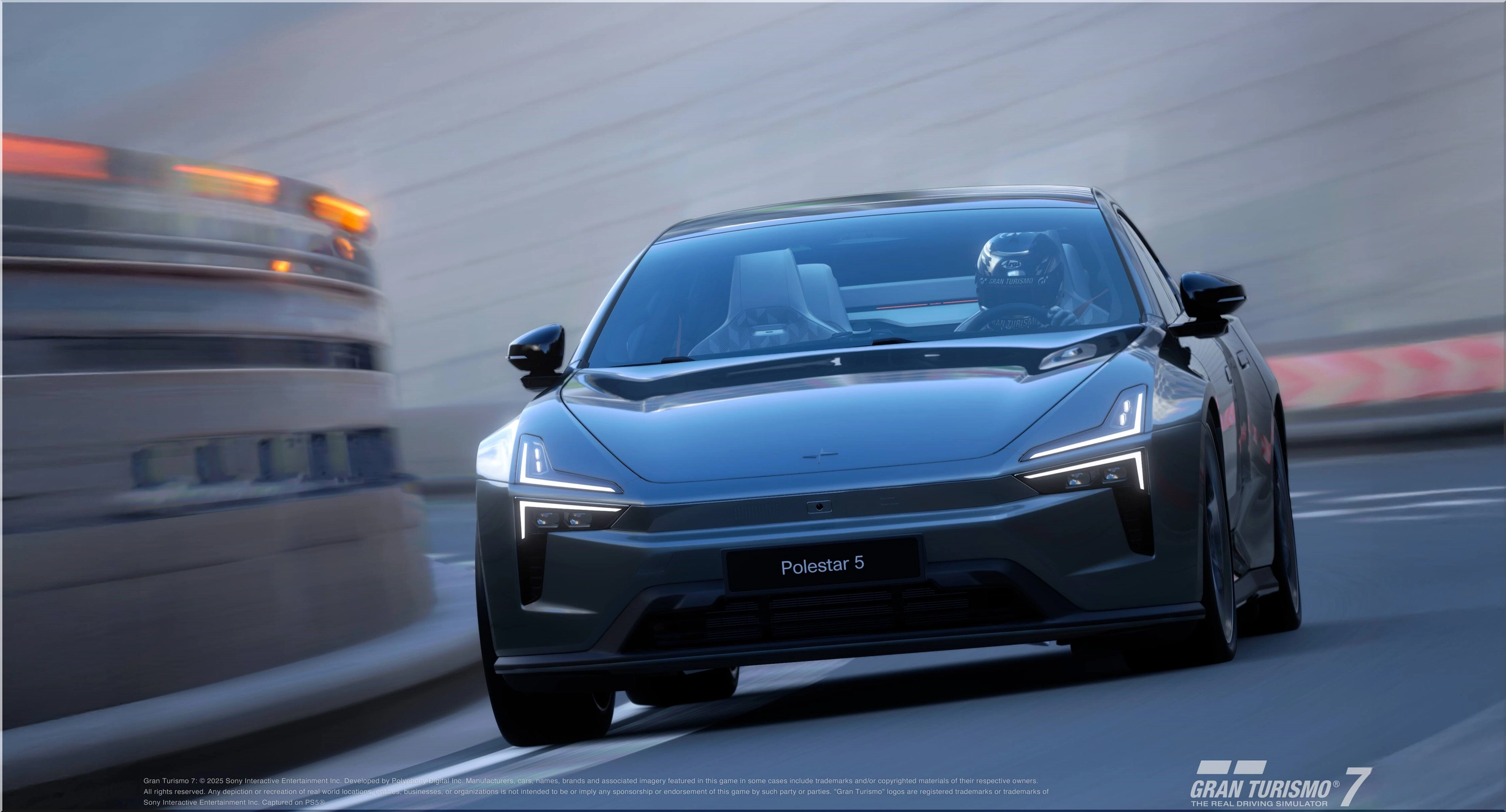
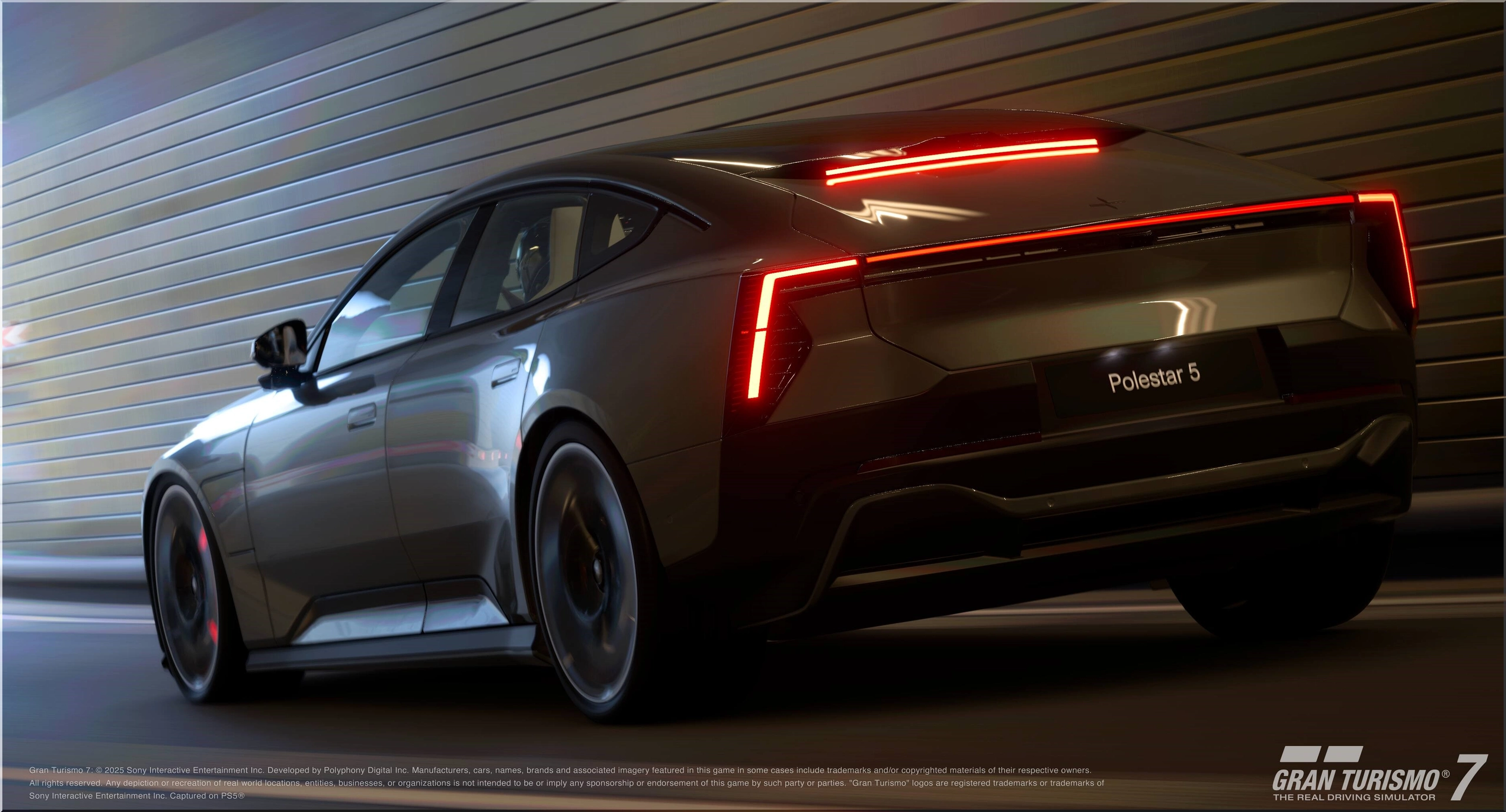
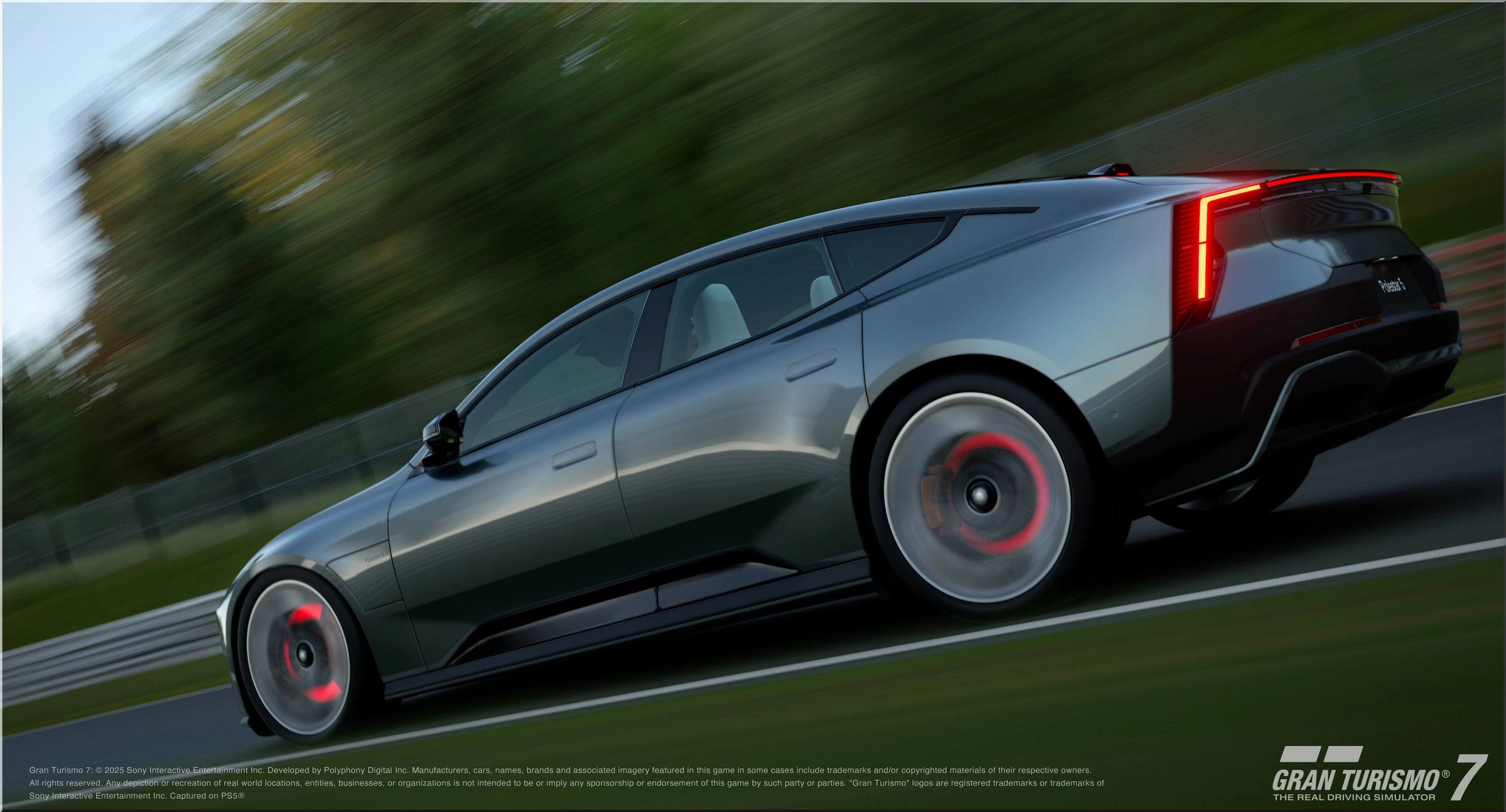
Polestar is taking its flagship performance GT, the Polestar 5, from the real track to the virtual one. Beginning December 2025, the all-electric grand tourer will join Gran Turismo 7 on PlayStation 4 and 5 through a free game update. The move marks the start of a long-term partnership between Polestar and Polyphony Digital, the developer behind Sony’s globally successful racing simulator.
A Digital Debut with Real-World Precision
The collaboration between Polestar and Polyphony Digital went far beyond licensing a 3D model. Both teams shared development access—from R&D data to driving feedback—to ensure the digital Polestar 5 mirrors the dynamics of the real car.
Professional racer and sim-driver Igor Fraga worked directly with Polestar engineers in Sweden and tested prototypes at Brands Hatch in England. His real-world input became the basis for the in-game tuning, creating lap times in Gran Turismo 7 that closely match real-world results.
“Polestar cars have always stood out for their clean, advanced design,” said Kazunori Yamauchi, Producer of the Gran Turismo series. “Bringing the Polestar 5 into the game has been a rewarding experience, and players will notice the precision in every turn.”
Engineering Accuracy into Pixels
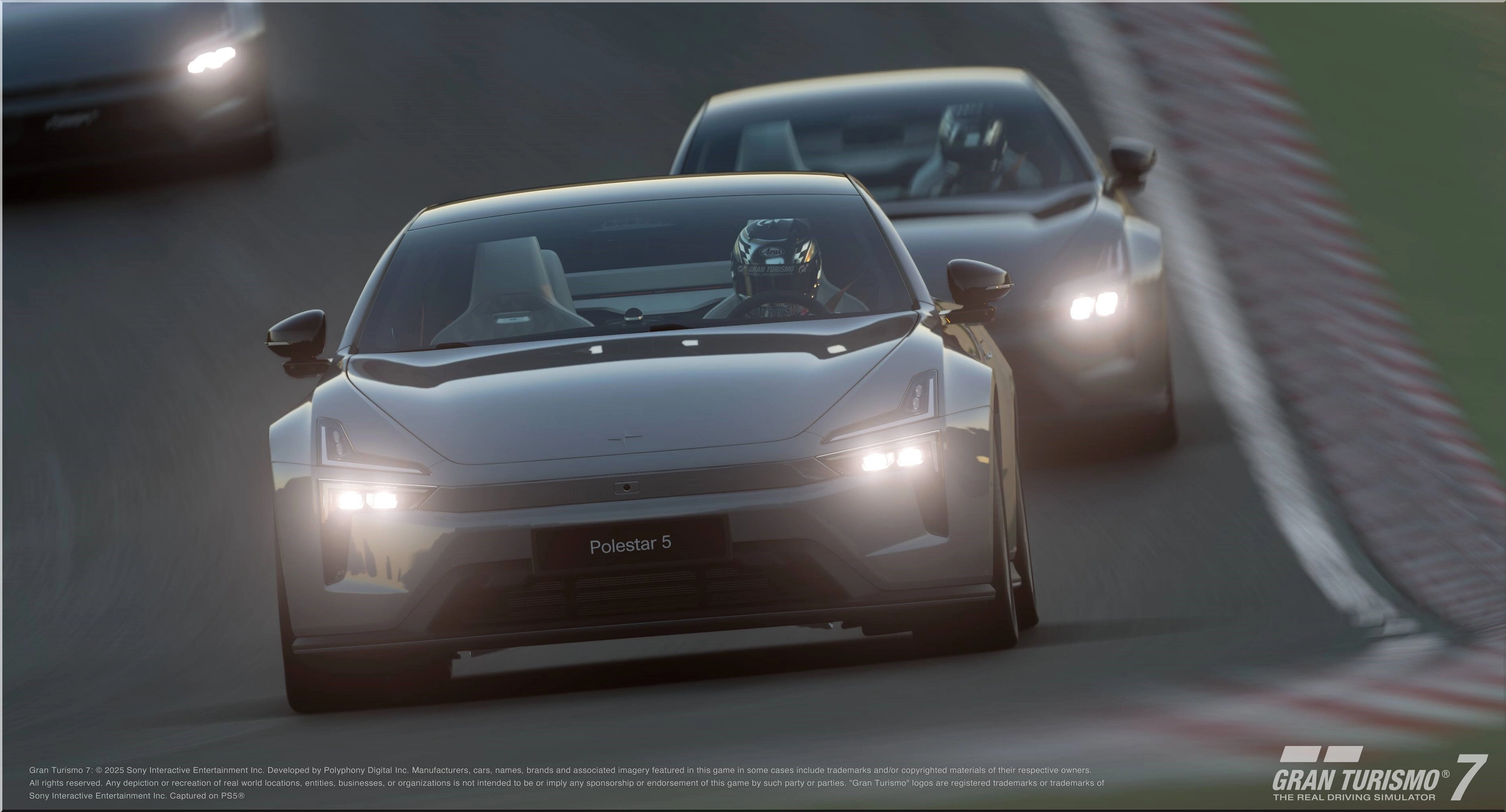
Joakim Rydholm, Head of Driving Dynamics at Polestar, described the collaboration as a key step in representing the brand’s driving DNA digitally. “The result means the virtual Polestar 5 replicates the real one’s steering, weight balance, and cornering behavior,” he said.
Gran Turismo’s simulation engine processes millions of physics calculations per second. Integrating Polestar’s proprietary data—including chassis stiffness, torque distribution, and regenerative braking characteristics—helped recreate a 100% authentic driving experience.
Technical Synergy
| Collaboration Area | Real-World Data Source | In-Game Application |
|---|---|---|
| Chassis Dynamics | Polestar 5 prototype testing | Suspension and handling calibration |
| Aerodynamics | CFD simulations from Polestar R&D | Vehicle drag and downforce mapping |
| Power Delivery | Dual-motor torque maps | Acceleration and traction modeling |
| Steering Feel | Test laps by Igor Fraga | Force feedback tuning for controllers and wheels |
From Gothenburg to Los Angeles—and Japan
The Polestar 5 was unveiled inside Gran Turismo 7 during the 2025 GT World Series event in Los Angeles, connecting fans, drivers, and developers in one showcase.
To celebrate its debut, a special Polestar time-trial competition will be held within the game. The fastest player will win an exclusive trip to Fukuoka, Japan, to attend the World Finals of the GT World Series—bridging the gap between eSports and electric performance.
Polestar will also release a YouTube documentary featuring behind-the-scenes footage of how engineers converted data from prototype testing to digital performance metrics.
Expanding Polestar’s Brand Through Gaming
This collaboration is strategic. The Gran Turismo franchise has sold over 100 million copies since its debut, making it one of the most influential automotive gaming platforms globally. For Polestar, inclusion in this digital ecosystem extends its brand exposure to a younger, tech-oriented audience.
In 2025, gaming partnerships have become a measurable tool for EV market penetration. Electric automakers, from Porsche to Hyundai, have used virtual racing to reach early adopters. Polestar’s entry signals its intent to compete for mindshare in both digital and physical performance segments.
By integrating the Polestar 5’s specifications into Gran Turismo’s real-world physics model, the company provides a data-driven showcase of what its engineers are building in Sweden and the UK. The collaboration reinforces Polestar’s core identity—clean performance and technical transparency.
The Polestar 5: Designed for Drivers, Built for Precision
The Polestar 5 serves as the company’s halo model, positioned above the Polestar 2, 3, and 4. It’s a four-door electric GT with design roots in the Polestar Precept concept.
Expected to reach customers in 2025, the Polestar 5 combines dual-motor all-wheel drive, high-voltage battery technology, and a lightweight bonded aluminum chassis developed in-house. Pricing is projected to start near $100,000 USD, aligning it with premium competitors like the Porsche Taycan Turbo and Tesla Model S Plaid.
Key Performance Metrics (Expected)
| Specification | Polestar 5 (Est.) |
|---|---|
| Power Output | ~884 hp (dual-motor) |
| Torque | 664 lb-ft |
| 0–60 mph | 3.0 seconds |
| Range | Approx. 370 miles (EPA est.) |
| Charging | 800V architecture, 250 kW fast charging |
| Chassis | Bonded aluminum platform |
| Drivetrain | Dual-motor all-wheel drive |
Long-Term Impact: Where Real Cars Meet Virtual Testing
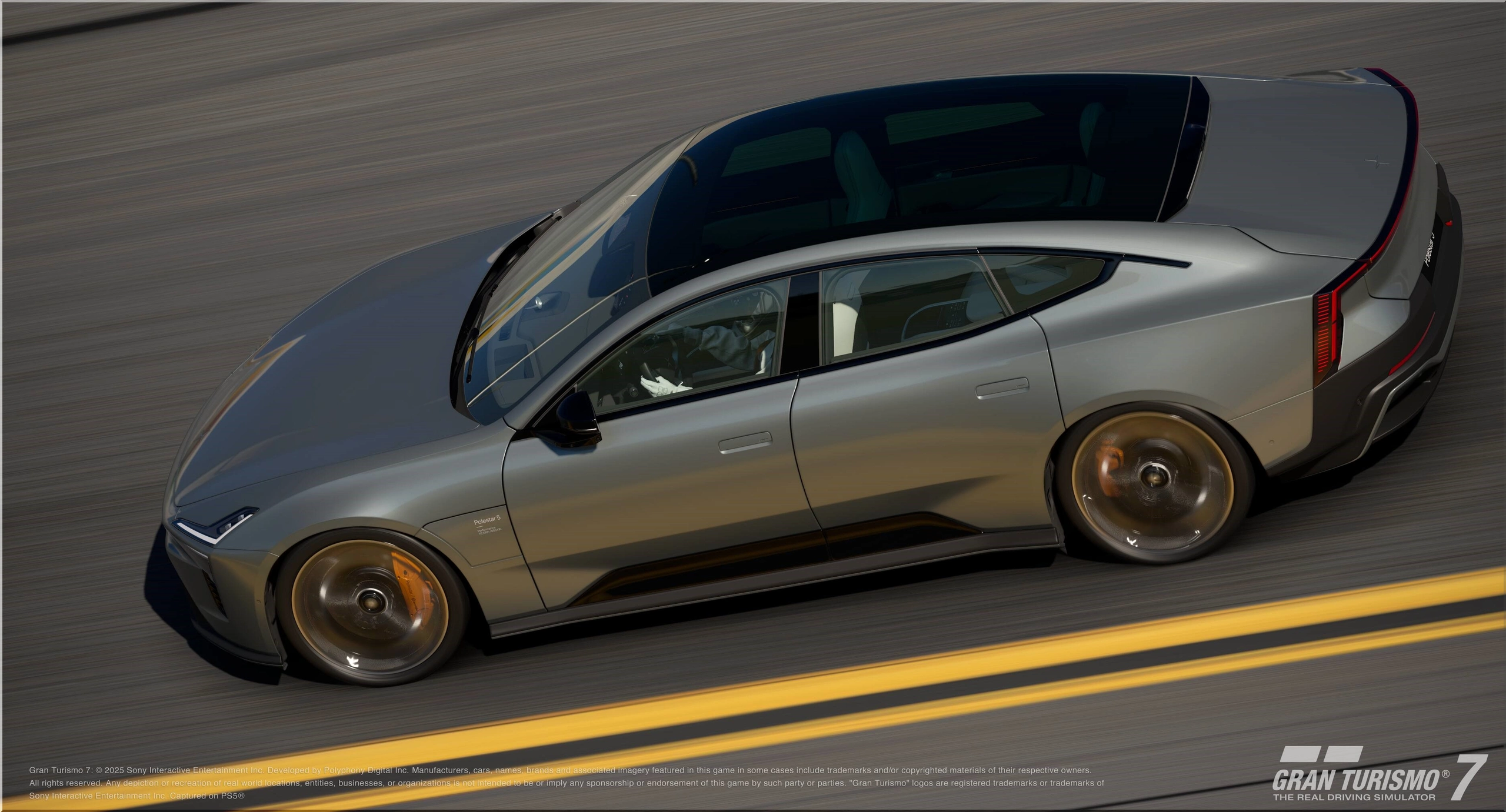
For automakers, simulation partnerships offer more than marketing reach—they’re testing ecosystems. The data exchange between Polestar and Polyphony Digital could inform future vehicle tuning, as virtual telemetry becomes increasingly accurate.
By comparing in-game lap telemetry with physical test data, engineers can analyze how digital drivers adapt to torque delivery, regenerative braking, and grip thresholds. Over time, that data can refine software-defined vehicle performance—a growing focus area for all EV manufacturers.
Polestar’s use of Gran Turismo data aligns with the company’s broader software-first strategy, aiming to make over-the-air updates deliver measurable driving improvements, not just interface tweaks.
Sustainability Meets Simulation
While the Gran Turismo partnership is about precision, it also connects to Polestar’s sustainability roadmap. The brand targets a 50% reduction in per-vehicle CO₂ emissions by 2030 and full climate neutrality by 2040.
By highlighting its electric GT in a global gaming platform, Polestar reinforces that high performance and zero emissions can coexist—and can be experienced by millions without burning a drop of fuel.
Looking Ahead
Polestar plans to extend its gaming presence with future models, including the Polestar 6 roadster and Polestar 7 compact SUV. As EV technology becomes more software-centric, the integration of simulation environments like Gran Turismo could become a development standard, not just a marketing tactic.
For gamers, the Polestar 5 brings a new standard of digital realism. For Polestar, it’s a proof of concept that precision engineering translates seamlessly between code and carbon fiber.
- Add new comment
- 120 views