Amazon Expands Fleet with 5,000 Electric Vans
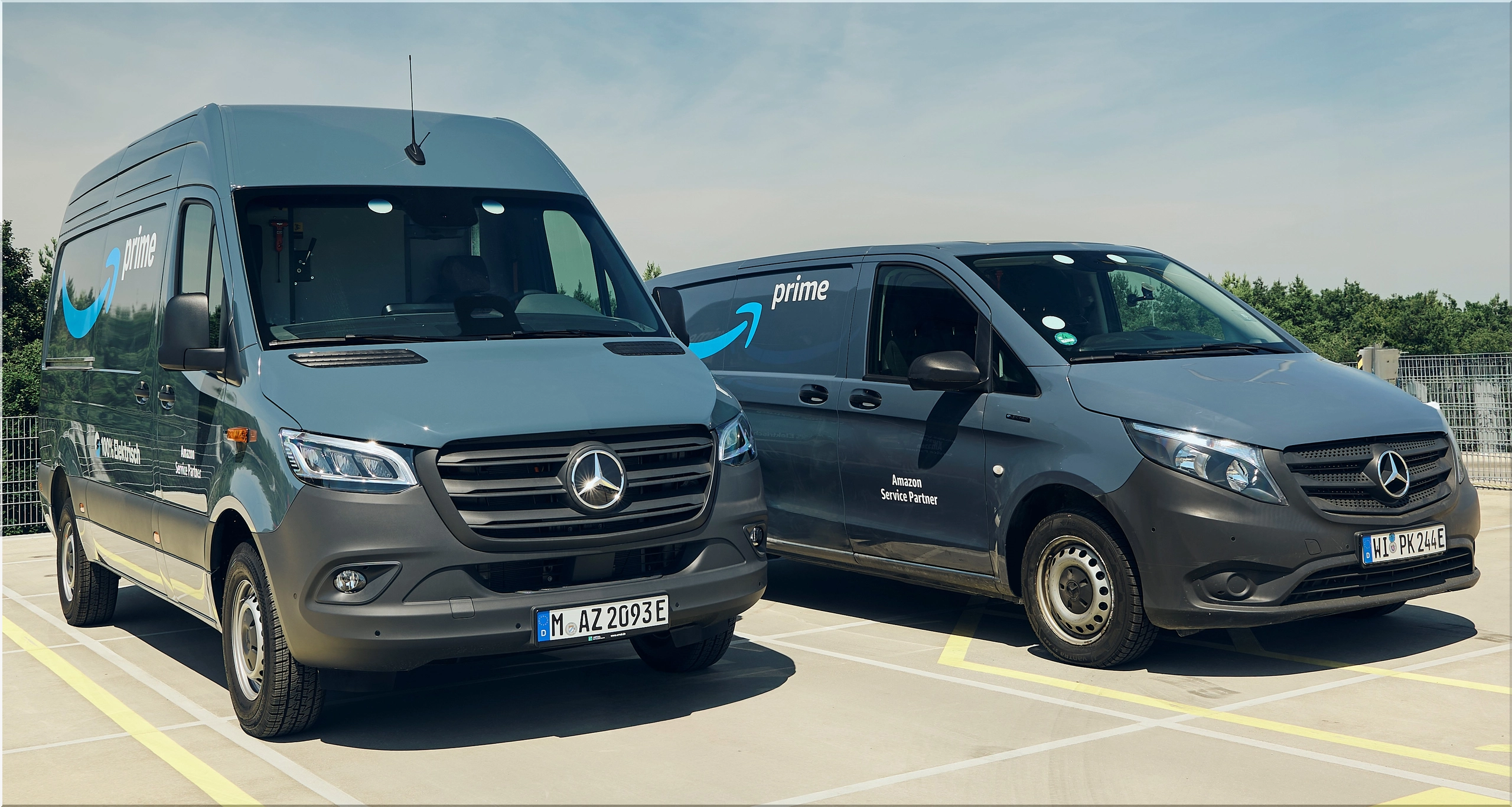
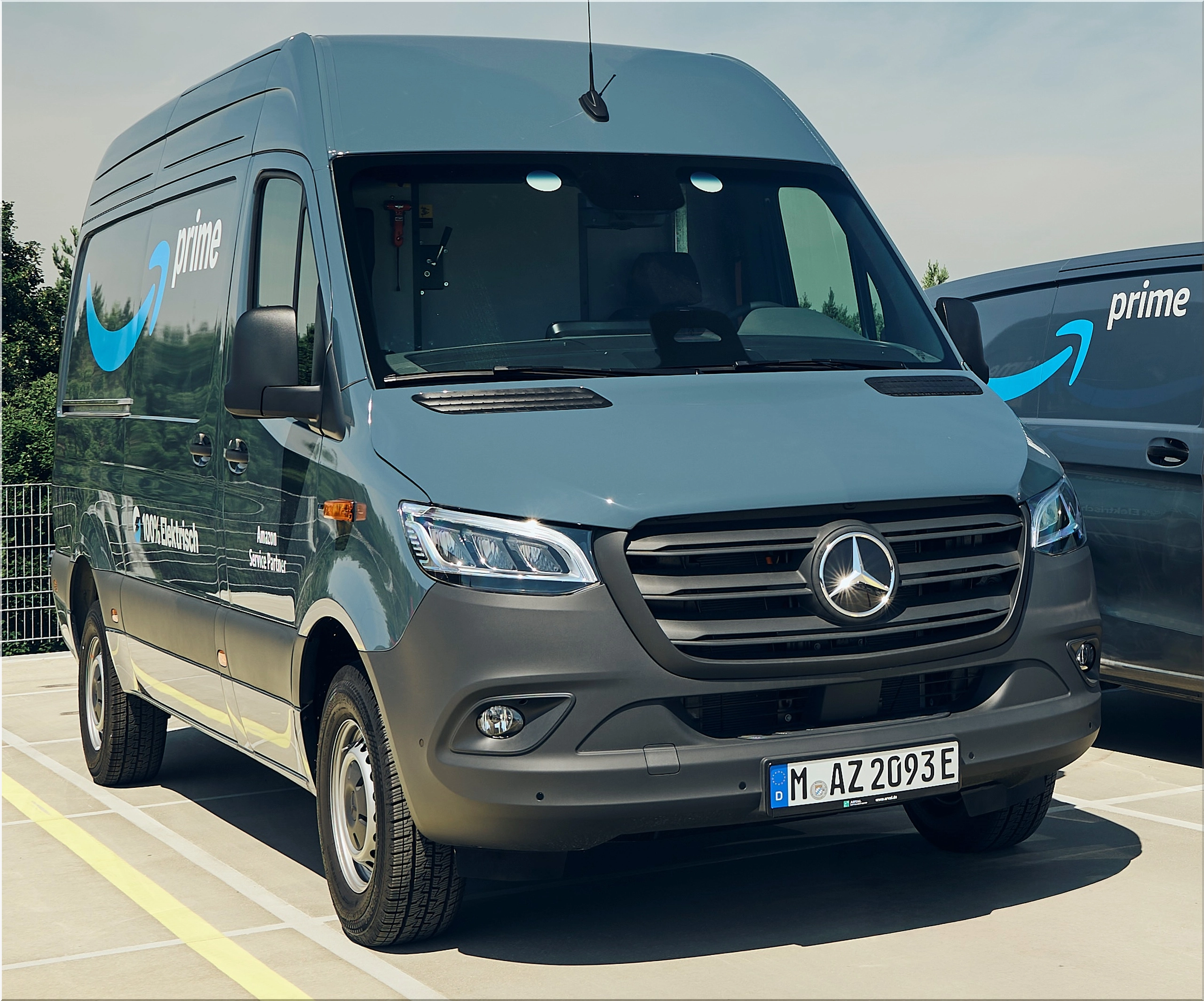
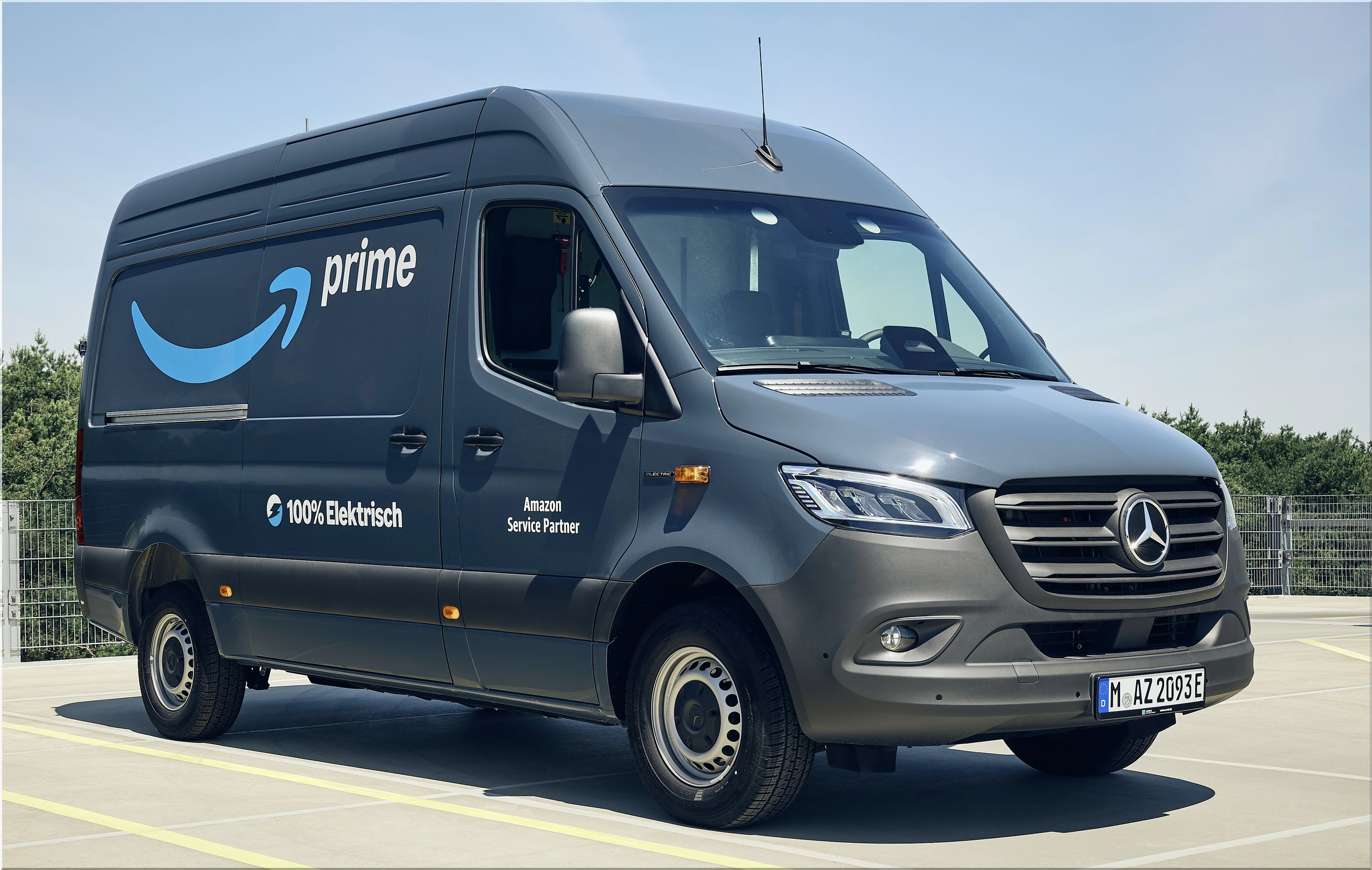
Amazon’s delivery ecosystem just made a significant shift toward electrification. Mercedes-Benz confirmed delivery of nearly 5,000 electric vans to Amazon’s Delivery Service Partners (DSPs) in Europe. This fleet—roughly 3,750 eSprinter vans and 1,250 eVito vans—will support parcel distribution in five European countries, led by Germany with over 2,500 units.
The move reflects growing demand for commercial electric delivery vans and is now the largest single electric van order ever recorded by Mercedes-Benz.
Deployment Timeline and Regional Focus
The vehicles will be delivered and deployed in the coming months across:
- Germany – over 2,500 units
- France
- Spain
- Italy
- United Kingdom
Amazon expects this new fleet to deliver over 200 million parcels annually.
Vehicle Specs: eVito vs eSprinter
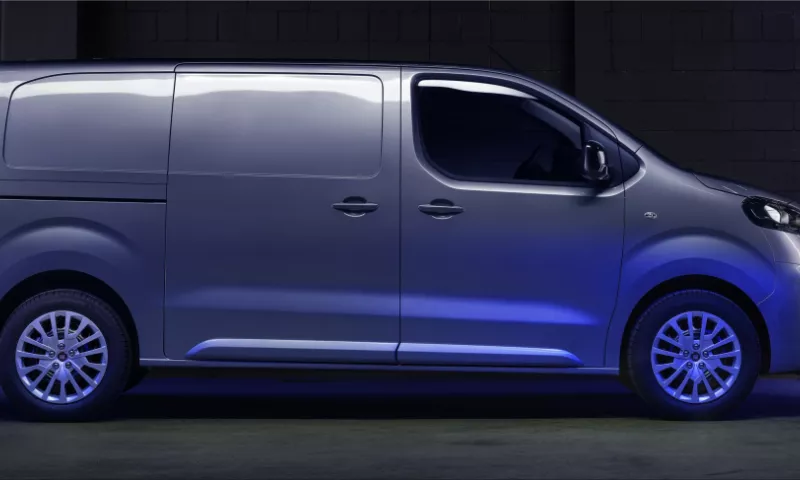
Mercedes-Benz eVito Panel Van
- Battery capacity: 60 kWh or 90 kWh
- Motor options: 85 kW or 150 kW (peak)
- Max range: Up to 298 miles (480 km WLTP)
- Manufacturing location: Vitoria, Spain
- Design focus: Last-mile, urban delivery
- Interior features: Integrated MBUX infotainment, digital navigation with Electric Intelligence
Mercedes-Benz eSprinter Van
- Battery options: Three sizes, unspecified
- Max range: Up to 300 miles (484 km WLTP)
- Max cargo volume: 14 cubic meters
- Gross vehicle weight: Up to 9,370 lbs (4.25 tonnes)
- Manufacturing location: Düsseldorf, Germany
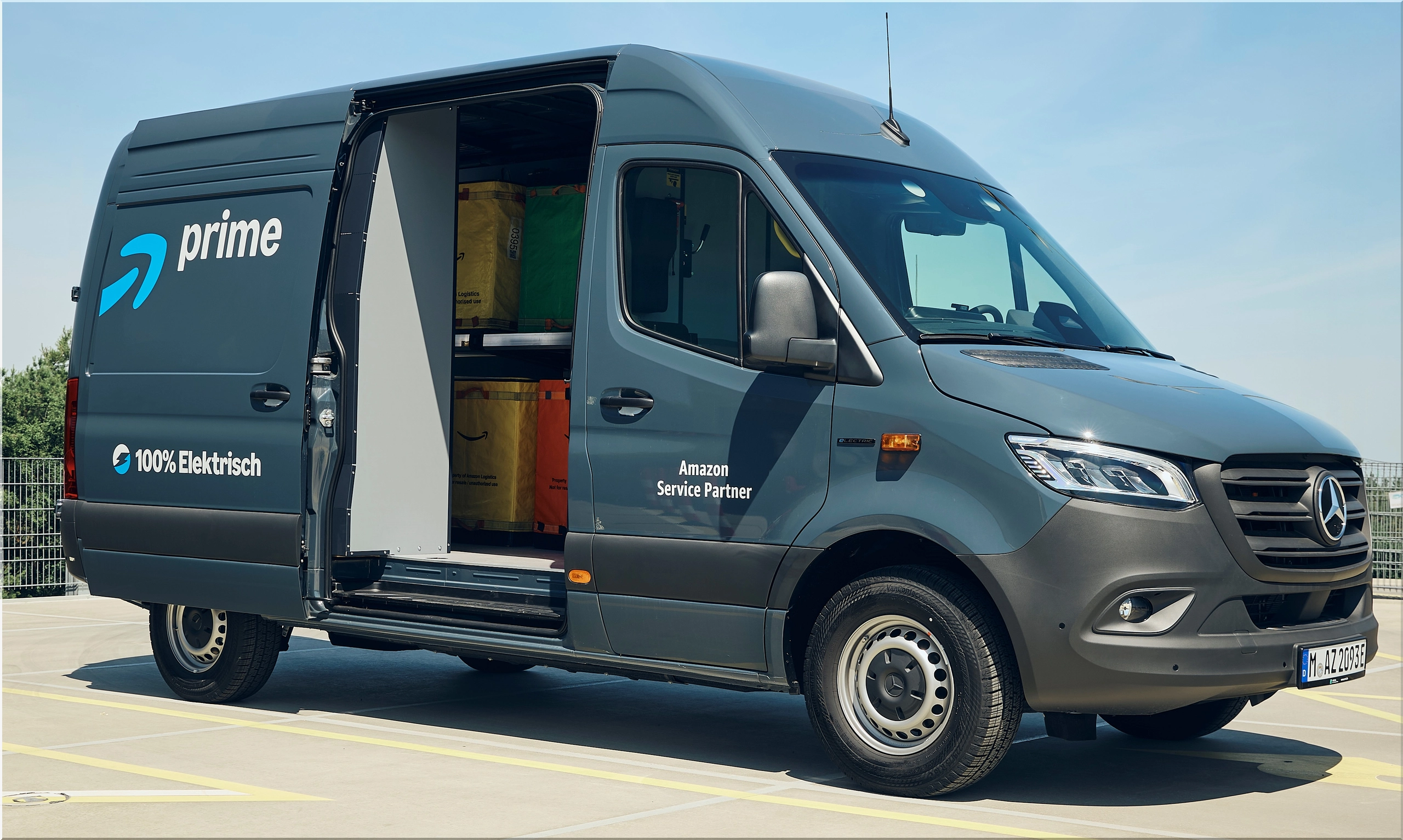
- Special modifications: Custom shelving and internal partitions for optimized parcel handling
| Model | Max Range (WLTP) | Max Battery | Max GVWR | Cargo Volume | Assembly Plant |
|---|---|---|---|---|---|
| Mercedes-Benz eVito | 298 miles | 90 kWh | ~7,700 lbs | N/A | Vitoria, Spain |
| Mercedes-Benz eSprinter | 300 miles | Not disclosed | 9,370 lbs | 14 cu. meters | Düsseldorf, Germany |
Key Performance Highlights
- Zero local CO2 emissions
- Digital integration with Mercedes me, Electric Intelligence routing, and MB.CHARGE Public access
- Enhanced safety tech with upgraded driver-assistance systems
- Flexible powertrain options tailored to last-mile and regional delivery models
Strategic Significance
This isn’t Mercedes-Benz Vans’ first electric delivery collaboration with Amazon. Back in 2020, the two companies launched a fleet of 1,800 eSprinter and eVito units, forming the foundation for electric last-mile logistics in Europe.
Now, five years later, Amazon’s order nearly triples the original deployment. That scale indicates Amazon’s long-term logistics roadmap is firmly tied to battery-electric commercial vehicles.
Emissions Cuts and Carbon Strategy
Neil Emery, Amazon’s Global Fleet & Product Director, stated that this move helps "reduce carbon emissions in operations." This aligns with Amazon's broader commitment under The Climate Pledge, a sustainability initiative it co-founded in 2019 with Global Optimism.
Mercedes-Benz, also a Climate Pledge signatory, reinforced its strategy to decarbonize transportation infrastructure and support commercial customers shifting to electrified fleets.
Manufacturing Capacity and Scalability
Mercedes-Benz builds the eVito in Vitoria and the eSprinter in Düsseldorf, both within optimized supply chains that are now scaled for higher electric van production.
To support Amazon’s requirements, the vans received post-production modifications from certified upfitters—optimized for:
- Parcel organization shelves
- Secure cabin-cargo separation
- Driver efficiency and comfort
This allows for direct integration into DSP operations without additional fleet adaptation costs.
Commercial Van Market Impact
Mercedes-Benz is leveraging this deal to reinforce its positioning in Europe’s electric Courier, Express, and Parcel (CEP) market—a segment that has rapidly adopted battery-electric vehicles due to strict emissions regulations in urban zones.
The eSprinter and eVito models directly compete with:
Mercedes' edge lies in its ability to combine extended range, flexible payload configurations, and digital fleet tools into a single commercial platform.
Cost Efficiency and Operating Metrics
Amazon expects to save significantly on:
- Fuel costs, given electricity is cheaper per mile
- Maintenance, due to fewer moving parts
- Downtime, with built-in diagnostics and smart charging features
Assuming an average operating cost reduction of $0.15 per mile, and 200 million deliveries annually, even modest distance assumptions yield millions in yearly savings.
Estimated Annual Fuel Savings
| Assumed Miles/Parcel | Total Miles | Cost Savings @ $0.15/mile |
|---|---|---|
| 1.5 | 300 million | $45 million |
| 2.0 | 400 million | $60 million |
| 2.5 | 500 million | $75 million |
Future Implications
This scale-up signals a major shift:
- Amazon is preparing for full electric logistics in Europe by 2030
- Mercedes-Benz is demonstrating volume readiness for commercial EVs
- Local governments may further restrict ICE vans, increasing pressure on competitors lagging in electrification
The delivery segment is now the proving ground for commercial EVs. Those without scalable products or service networks risk getting pushed out.
Mercedes-Benz Commercial EV Roadmap
- Continued investment in flexible EV architectures
- Rollout of new eSprinter variants in North America
- Ongoing development of charging infrastructure through MB.CHARGE
- Software enhancements for fleet monitoring and driver assistance
Final Word
This 5,000-van delivery isn’t about symbolism. It’s a signal. Amazon demands scale, performance, and reliability. Mercedes-Benz delivered that—and then some.
As urban delivery becomes a zero-emission mandate rather than an option, deals like this define the pace at which traditional OEMs can stay competitive.
- Add new comment
- 96 views