Fuel Cell Trucks Face Real Heat
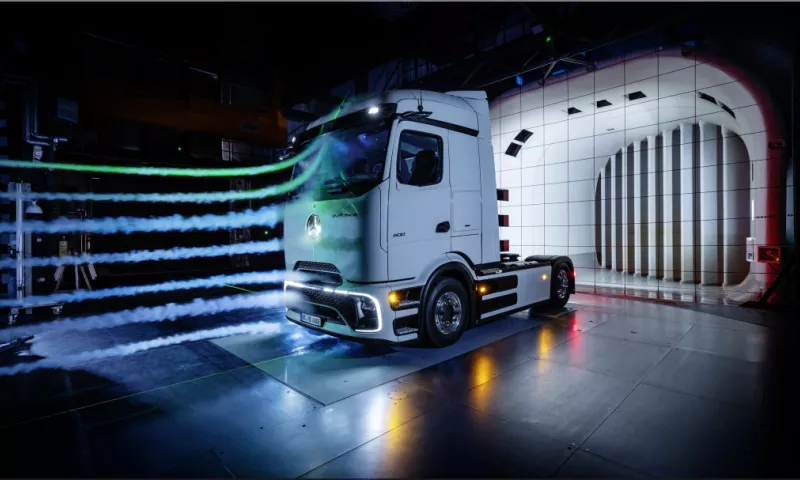
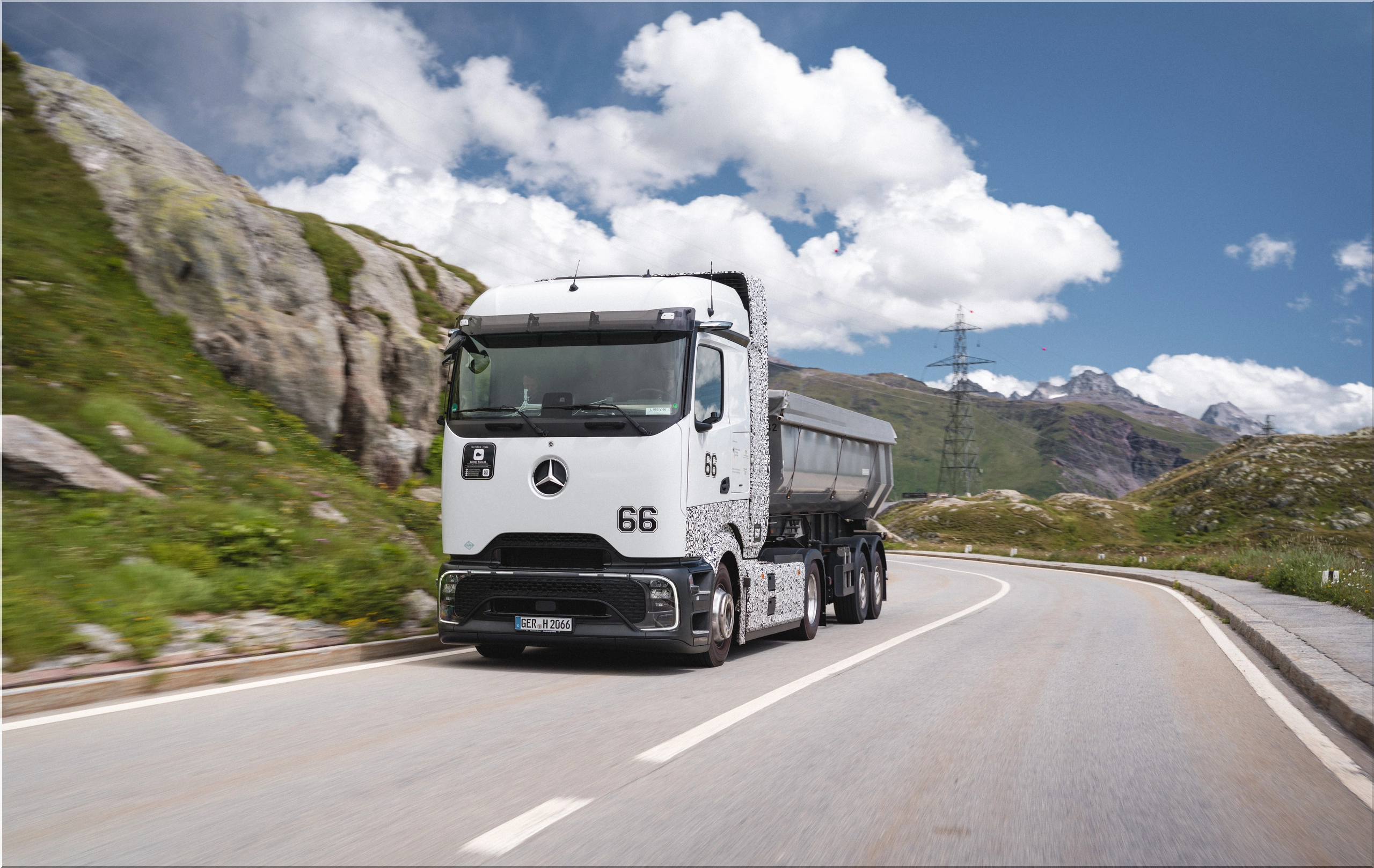
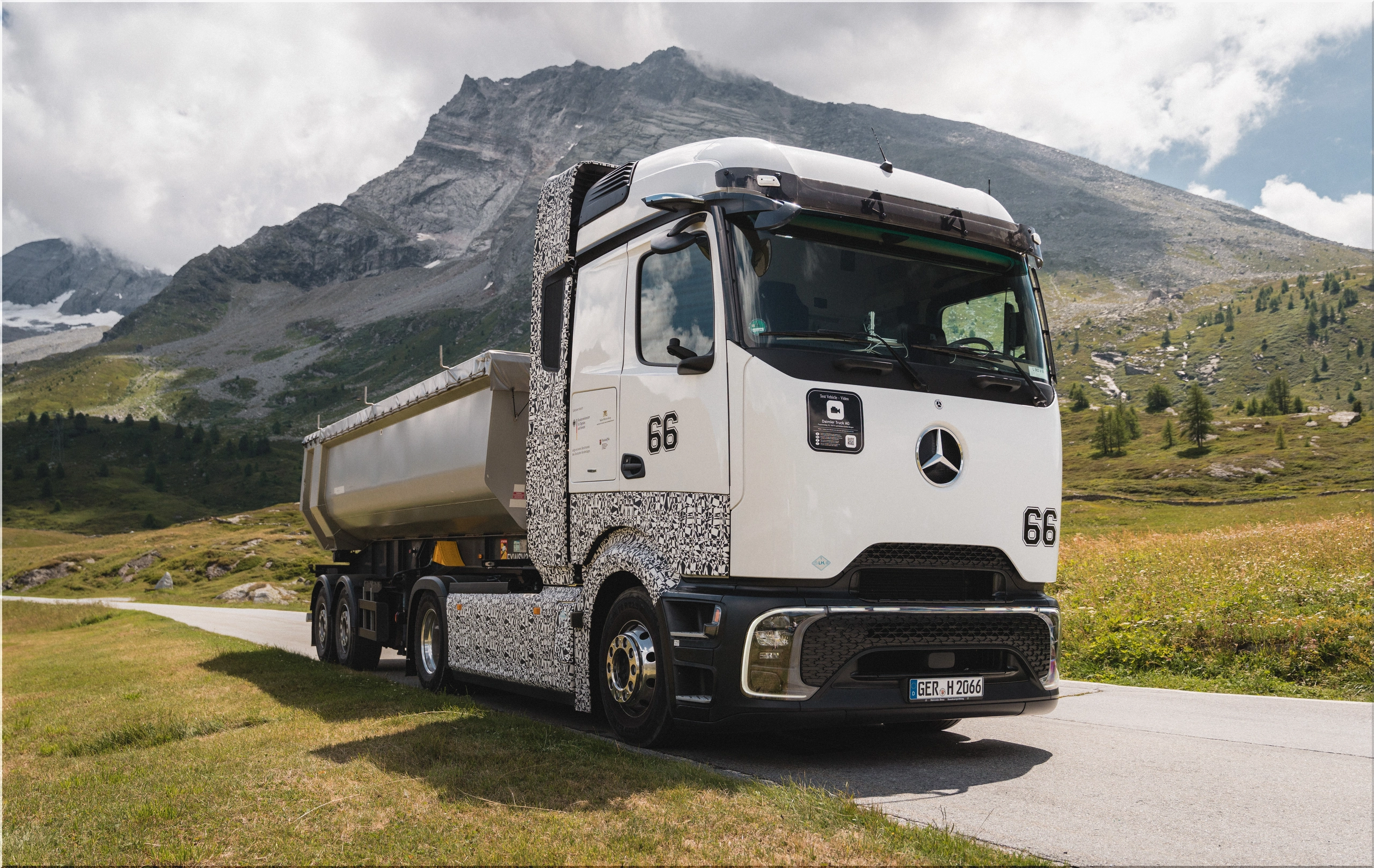
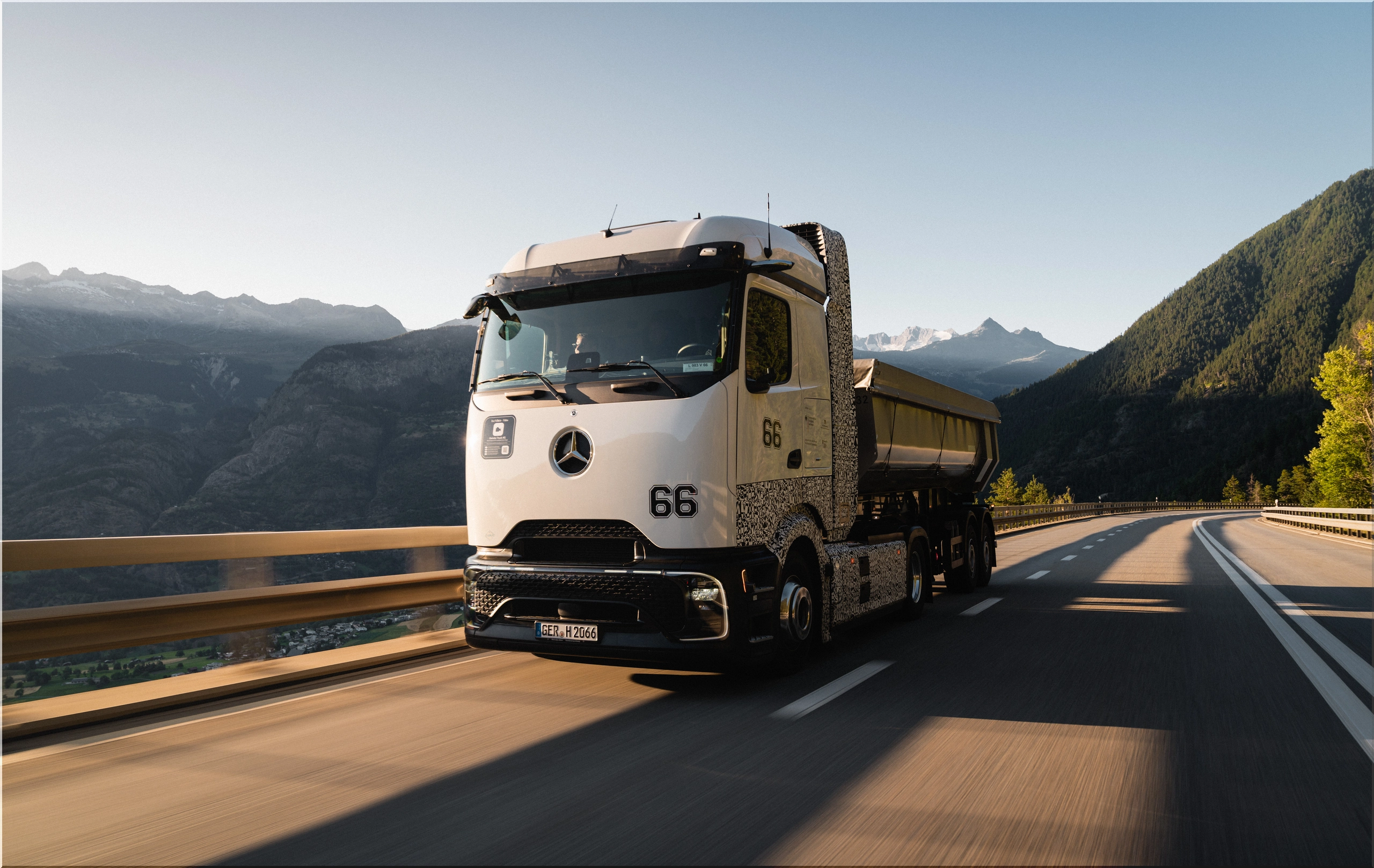
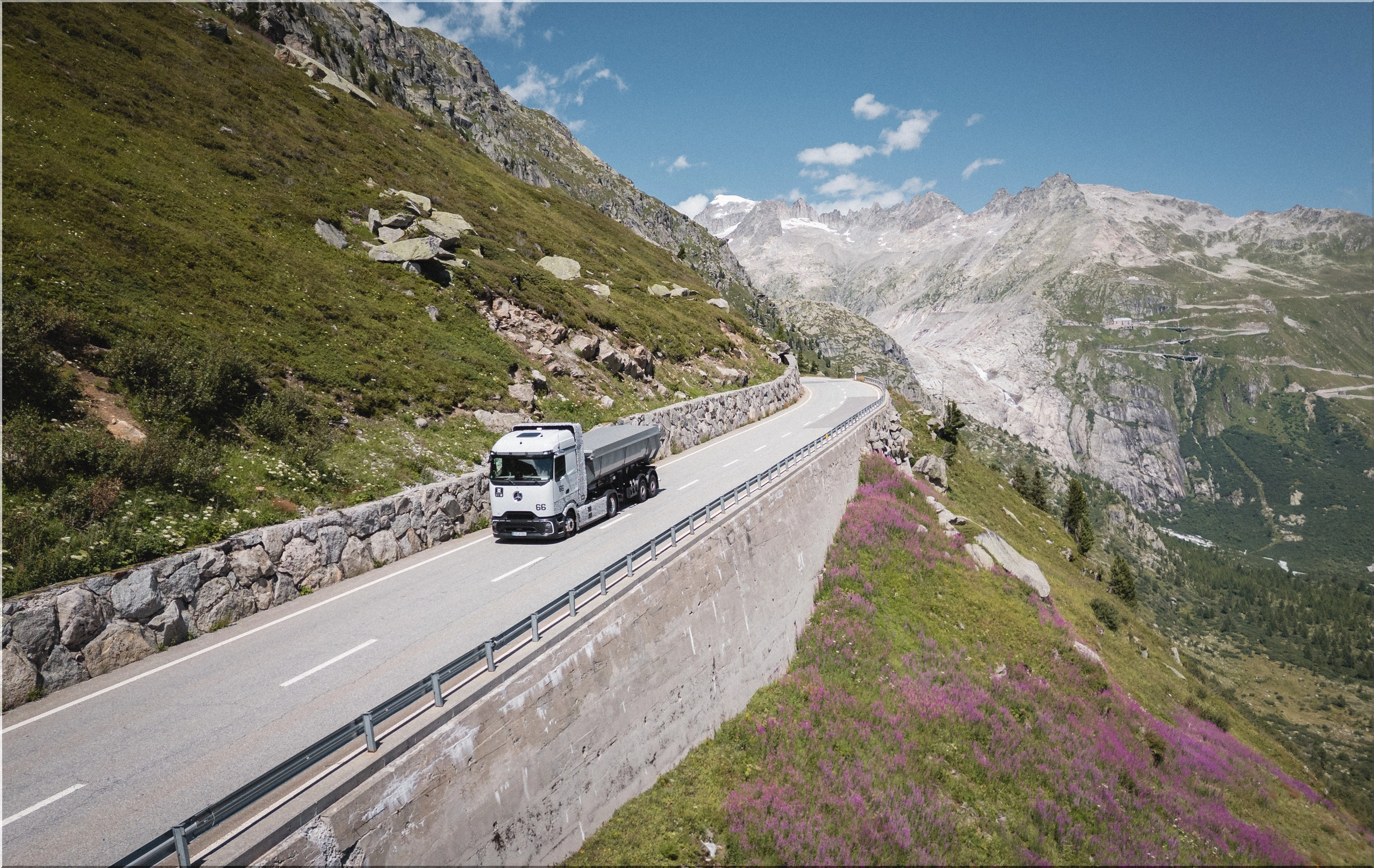
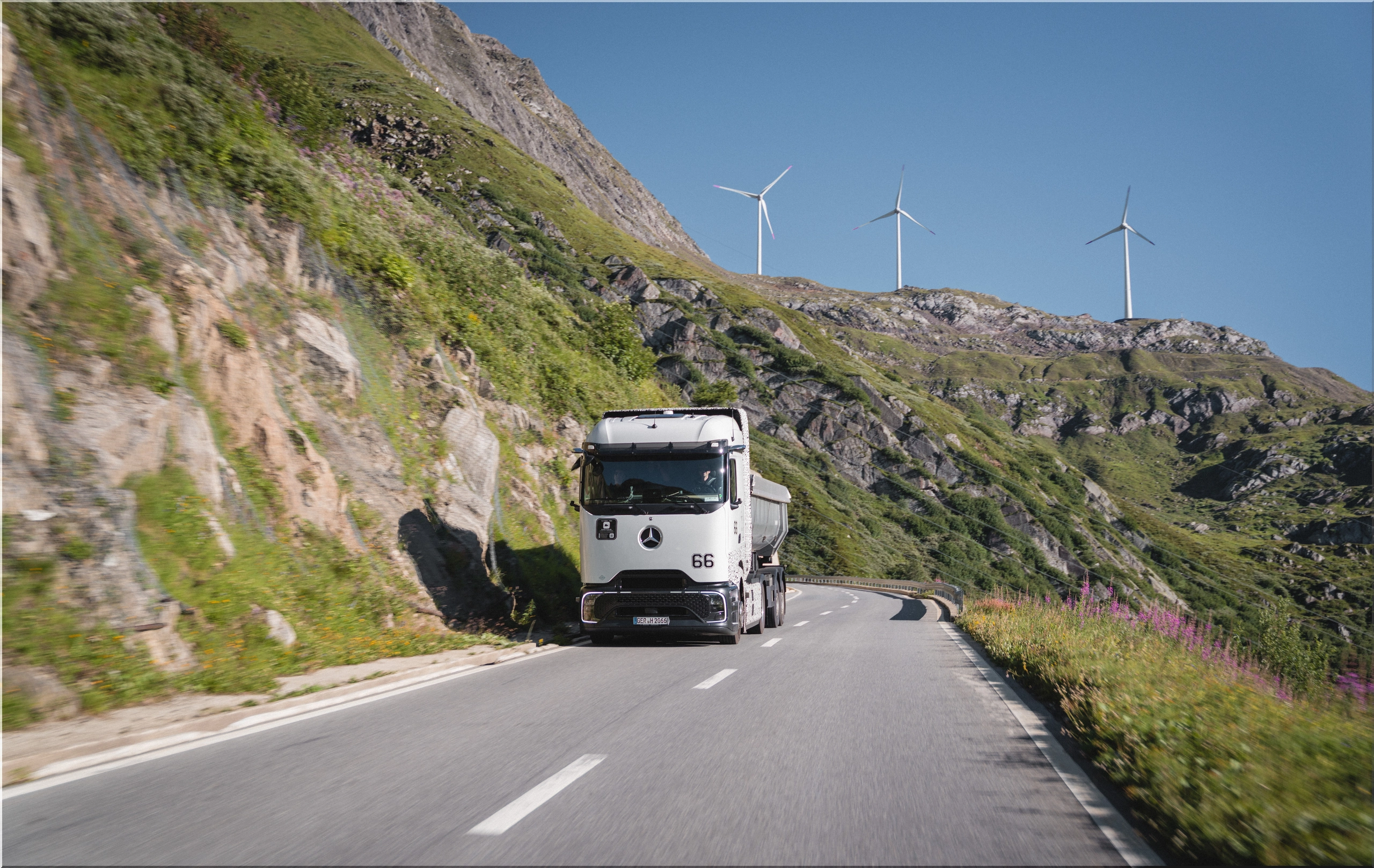
Daimler Truck returned to the Swiss Alps this summer with four Mercedes-Benz GenH2 Truck prototypes. The company tested how its hydrogen fuel cell trucks performed under heat, altitude, and real-world load demands. The trials followed winter testing in Sweden and pushed the vehicles into new extremes.
The routes in Valais ranged from 600 to 2,478 meters in elevation. Temperatures topped 95°F (35°C). Thin mountain air added stress on the fuel cell system. The objective was to prove reliability under these punishing conditions and capture data for the next development phase.
What Daimler Tested
The focus went beyond durability. Engineers tracked:
- Driving behavior during steep climbs.
- Electric drivetrain performance under heavy load.
- Thermal management of batteries and fuel cells in extreme heat.
- System interaction between fuel cell, battery, and hydrogen tanks.
- Efficiency of Predictive Powertrain Control (PPC) software.
The PPC software uses geobased route data to detect climbs miles ahead. It adjusts the fuel cell output before the truck reaches the slope. This keeps the high-voltage battery charged and ensures enough power for efficient ascents.
Real-World Metrics
Over several weeks, the four fuel cell trucks achieved:
- 10,000 kilometers (6,214 miles) of testing.
- 146,000 meters (479,000 feet) of elevation gain.
Refueling took place via liquid hydrogen from a mobile Air Products station using the sLH2 standard. Refueling times were competitive with diesel.
The test confirmed stable drivetrain output even during extended climbs and prolonged high temperatures.
Next Development Steps
The prototypes are approaching maturity. Daimler will build a small fleet of 100 trucks in 2026 at its Woerth plant in Germany. These trucks will run in daily customer operations. The objective is to test real-world logistics conditions before scaling up.
Mass production is scheduled for the early 2030s. The initial rollout will target Europe, focusing on heavy-duty long-haul freight where batteries face range and payload challenges.
Why Hydrogen Trucks Matter
The move toward CO2-neutral transport requires alternatives to diesel. Battery-electric trucks are effective for city delivery and medium duty. But for long-haul freight, fuel cell trucks hold advantages:
- Longer range compared to heavy battery packs.
- Higher payload capacity thanks to lighter hydrogen tanks.
- Fast refueling, competitive with diesel, when using liquid hydrogen.
For Daimler, hydrogen fuel cells represent one part of a dual strategy alongside battery-electric trucks.
Competitive Context
The Mercedes-Benz GenH2 Truck faces competition across the hydrogen segment:
- Volvo Trucks is developing fuel cells in partnership with Daimler.
- Hyundai operates its XCIENT Fuel Cell trucks in Switzerland.
- Toyota and Kenworth have tested fuel cell trucks in U.S. ports.
The Alpine test results are significant because they prove progress toward real-world readiness. Buyers in the heavy freight market prioritize durability, range, and total cost of ownership. Daimler is demonstrating movement in that direction.
Economic Factors
Hydrogen costs remain high. Prices often exceed $10 per kilogram in Europe and the U.S. A long-haul truck requires 60–80 kilograms per fill. That equals $600–$800 per refueling.
Diesel is still cheaper per mile today. Daimler is betting on scaling, infrastructure growth, and government incentives to close the cost gap.

Key Takeaways from Testing
- Hydrogen trucks performed reliably in extreme Alpine heat.
- Predictive Powertrain Control optimized efficiency on steep climbs.
- 10,000 kilometers of testing confirmed system stability.
- 100 pre-series trucks will launch in 2026 for customer trials.
- Series production is set for the early 2030s.
Market Outlook
Daimler Truck, with more than 100,000 employees worldwide, is positioning the GenH2 Truck to lead in zero-emission long-haul freight. The development timeline aligns with European Union emissions targets for the next decade.
Carriers across Europe will need solutions that balance compliance, cost efficiency, and operational flexibility. The GenH2 program offers a direct response to those demands.
Action Points for Fleets
Carriers planning for the 2030s should:
- Monitor pilot deployments starting in 2026.
- Assess hydrogen infrastructure along long-haul corridors.
- Compare hydrogen refueling costs with diesel and electricity.
- Adopt dual fleet strategies: use battery-electric trucks for regional haul and hydrogen fuel cell trucks for cross-border operations.
The Mercedes-Benz GenH2 Truck testing proves that fuel cells are no longer limited to prototypes. They are progressing toward becoming commercial freight assets.
- Add new comment
- 41 views