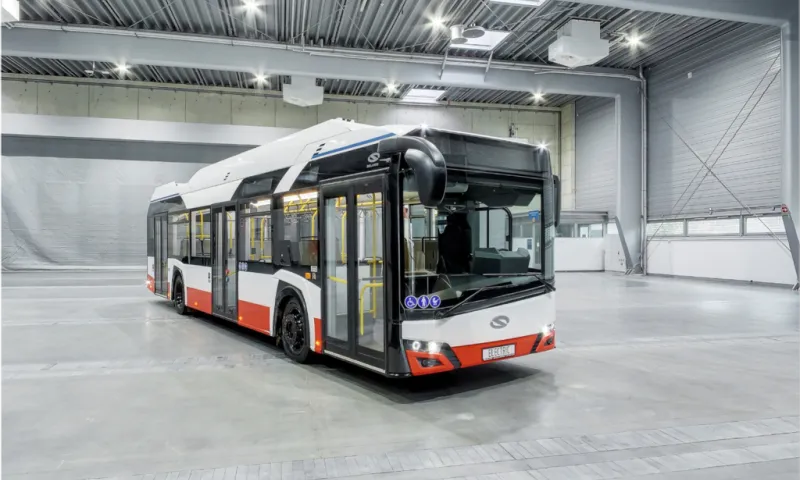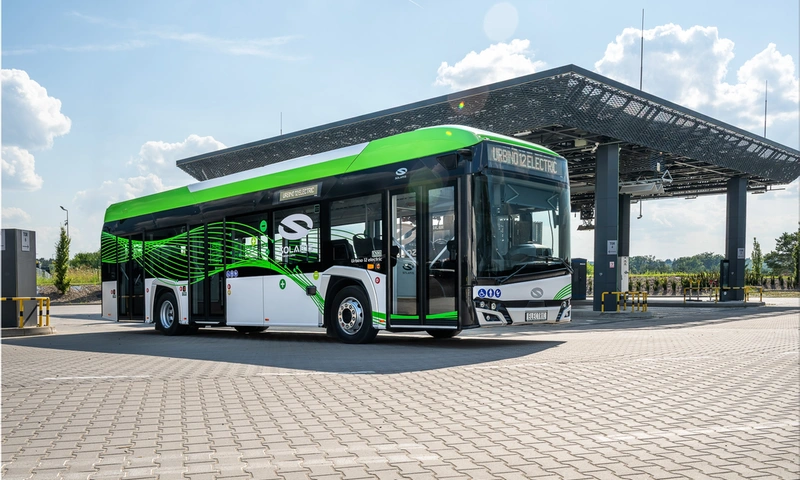
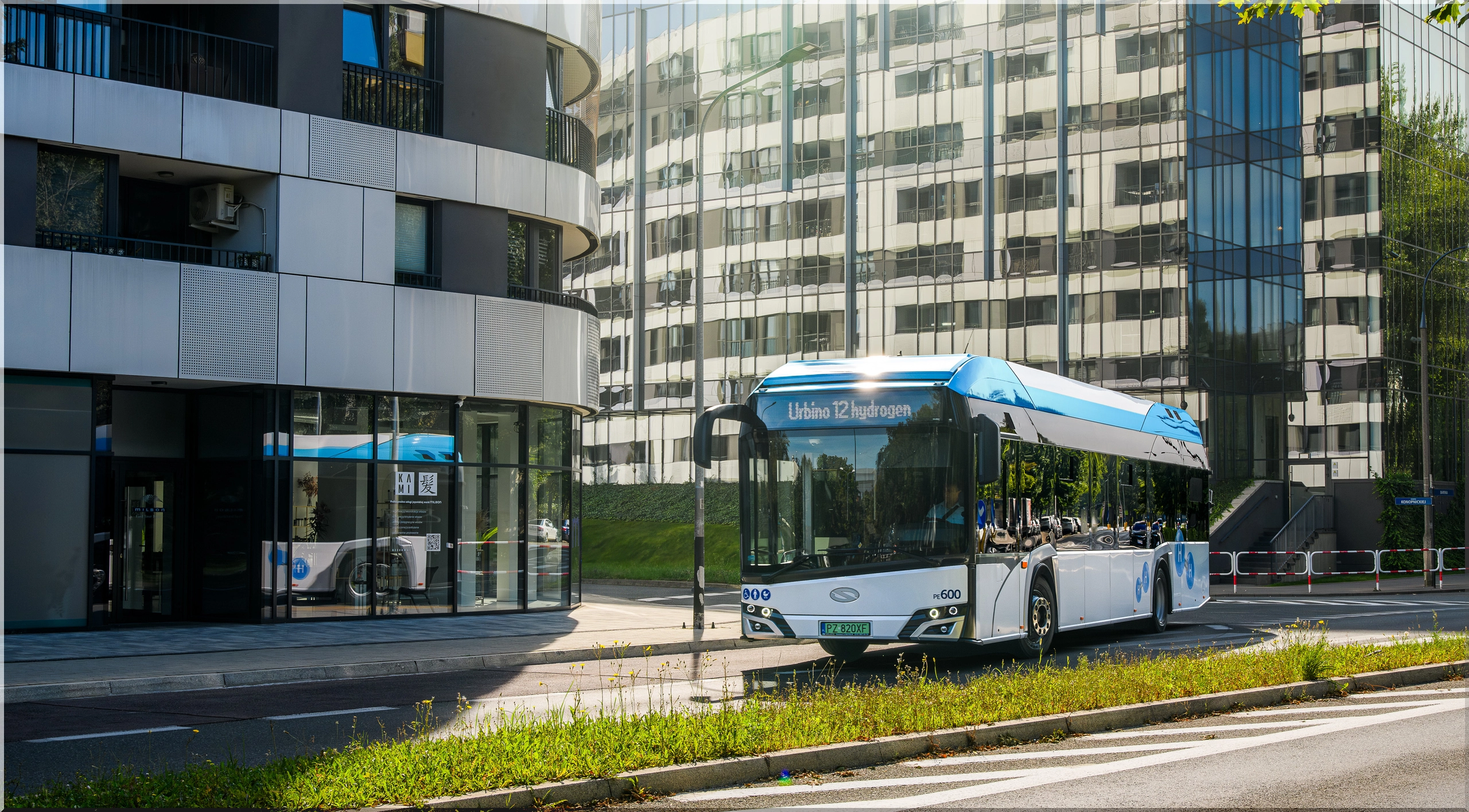
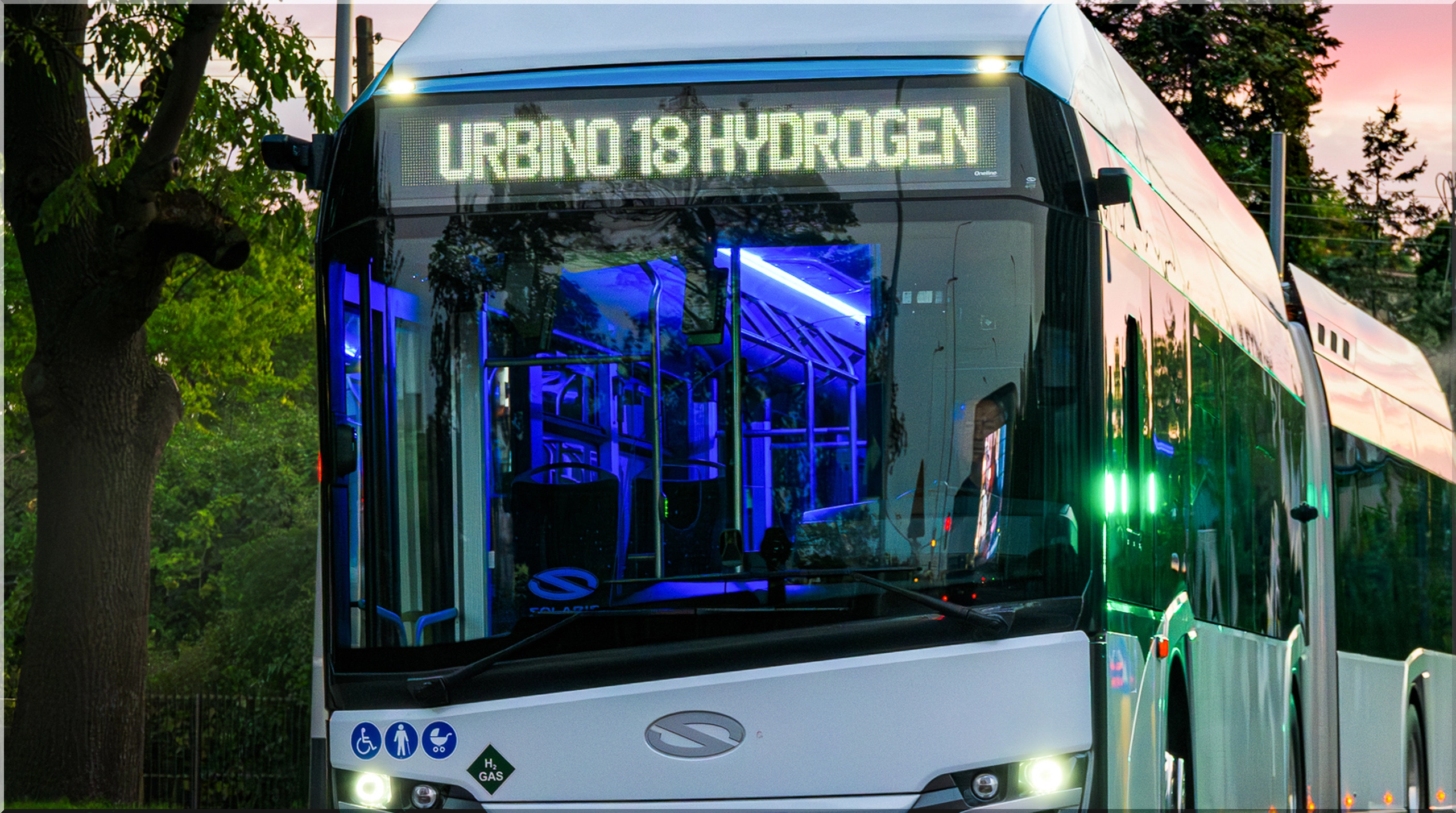
Solaris Bus & Coach has secured a new German hydrogen bus order from SWK Mobil Krefeld: 19 Solaris hydrogen buses, split between 9 Urbino 12 hydrogen buses and 10 Urbino 18 hydrogen articulated buses. Delivery starts in 2027, and the order expands Krefeld's zero-emission fleet after an earlier batch of 10 Urbino 12 hydrogen buses entered service in 2025.
The move tells a clear fleet-planning story. Krefeld wants long daily range, fast depot refueling, and electric-drive operation without building a high-power charging network across every route. Hydrogen fuel-cell buses fit that use case because they generate electricity onboard, feed an electric drivetrain, and give operators diesel-like dispatch flexibility with zero tailpipe emissions.
Why Krefeld Chose Solaris Hydrogen Buses Again
SWK Mobil Krefeld has worked with Solaris since 2011, so this contract extends an established supplier relationship rather than starting a trial from scratch. Specifically, the operator already runs 10 Solaris Urbino 12 hydrogen buses ordered in 2023 and delivered in 2025. The 2027 order adds scale and introduces articulated 18-meter hydrogen buses for higher-capacity routes.
Looking at the data, the fleet mix makes sense:
| Order Detail | Data |
|---|---|
| Total new buses | 19 |
| Urbino 12 hydrogen | 9 |
| Urbino 18 hydrogen | 10 |
| Delivery timing | 2027 |
| Previous Krefeld hydrogen order | 10 Urbino 12 hydrogen buses |
| Previous delivery timing | 2025 |
| Operator | SWK Mobil Krefeld |
| City | Krefeld, Germany |
In addition, SWK Mobil Krefeld will use Solaris' eSConnect fleet-management platform again. That decision matters for operators because hydrogen fleets need precise visibility into energy use, route behavior, refueling cycles, and uptime patterns. A bus that returns with predictable hydrogen reserves gives dispatchers more control over vehicle assignment the next morning.
Urbino 12 Hydrogen Specs: Compact Range for Urban Duty
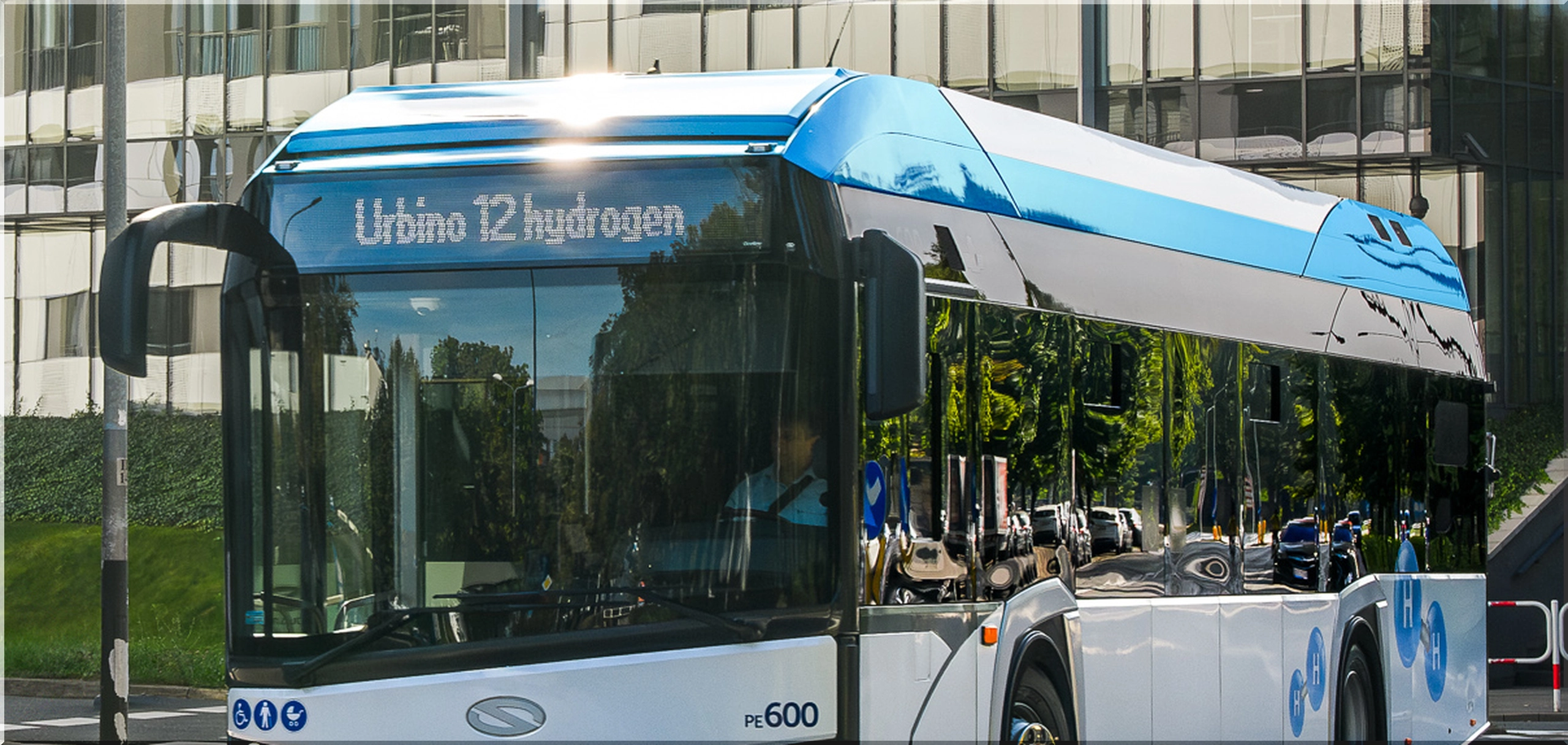
The Urbino 12 hydrogen targets conventional city routes where a 12-meter footprint, three-door boarding, and manageable gross vehicle weight count more than maximum passenger volume. The bus measures 12,000 mm long, 2,550 mm wide, and 3,300 mm tall. Converted, that equals about 472.4 inches long, 100.4 inches wide, and 129.9 inches tall.
Its 5,900 mm wheelbase, or 232.3 inches, gives the bus a familiar city-bus turning profile. The 2,700 mm front overhang and 3,400 mm rear overhang place mass and body structure within a conventional urban packaging envelope. From an expert perspective, that layout helps operators add hydrogen propulsion without changing depot lanes, stops, or driver training assumptions as much as a longer platform would.
| Specification | Solaris Urbino 12 Hydrogen |
|---|---|
| Length | 12,000 mm / 472.4 in |
| Width | 2,550 mm / 100.4 in |
| Height | 3,300 mm / 129.9 in |
| Wheelbase | 5,900 mm / 232.3 in |
| Front / rear overhang | 2,700 / 3,400 mm |
| Drive axle | Electric axle, 2 integrated motors |
| Motor output | 2 x 125 kW |
| Fuel cell | 70 kW |
| Hydrogen tank capacity | 1,560 liters |
| Passenger capacity | Up to 85 |
| Seats | 31 |
| GVW | 19,200 kg |
The engineering logic stays clean. The fuel cell supplies steady electrical energy, while the Solaris High Power battery buffers transient demand during acceleration, grade changes, and auxiliary loads. Consequently, the bus avoids sizing the fuel-cell stack for every short power spike, which helps control weight, cost, and thermal load.
Urbino 18 Hydrogen Specs: Higher Capacity, 240 kW Drive
The Urbino 18 hydrogen answers a different operational question: how does a city move more riders on busy corridors without returning to diesel? Solaris gives the articulated bus an 18,000 mm length, or 708.7 inches, while keeping the width at 2,550 mm and height at 3,300 mm. That footprint supports up to 140 passengers, depending on layout.
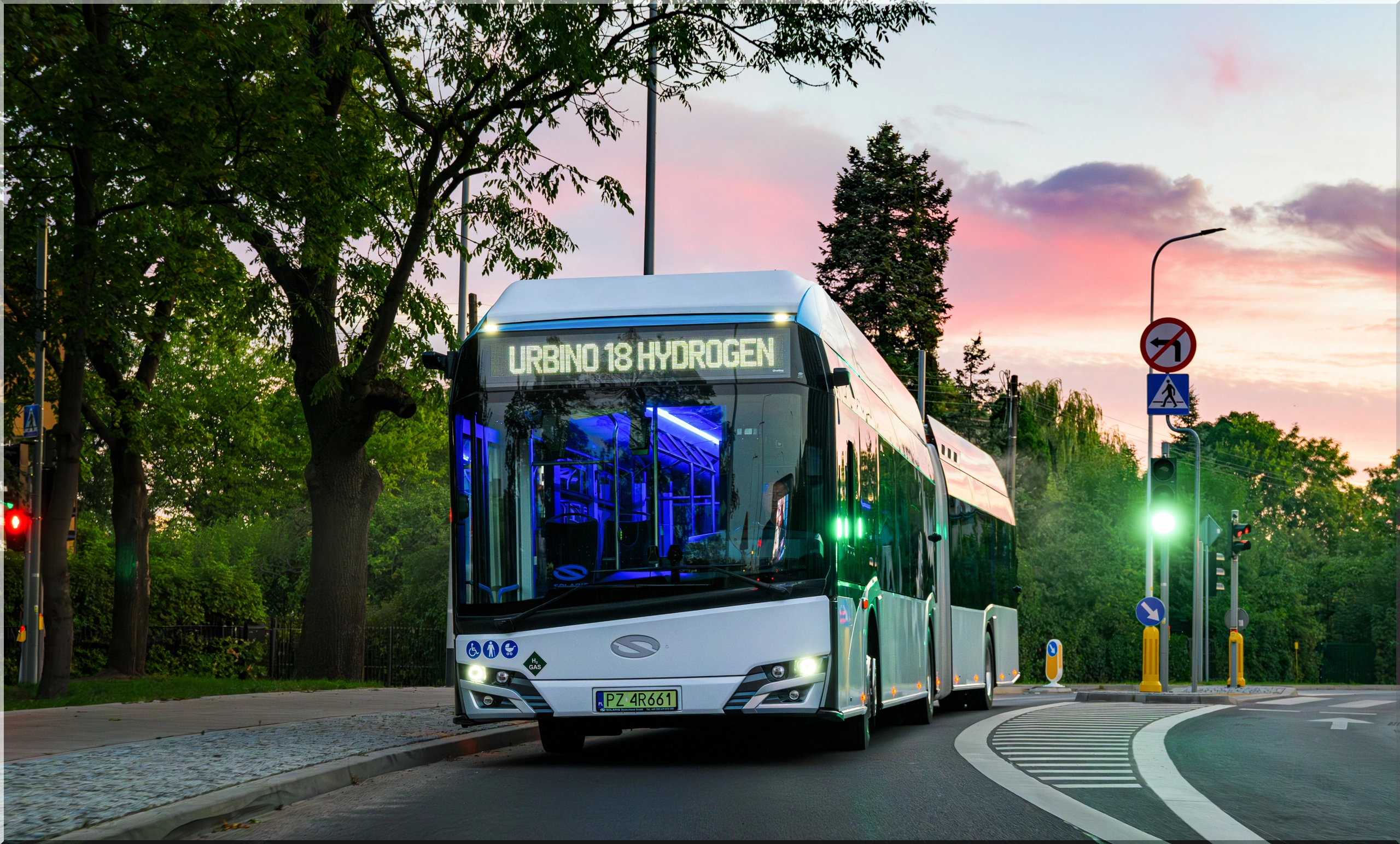
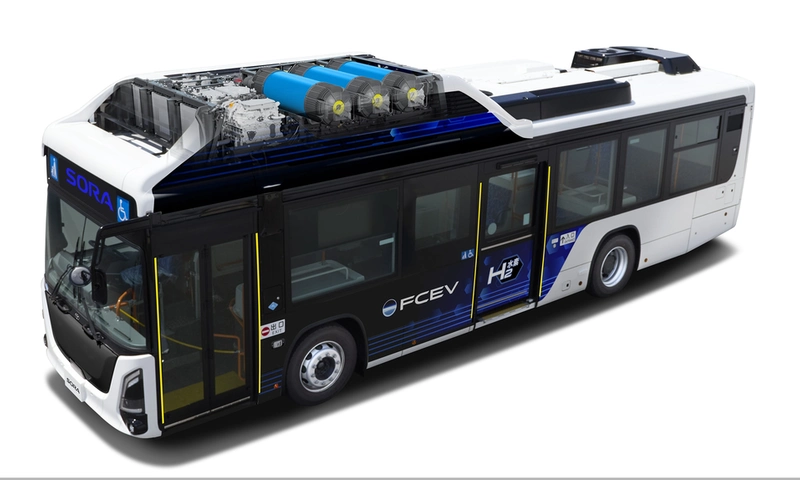
By comparison, the 18-meter model uses a central 240 kW electric motor and a 100 kW fuel cell. The modular drive with SiC technology supports efficient power conversion, while portal axles and roof-mounted hydrogen hardware protect interior volume. The 2,142-liter hydrogen storage system carries 51.2 kg of hydrogen in Type 4 composite tanks.
| Specification | Solaris Urbino 18 Hydrogen |
|---|---|
| Length | 18,000 mm / 708.7 in |
| Width | 2,550 mm / 100.4 in |
| Height | 3,300 mm / 129.9 in |
| Wheelbase | 5,900 mm + 6,000 mm |
| GVW | 29,000 kg |
| Electric motor | Central, 240 kW |
| Fuel cell | 100 kW |
| Hydrogen tanks | 2,142 liters / 51.2 kg |
| Battery | Solaris High Power, 60 kWh |
| Passenger capacity | Up to 140 |
| Maximum seats | 44, up to 52 optional |
| Door layout | 2-2-2-2 |
Safety, Accessibility, and Fleet ROI
The Krefeld buses will use camera systems in place of traditional mirrors, plus driver-safety and passenger-comfort systems. The Urbino 18 hydrogen technical package includes GSR2-related systems such as blind-spot monitoring, driver drowsiness warning, intelligent speed assistance, moving-off information, reversing detection, and tire-pressure monitoring.
Accessibility also plays a central role. Solaris says the buses will include ramps and wheelchair areas, which helps operators deploy zero-emission vehicles on regular public-service routes rather than limiting them to showcase lines.
Pro-Tips for Transit Operators Planning Hydrogen Bus ROI
- Match bus length to passenger density. Use 12-meter hydrogen buses on standard routes and 18-meter articulated units where peak passenger loads strain headways.
- Track hydrogen use by route, not by fleet average. Hills, HVAC demand, dwell time, and traffic cycles change real-world consumption.
- Use telematics early. eSConnect-style data helps planners compare fuel-cell load, battery buffering, driver behavior, and refueling timing before the fleet grows larger.
- Plan depot flow around refueling dwell time. Hydrogen can reduce route-charging complexity, but the refueling station must support morning pull-out and evening return windows.
What Now?
Krefeld's 19-bus order shows how hydrogen public transport has moved from pilot status into repeat procurement. Germany already ranks as Solaris' strongest hydrogen market, and Krefeld's second order shows why: operators can scale zero-emission service while keeping long-range flexibility and high-capacity route coverage.
For SWK Mobil Krefeld, the next step centers on execution. The operator must integrate new 12-meter and articulated hydrogen buses into schedules, train staff on fuel-cell systems, and use fleet data to prove operating cost discipline. The purchase gives Krefeld more zero-emission capacity. The results will depend on routing, refueling uptime, and daily utilization.
- Add new comment
- 56 views