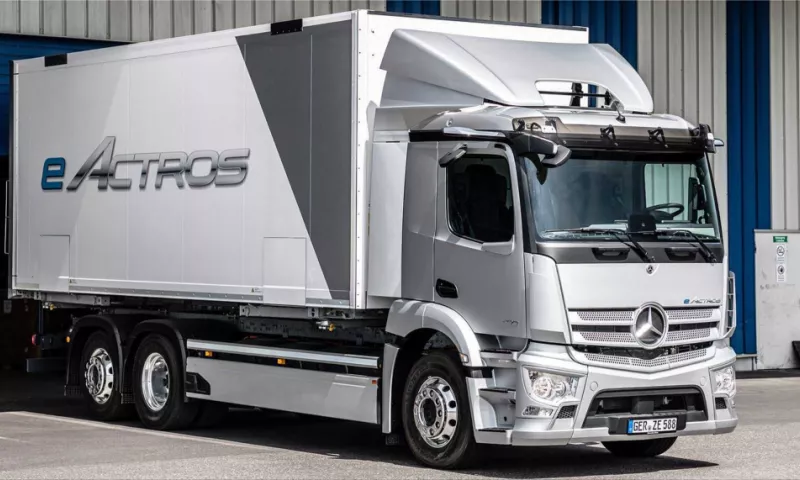
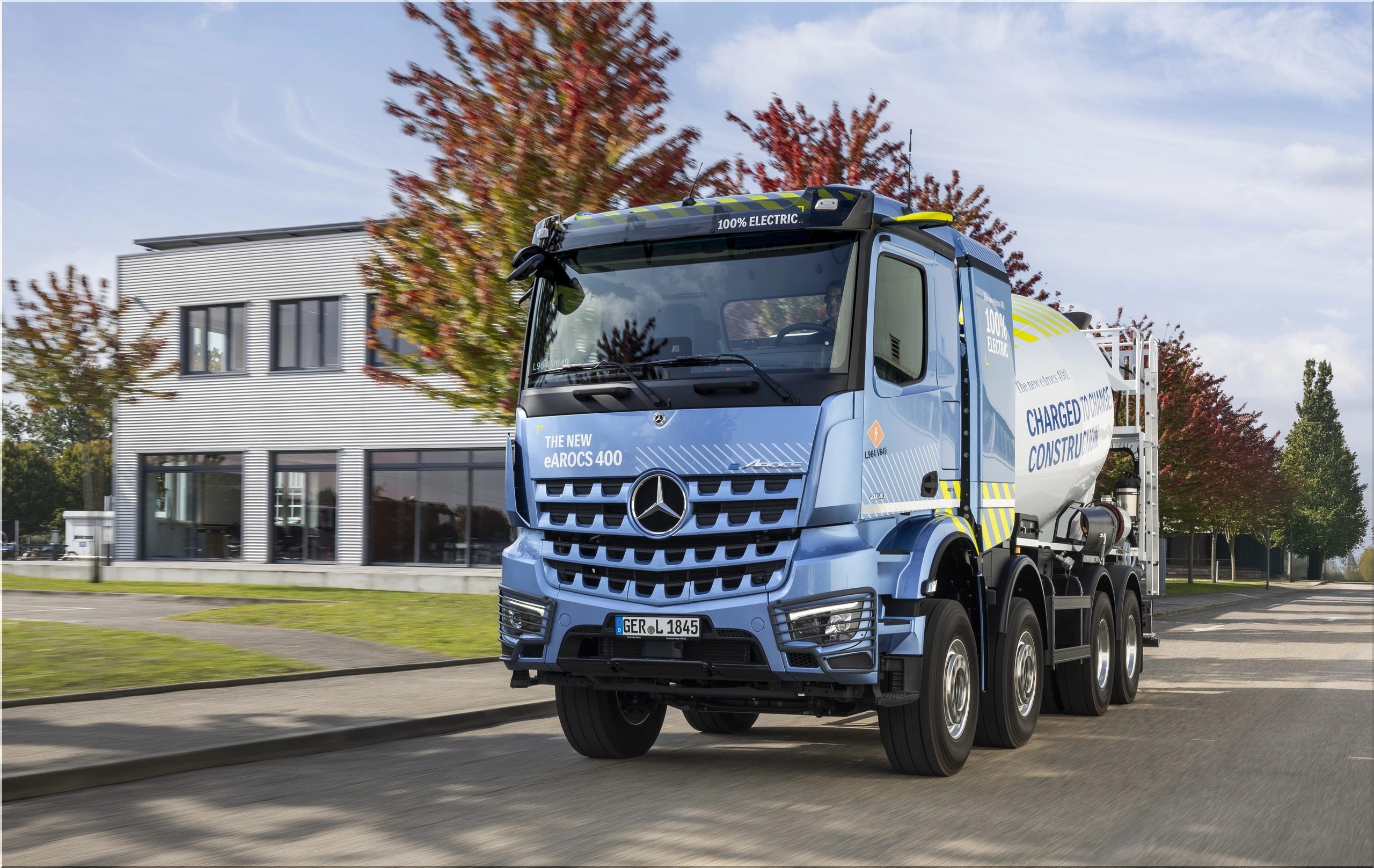
Mercedes-Benz Trucks is opening the order bank for the Mercedes-Benz eArocs 400 in April, and that matters because this is where fleet electrification stops talking about distribution vans and starts dealing with concrete, aggregate, and urban construction haulage.
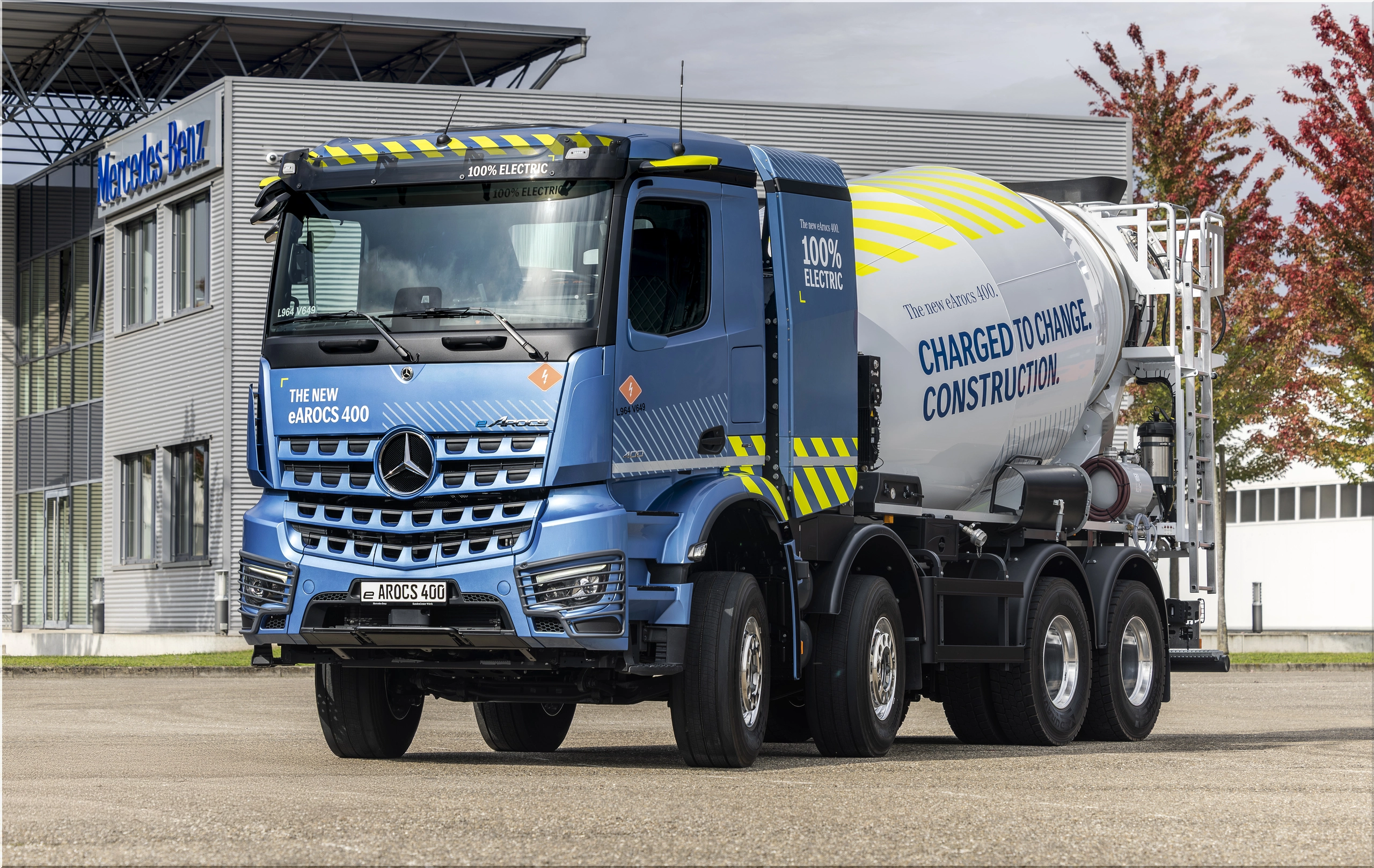
This truck targets real work. The battery-electric construction truck arrives with two LFP battery packs, an 800-volt architecture, a 3-speed transmission, and an 8x4/4 axle configuration aimed at dump bodies and concrete mixer applications. Looking at the data, Mercedes-Benz is pushing the eArocs 400 straight into the segment where low-noise operation, restricted urban access, and daily route predictability all collide.
Why the Mercedes-Benz eArocs 400 matters
The Arocs badge already carries weight in construction transport. Consequently, electrifying it gives Mercedes-Benz Trucks a way to move from pilot-stage urban logistics into heavier vocational duty cycles.
The logic is straightforward. Many road-focused construction fleets run single shifts, cover relatively short daily routes, and return to base. That operating pattern fits battery power far better than long-haul freight. In addition, construction firms working in dense cities now face tighter emissions rules, low-emission zones, and more pressure around nighttime noise. The eArocs 400 attacks all three.
Core specs: what Mercedes-Benz confirmed
Mercedes-Benz says the truck will initially be available in two versions with technically permissible gross vehicle weights of 37 tonnes and 44 tonnes. Specifically, it uses an 8x4/4 configuration and comes with four wheelbase options, though the company has not yet published the exact wheelbase figures in the release tied to the April order opening.
The battery system matters here. Each pack carries 207 kWh installed capacity, giving the truck a total installed capacity of 414 kWh. Mercedes-Benz also uses lithium iron phosphate battery technology, which makes sense in a vocational truck because LFP chemistry favors long service life, thermal stability, and high usable capacity over the raw energy density race that passenger EV marketing tends to obsess over.
Mercedes-Benz eArocs 400 key numbers
| Spec | Mercedes-Benz eArocs 400 |
|---|---|
| Order timing | Available to order starting April 2026 |
| Production start for base vehicle | Q3 2026 |
| Final drivetrain integration | Paul Group, Vilshofen an der Donau |
| GVW variants | 37 tonnes and 44 tonnes |
| Axle layout | 8x4/4 |
| Battery packs | 2 |
| Battery capacity | 414 kWh installed total |
| Battery chemistry | LFP battery |
| Electrical system | 800-volt architecture |
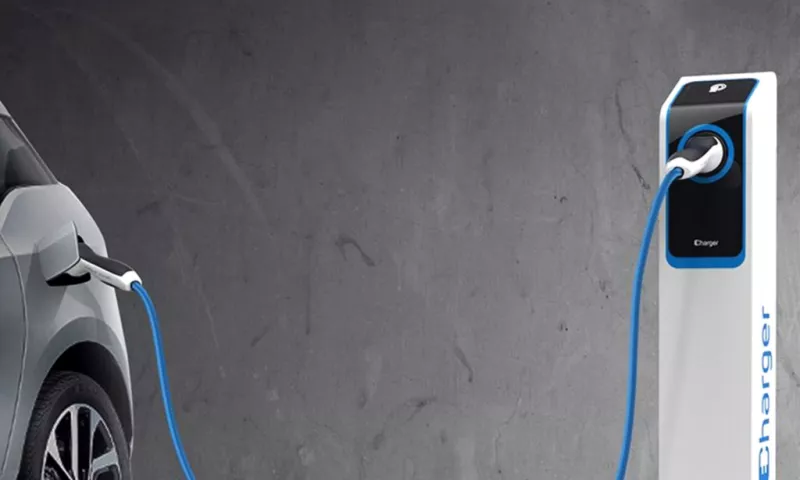
| Charging | Up to 400 kW DC via CCS2 |
| 10-80 percent charging time | About 46 minutes |
| Drive output | 380 kW continuous, 450 kW peak |
| Transmission | Integrated 3-speed transmission |
Range, charging, and what that means on a workday
Mercedes-Benz claims up to 200 kilometers of range in concrete mixer operation and up to 240 kilometers in dump truck operation. By comparison, the average daily distance in many urban construction cycles sits well below that threshold, which explains why Mercedes is talking about a full workday without intermediate charging.
That claim only works because the company stacked several efficiency plays together:
- Recuperation
- Electrically powered body functions
- High usable battery capacity from LFP
- An 800-volt system that supports high-power charging
- Duty cycles with frequent return-to-base routing
From an expert perspective, the charging figure is one of the most useful numbers in the whole release. A truck that can pull up to 400 kW and go from 10 to 80 percent in about 46 minutes has a realistic overnight-and-top-up operating case. That does not turn it into a cross-continent hauler. It does make it practical for municipal and contractor fleets with depot charging.

Operating profile table
| Use case | Claimed range | Typical fit |
|---|---|---|
| Concrete mixer | Up to 200 km | Urban concrete delivery, fixed-return routes |
| Construction tipper | Up to 240 km | Near-road dump work, municipal haulage |
| Charging rate | Up to 400 kW | Fast depot or opportunity charging |
| Charge window | 10-80 percent in about 46 min | Midday top-up or rapid turnaround |
Powertrain logic: why Mercedes used this setup
The eArocs 400 uses a central electric drive with an integrated 3-speed transmission, delivering 380 kW continuous and 450 kW peak. That is a smart vocational move.
A central drive lets Mercedes keep proven axle hardware in play. Specifically, the truck combines the electric drive with the brand's established hypoid and planetary axles, preserving the ground clearance and off-road capability that construction fleets need. Put simply, Mercedes did not try to reinvent the whole underbody just to say it did. It kept the rugged bits that already work.
That same thinking shows up elsewhere. The truck keeps a robust frame, steel suspension front and rear, tandem drive axles for traction, and an M-cab designed for low maintenance. The cab is fully galvanized, and Mercedes says the packaging supports maximum body length while keeping maneuverability in check. For a construction truck, that balance matters more than flashy aero language ever will.
Cab tech and safety systems
The cabin gets the Multimedia Cockpit Interactive 2, complete with voice control and an improved ergonomic switch layout. That sounds like a comfort feature, but it has a worksite angle too. A driver bouncing through rough access roads does not need a fussy interface.
Safety tech also lands where fleets now expect it to. Mercedes lists:
- Active Brake Assist 6 Plus
- Active Sideguard Assist 2
- Front Guard Assist
In addition, these systems support jobsite and road use where visibility, vulnerable road users, and constant stop-start movement create risk from every direction.
Winter testing says more than the press headline
Mercedes-Benz also put the eArocs 400 through winter testing near the Arctic Circle at temperatures down to -20 C. That matters because electric vocational trucks do not get judged in ideal weather. They get judged on cold starts, traction, charging behavior, and how hard the battery gets hit when the heater, drivetrain, and auxiliary systems all draw power at once.
Looking at the data, Mercedes focused on exactly those pressure points: snow and ice traction, driving stability, cold-start behavior, charging performance, drivetrain efficiency, and recuperation in winter operation. That does not answer every durability question, but it does show the program is moving past brochure-stage claims.
Definitions
LFP battery: Lithium iron phosphate chemistry known for long cycle life, thermal stability, and strong durability in commercial use.
8x4/4: Four-axle truck layout with four driven wheel positions suited to heavy vocational work.
CCS2 charging: European DC fast-charging standard used for high-power charging.
Pro-Tip for fleet buyers
Do not judge the Mercedes-Benz eArocs 400 on headline range alone. Judge it on route repeatability, idle-time reduction, access to low-emission zones, night-shift noise limits, and depot charging uptime. In construction, those factors often hit total operating value faster than raw distance.
What now?
Fleet operators should ask three hard questions before placing an order:
- Can your mixer or tipper routes stay inside a 200-240 km daily window?
- Do you have depot access to high-power charging that can exploit the truck's 400 kW capability?
- Will low-noise and zero-tailpipe operation open more urban work hours or access in your market?
If the answer is yes, the Mercedes-Benz eArocs 400 looks like a serious tool, not a compliance prop. It brings electric power into one of trucking's rougher assignments without stripping out the hardware that construction buyers actually care about. That is the real story here.
- Add new comment
- 68 views