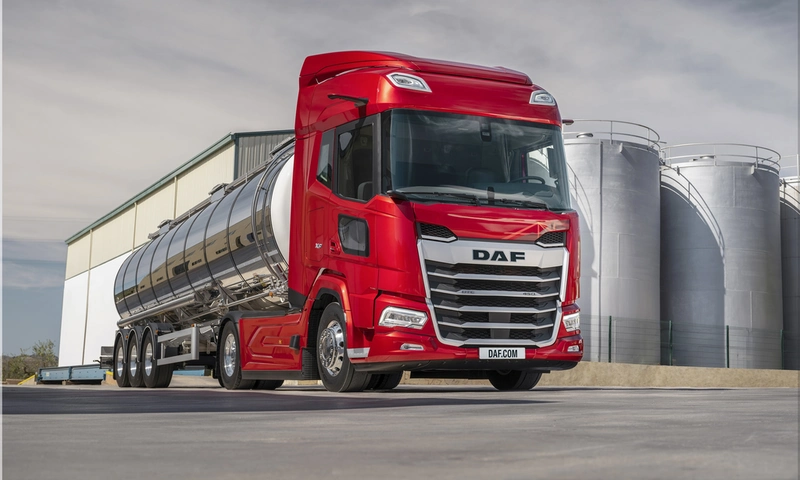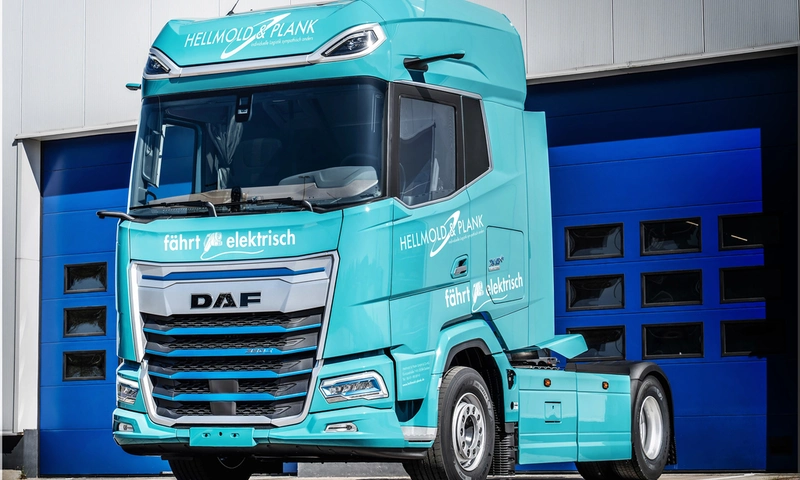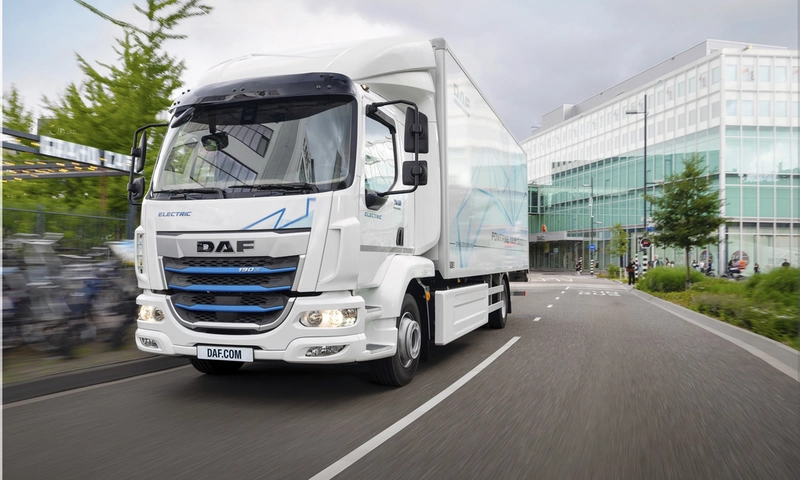
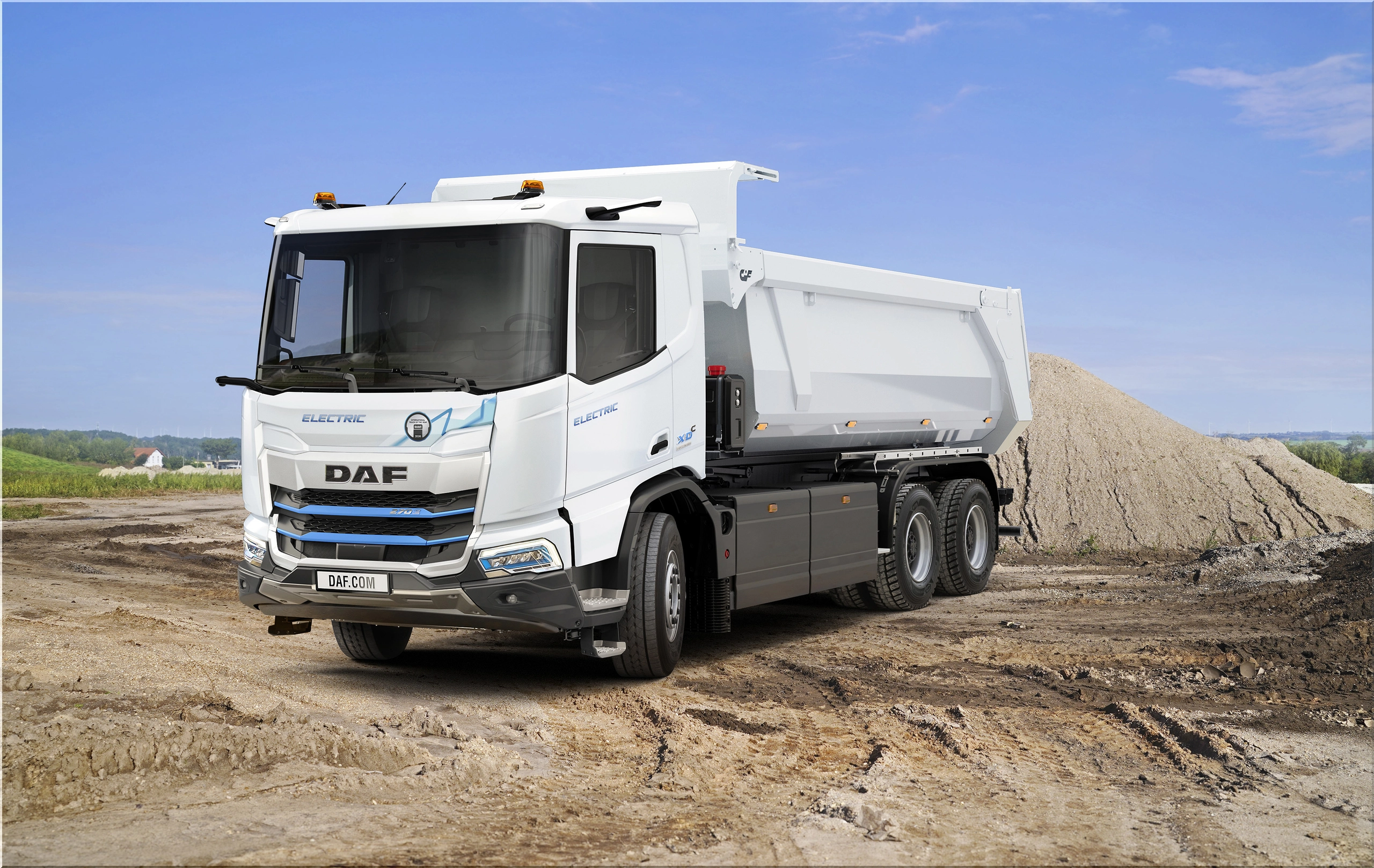
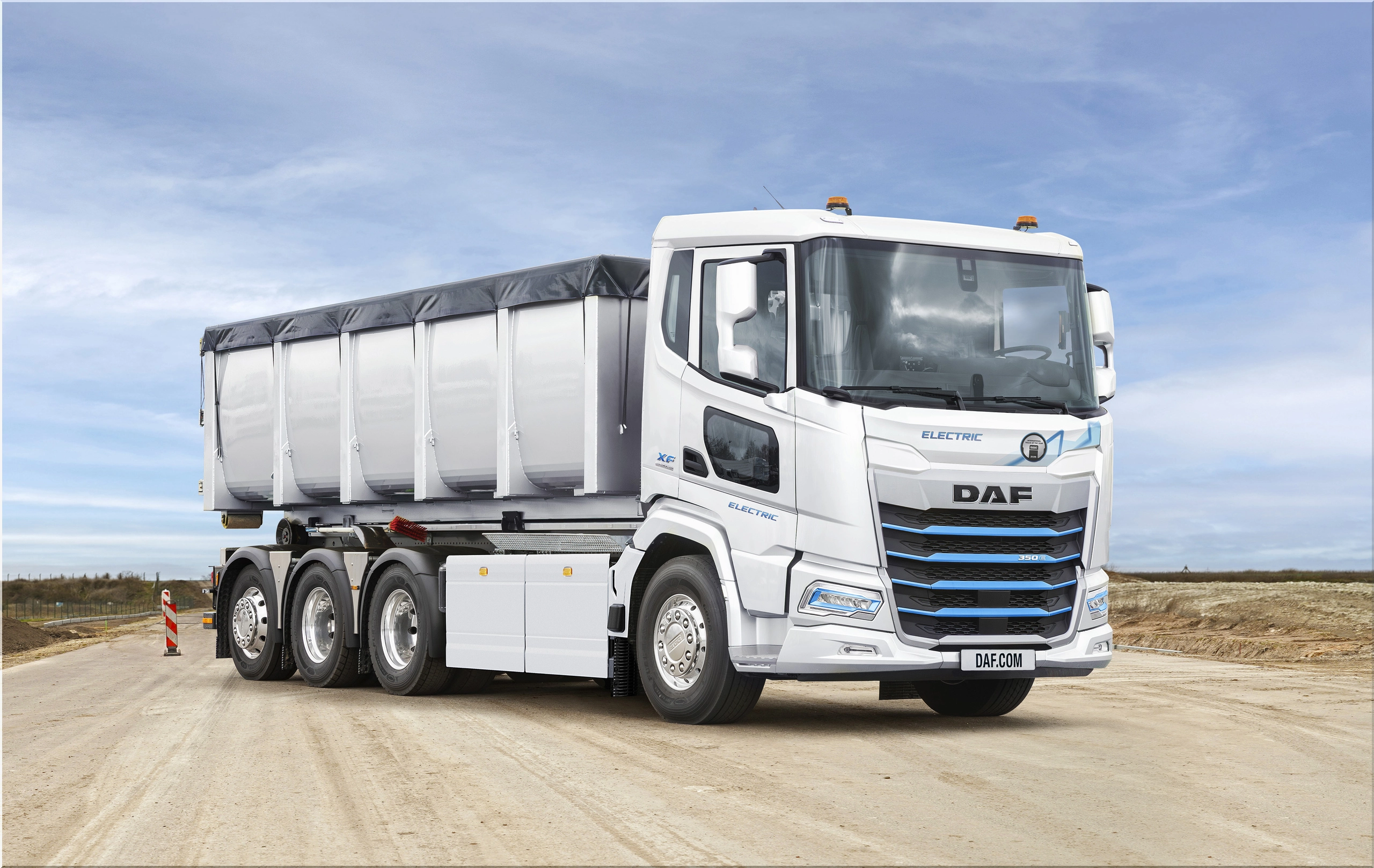
DAF just made its electric truck lineup far more useful. The Dutch brand no longer stops at straightforward 4x2 distribution work. It now pushes deeper into heavier duty territory with new 6x2 tractors, 6x2 rigids, 6x4 rigids, and 8x4 rigids across the XD Electric, XF Electric, XG Electric, and XG+ Electric families.
That matters because truck electrification has entered a tougher phase. Early battery-electric trucks handled urban delivery and short regional loops well enough, but many fleets still needed diesel for tippers, hook-lifts, construction support, heavy payload work, and multi-axle applications. DAF now attacks that gap head-on with axle layouts and chassis choices that target payload, traction, manoeuvrability, and bodybuilder flexibility instead of chasing headline range alone.
Looking at the data, DAF built this expansion around the parts that actually move fleet decisions: gross combination weight, battery packaging, e-PTO support, traction on rough sites, and charging speed that can fit a working day. That gives operators something more useful than a shiny concept. It gives them a truck they can spec for the job.
What DAF Added, and Why It Matters
The headline sounds simple: more axle layouts. The effect runs deeper than that.
DAF added new electric versions of these layouts:
- FTG and FTN 6x2 tractors
- FAS 6x2 rigids
- FAT 6x4 rigids
- FAW 8x4 rigids
Specifically, DAF targets operators that move construction materials, run tippers, carry swap bodies, handle demountable container systems, or need extra axle capacity without giving up zero-emission access. In many European cities, that access decides which fleet gets the contract and which fleet stays outside the gate.
DAF Electric Truck Range Expansion at a Glance
| Model layout | Key use case | Weight rating | Core benefit |
|---|---|---|---|
| FTG Electric 6x2 tractor | Heavy-duty distribution, building materials, high payload work | GCW up to 50 tonnes | Pusher axle setup improves axle load split and payload potential |
| FTN Electric 6x2 tractor | Urban and regional heavy-duty work with frequent manoeuvres | GCW up to 50 tonnes | Steered trailing axle improves turning behaviour |
| FAS Electric 6x2 rigid | Tippers, hook-lifts, demountable container systems | GVW up to 28 tonnes | Double-mounted 10-tonne trailing axle handles high static load |
| FAT Electric 6x4 rigid | Tippers, mixers, heavy site work | GVW up to 29 tonnes | Dual-drive rear axles give high traction on poor surfaces |
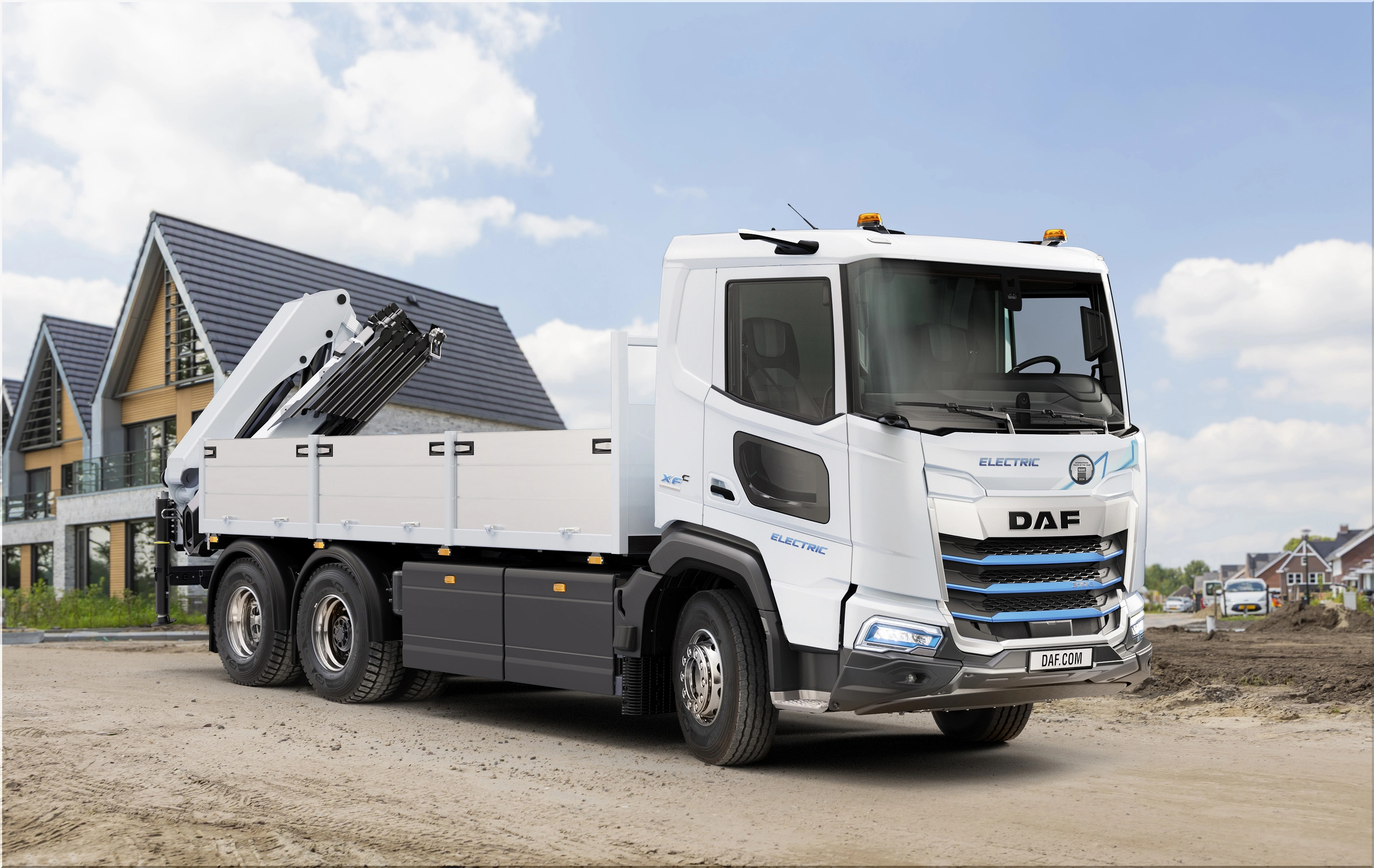
| FAW Electric 8x4 rigid | Crane bodies, asphalt, gravel, large-volume bulk loads | GVW up to 37 tonnes | Extra axle capacity plus useful manoeuvrability from a steered trailing axle |
By comparison, many battery-electric truck launches still lean heavily on 4x2 regional haul tractors. DAF now covers a much broader patch of commercial work. That shifts the conversation from "Can electric trucks do some jobs?" to "Which axle setup fits this contract best?"
Why the New 6x2 Tractors Matter More Than the Press Release Suggests
The FTG Electric may look like a niche entry, but it answers a real fleet problem. Operators often need extra payload and a clean axle load split, yet they still want sharp yard manners and city access. DAF says the FTG can use a steered or non-steered pusher axle, and that gives bodybuilders and fleet engineers more room to match the chassis to route profile, trailer mix, and loading pattern.
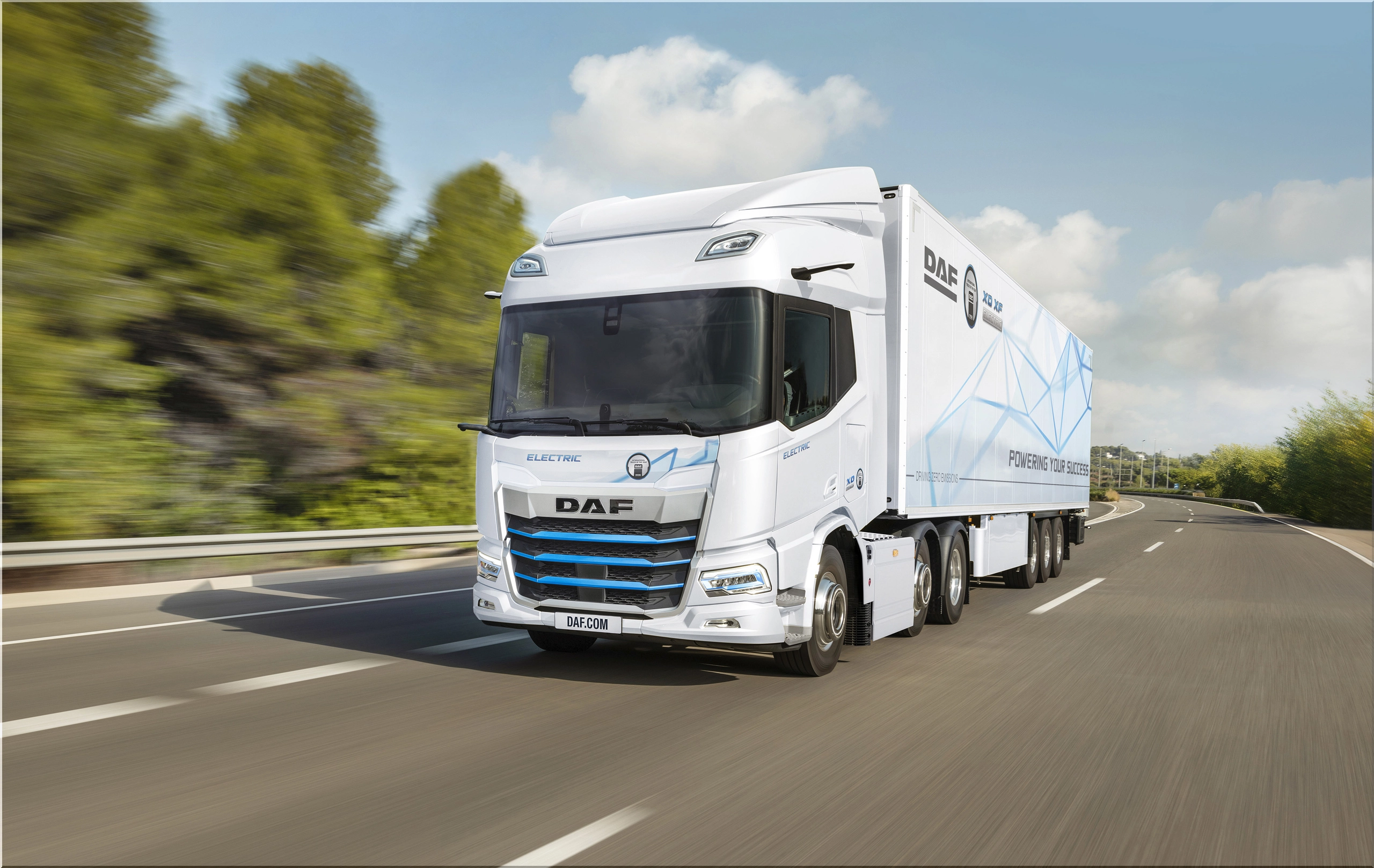
The FTN Electric attacks the turning-circle side of the equation. A steered trailing axle makes a big difference in cramped depots, older city streets, and construction access roads where a long wheelbase tractor has to work hard for every turn. DAF also says the FTN can carry three, four, or five battery packs, with the five-pack setup pushing range to more than 500 kilometres.
Consequently, the two 6x2 tractors let fleets choose between two very different priorities:
- FTG if axle load split and payload take the lead.
- FTN if turning performance and route flexibility take the lead.
That is smart product planning. A fleet buyer rarely asks for "an electric truck." They ask for a truck that survives the duty cycle.
The Powertrain Story: Why DAF's Three-Speed Layout Makes Sense
DAF uses two main electric drive units here: PACCAR EX-D1 and PACCAR EX-D2. Both sit midship and both work with a three-speed transmission that uses planetary gearing.
From an expert perspective, that design choice tells you DAF values operating efficiency across a wide speed band. A single-speed setup works well in lighter applications, but a three-speed arrangement gives the truck more freedom to keep the motor in a stronger efficiency window during launch, hill work, urban stop-start use, and higher-speed regional running.
DAF also says the drive unit uses two separate electric motors. Under partial load, the system can run on one motor to cut energy use. When the truck needs more shove during acceleration, grade climbing, or regeneration, the second motor joins in right away.
That gives fleets three gains at once:
- lower energy use in light-load or steady-state running
- stronger response when the truck needs torque
- less mass than a conventional heavy transmission layout
DAF Electric Powertrain and Battery Specs
| Driveline | Model fitment | Output range | Torque | Battery packs | Gross battery capacity | Regen power |
|---|---|---|---|---|---|---|
| PACCAR EX-D1 | Mainly XD Electric solo work | 170-270 kW (230-370 hp) | 1,500 Nm | 2 to 5 | 210-525 kWh | 270 kW |
| PACCAR EX-D2 | XD, XF, XG, XG+ Electric heavy-duty work | 270-350 kW (370-480 hp) | 2,400 Nm | 3 to 5 | 315-525 kWh | 350 kW |
Looking at the data, EX-D1 suits urban distribution, waste work, and lower-weight rigid jobs. EX-D2 serves the heavier end of the range, including 50-tonne GCW applications and the new multi-axle tractors.
That split keeps the range logical. Fleets do not pay for power they do not need, but DAF still offers enough top-end shove for regional haulage and site-focused work.
Battery Strategy: DAF Chose LFP for a Reason
DAF uses LFP batteries across the lineup, and that decision tells you plenty about the brand's target customer. LFP chemistry usually trades some energy density for durability, thermal stability, and easier repeated charging to full state of charge.
For a commercial vehicle, those gains matter. A fleet operator cares less about bragging rights and more about:
- stable performance across years of daily use
- safe charging at depots
- battery life that holds up under hard cycling
- simpler operating routines for drivers and dispatchers
DAF says its lithium-iron-phosphate battery packs are cobalt-free and nickel-free, come with an 8-year warranty, and can handle regular 100% charging without harming lifespan. That makes the pack choice sound conservative in the best way. Fleet managers like conservative when uptime and depreciation sit on the line.
Charging, Range, and Daily Usability
DAF claims zero-emission range of more than 500 kilometres with the largest battery setups. It also says the trucks can cover up to 1,000 fully electric kilometres per day with the right charging plan.
That second claim deserves context. It does not mean every route can do it. It means the truck, battery pack, charger access, and shift plan can support that kind of day if the operator controls stops and timing.
Specifically, DAF states that a three-pack XG or XG+ Electric can charge from 10% to 80% in a little over 45 minutes. Earlier DAF technical material also points to DC fast charging up to 325 kW, which fits the same strategy: keep the stop short enough to make route planning workable for heavier commercial use.
Definition: GCW vs. GVW
- GCW means gross combination weight. It covers the truck plus trailer.
- GVW means gross vehicle weight. It covers the truck itself when loaded.
That distinction matters here because DAF stretches its electric reach into both tractor-trailer work and rigid vocational jobs.
Construction and Vocational Buyers Get the Real News Here
The FAT 6x4 and FAW 8x4 models carry the biggest strategic punch. Fleet buyers in construction do not care much about smooth launch videos. They care about grip, axle loading, chassis packaging, and if the truck can carry hydraulic or electric body equipment without ugly compromises.
DAF answers that with a few useful moves.
First, it offers double-driven tandem rear axles for the heavy trucks. Second, it gives buyers a choice of single or hub reduction plus leaf spring or air suspension on the heavier tandems. Third, it supports body equipment with an optional 650 V e-PTO, available in 25 kW, 60 kW, and 100 kW versions.
That matters for:
- electric cooling units
- demountable systems
- tipper bodies
- crane support equipment
In addition, DAF says the XDC and XFC Electric construction versions offer 40 cm (15.7 in) of ground clearance, depending on tyre size, and a 25-degree approach angle. Those numbers matter on broken site entrances, ramps, and loose-surface work areas where battery-electric trucks still have to prove they can behave like real vocational machines.
Cab Space Still Matters in an Electric Truck
Operators buy trucks for work, but drivers still spend long days inside them. DAF knows that. The new XG Electric and XG+ Electric push the long-haul comfort story hard.
DAF says the XG and XG+ cabs run 33 cm (13.0 in) longer than the XF, with total cab volume of 12.5 cubic metres, standing height of up to 2.2 metres (86.6 in), and a bed width of 80 cm (31.5 in) along its full length.
That matters for driver retention as much as comfort. A truck that sleeps well, stores gear well, and cuts driver fatigue helps fleets keep staff. In Europe's long-haul market, that still counts.
Why DAF's Packaging Could Win More Orders
The smartest part of this launch may sit under the bodywork. DAF uses modular battery placement to free up chassis space and improve bodybuilder friendliness. That gives upfitters more freedom for side-loader systems, cranes, demount equipment, and other vocational hardware.
Consequently, this range expansion solves more than an emissions problem. It solves a packaging problem, and that often blocks electric truck adoption faster than battery range does.
Pro-Tips for Fleet Buyers
- Start with the route map, not the brochure. Pick axle layout, battery count, and motor rating after you map payload, stops, gradients, and depot charging windows.
- Use the smallest battery pack that still clears the duty cycle. Lower battery mass can help payload and tyre wear.
- Match the e-PTO rating to the body. A tipper or hook-lift setup needs a very different power plan than a reefer or box body.
- Watch turning behaviour. A steered trailing axle can save time and stress on tight urban and site routes.
- Run the charging plan with real dwell times. A truck can hit the claimed day range only if dispatch and charging line up.
What Fleet Operators Should Do Next
DAF's bigger battery-electric truck range gives fleets a sharper path into jobs that diesel still dominates today. The biggest winners could come from three groups: urban construction suppliers, rigid vocational fleets, and regional operators that need more axle capacity without giving up zero-emission access.
What should a buyer do next?
- Audit routes by payload and dwell time. That will tell you if EX-D1 or EX-D2 fits.
- Split applications into urban, regional, and site-heavy work. One battery layout will not suit all three.
- Speak with the bodybuilder early. Battery placement, axle choice, and e-PTO demand all affect the final truck.
- Plan depot charging with future growth in mind. One or two electric trucks look easy. Twenty do not.
- Test the truck in the real job. Tipper work, hook-lift work, and city distribution punish weak assumptions fast.
DAF did not release a fantasy truck here. It widened its electric portfolio in the places that fleets actually care about: payload, traction, manoeuvrability, charging, upfit freedom, and operator comfort. For Europe's vocational and regional truck market, that move looks sharp, timely, and commercially grounded.
- Add new comment
- 64 views