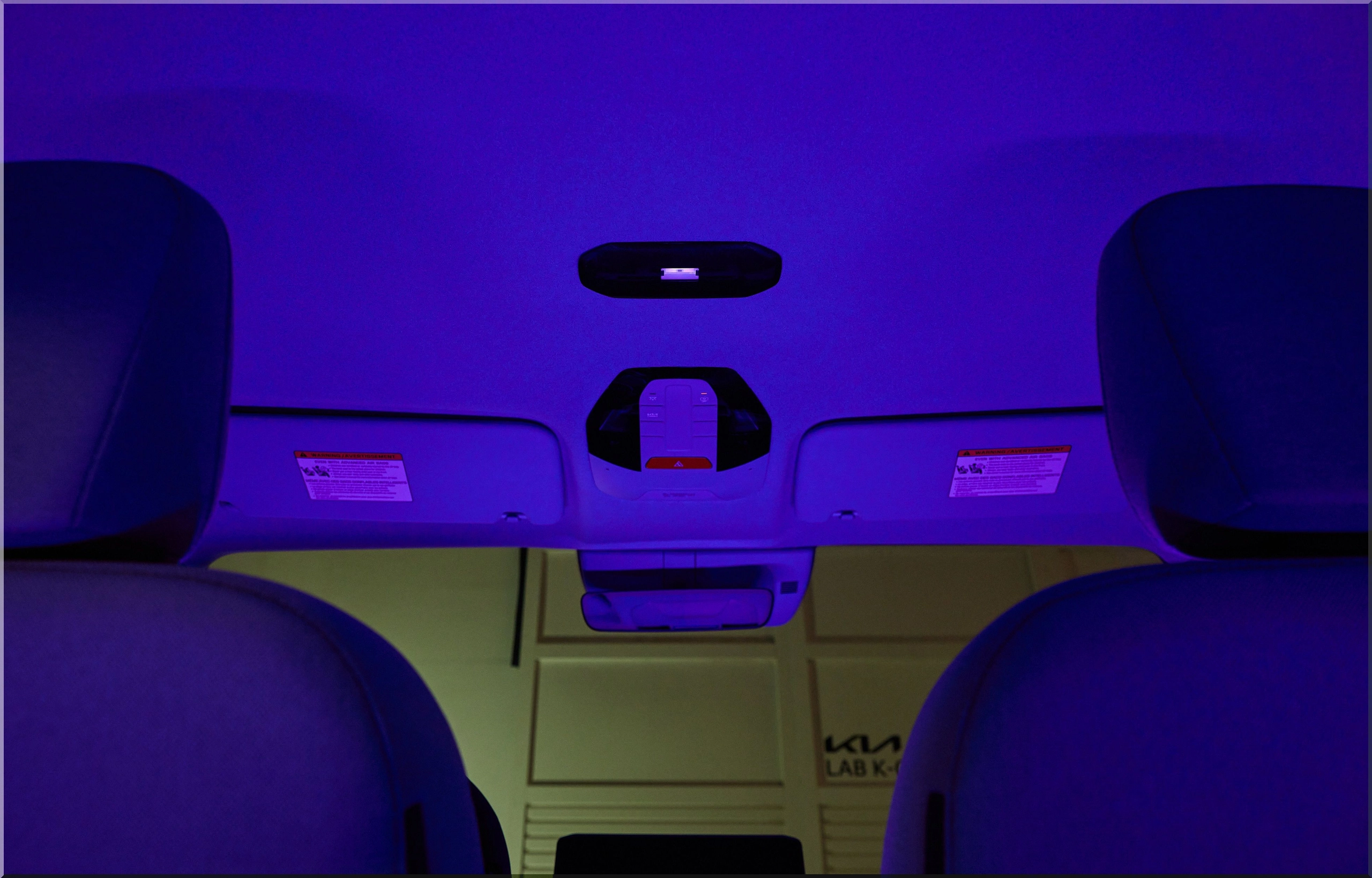
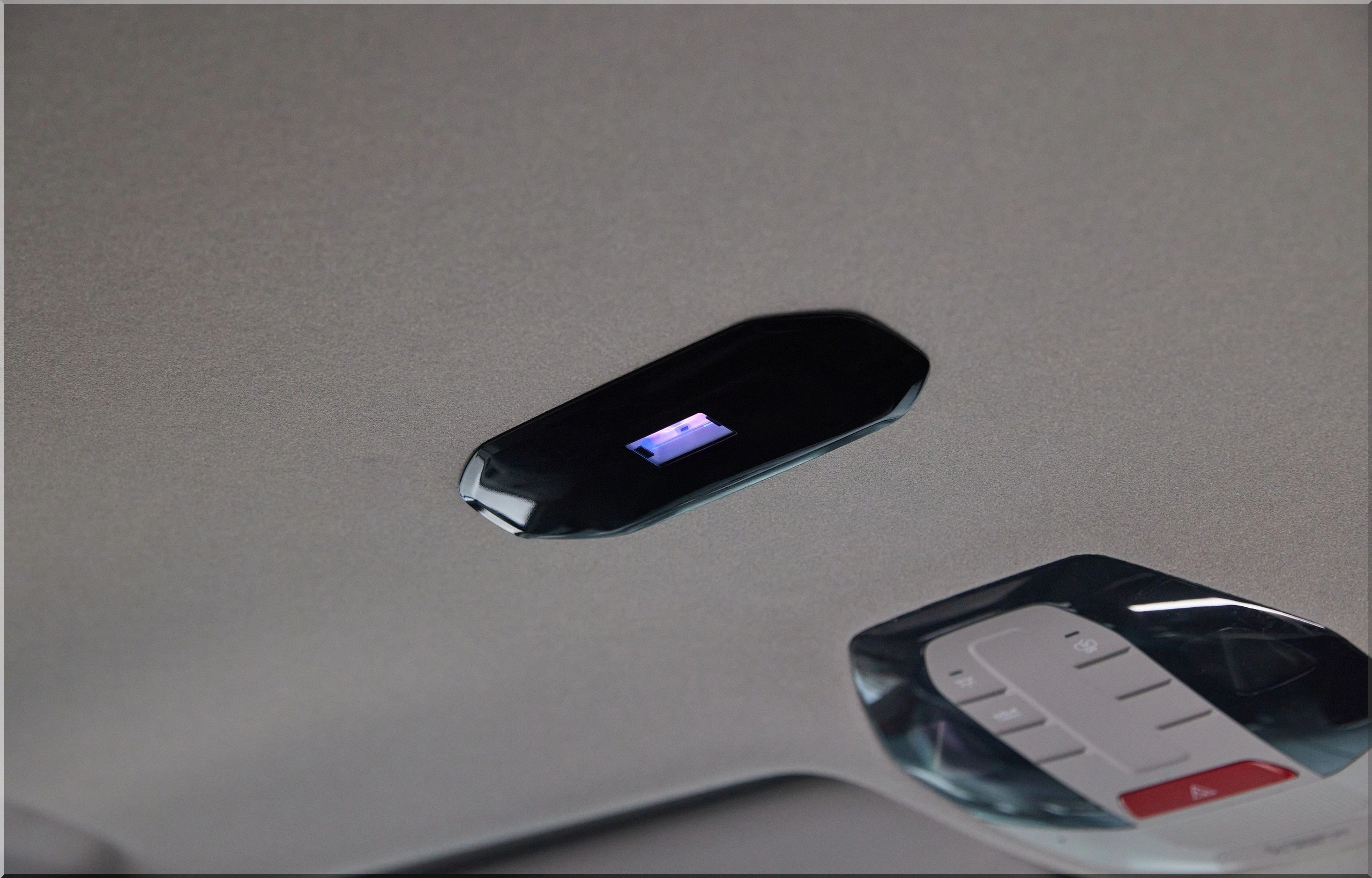
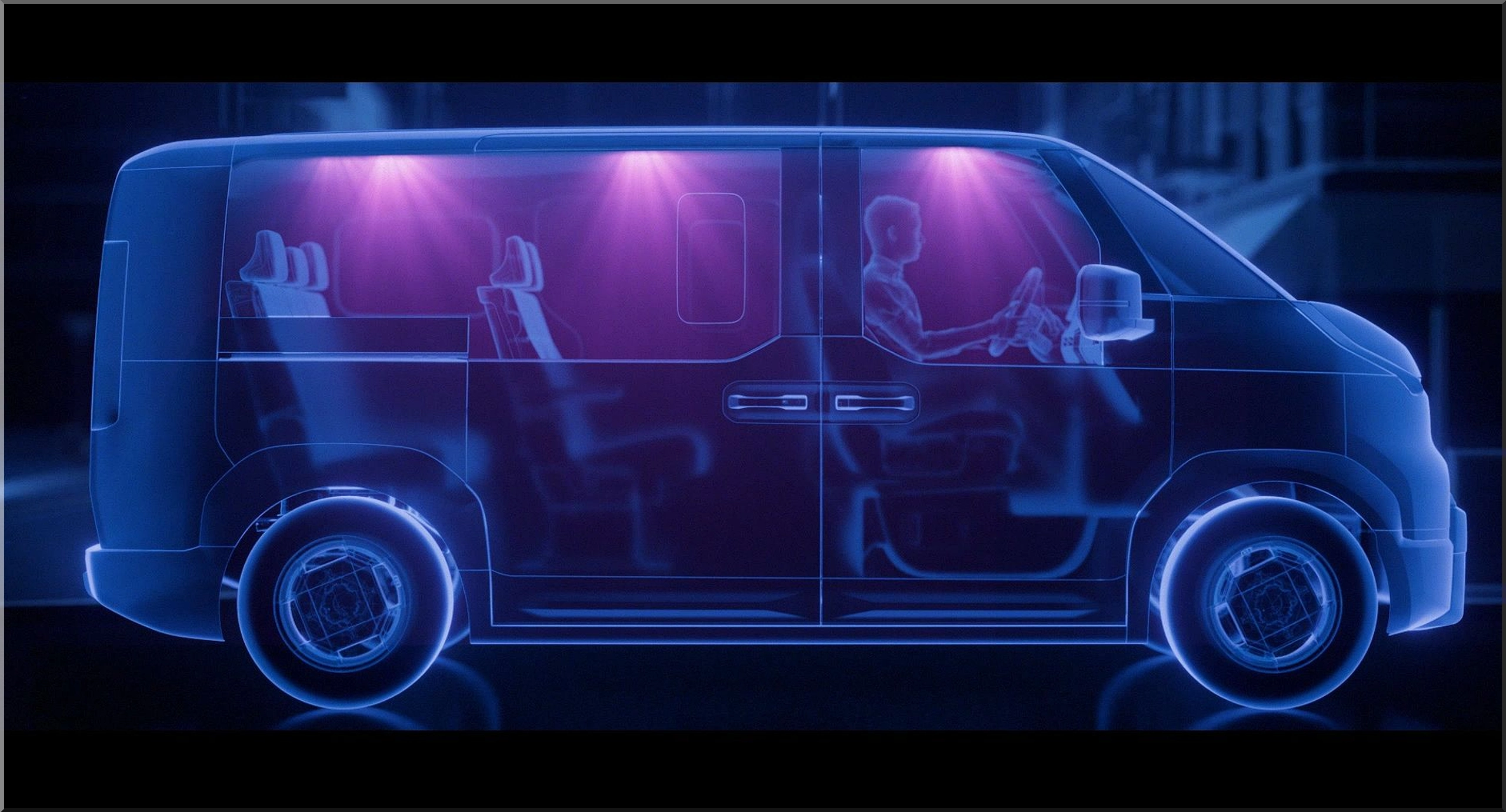
Hyundai Motor and Kia have developed Plasma Care UVC technology, a plasma-lamp system that emits 200-230 nm Far-UVC light across an occupied vehicle cabin. They call it the first plasma-lamp sanitation system designed for an open vehicle cabin with passengers aboard. It targets airborne and surface microorganisms while reducing odor compounds linked to microbial growth, making the idea relevant to shared shuttles, school transport, robotaxis, and purpose-built vehicles.
How does Plasma Care UVC sanitize an occupied cabin?
Far-UVC cabin sanitization relies on wavelength and controlled dose. The short-wave light carries enough energy to damage microbial DNA and RNA, while its low penetration depth limits how far it travels into human tissue. Specifically, Hyundai and Kia added a specialized optical filter that blocks unwanted wavelengths before light enters the cabin.
| Light band | Wavelength | Source or use | Cabin implication |
|---|---|---|---|
| UVA | 315-400 nm | Industrial curing | High penetration; no primary germicidal role here |
| UVB | 280-315 nm | Medical phototherapy | Produces direct biological effects |
| Conventional UVC | 255-280 nm | LED sanitizers | Requires enclosed compartments due to skin and eye risk |
| Far-UVC | 200-230 nm | Plasma lamp | Targets open-cabin sanitation under controlled exposure |
In addition, engineers adapted hardware originally suited to hospitals and schools for an automotive package. Their work focused on four areas:
- A plasma lamp generates wavelengths that conventional LEDs struggle to produce.
- Miniaturized controls reduce packaging and electrical demands.
- Reinforced hardware tolerates vibration and temperature swings.
- The optical filter provides a second barrier against unwanted emissions.
What did Hyundai and Kia's tests show?
Looking at the data, three independent programs moved from a chamber to a component and then a complete Kia PV5. Each test measured a different organism, exposure geometry, and duration. Consequently, the percentages show strong potential, but they do not establish one universal sanitation rate for every seat, surface, airflow pattern, or cabin layout.
| Evaluator and date | Test setup | Target | Reported result |
|---|---|---|---|
| Korea Testing Laboratory, June 21, 2022 | 8 m3 (282.5 ft3) chamber, 30 minutes | Airborne viruses | 96.8% reduction |
| Seoul National University center, June 1-September 30, 2023 | Lamp component, 30 and 60 seconds | Pneumonia-causing bacteria | 99.9% at 30 seconds; complete at 60 seconds |
| Korea Automotive Technology Institute, March 23-24, 2026 | Kia PV5, 700 mm (27.6 inches), 40 minutes | E. coli | 99.9% reduction |
By comparison, the 30-second component result and 40-minute vehicle result answer separate questions. Lamp position, shadows, upholstery, passenger movement, airflow, and initial contamination all change delivered dose. Hyundai and Kia still need repeatable occupied-cabin data across vehicle sizes and operating modes.
Can fleets justify Plasma Care UVC investment?
From an expert perspective, fleet ROI remains unproven because Hyundai and Kia have disclosed no price, lamp service life, power draw, replacement interval, cleaning-labor savings, or production date. Operators therefore lack the inputs required for a defensible cost-per-cycle model. Still, high-turnover passenger and food-service vehicles present a credible use case.
Pro-Tips for fleet buyers
- Ask for IEC 62471 compliance documentation, dose maps, lamp-life data, and spectral output after aging.
- Compare cleaning minutes saved per shift with energy use, filter cost, downtime, and manual wipe-down requirements.
- Demand results for occupied cabins, HVAC circulation, shaded surfaces, and each planned seating configuration.
Hyundai and Kia currently classify this in-vehicle sanitization technology as research and development. It still requires technical validation, engineering work, and legal, regulatory, and certification approvals before production.
- 8 views