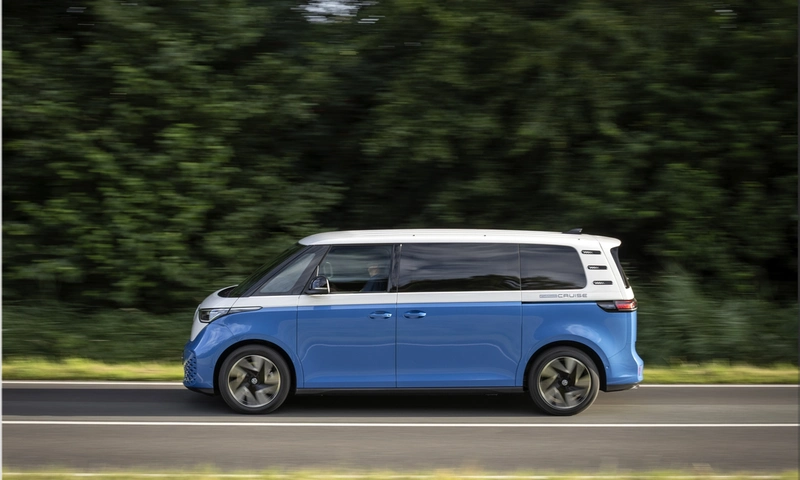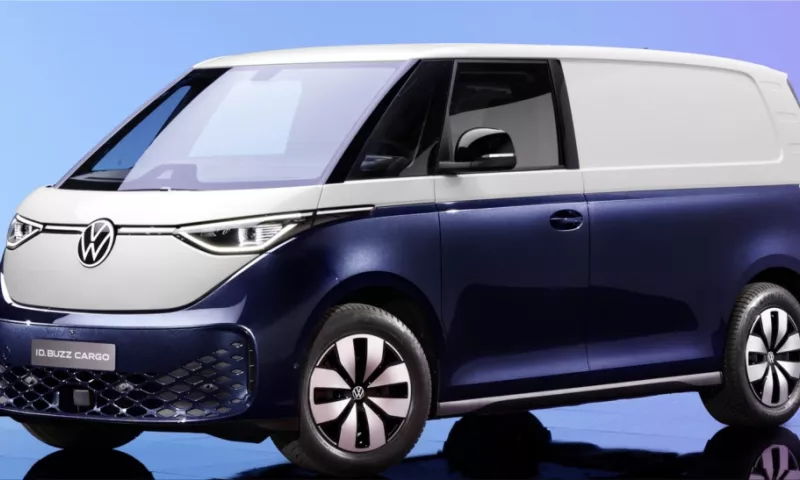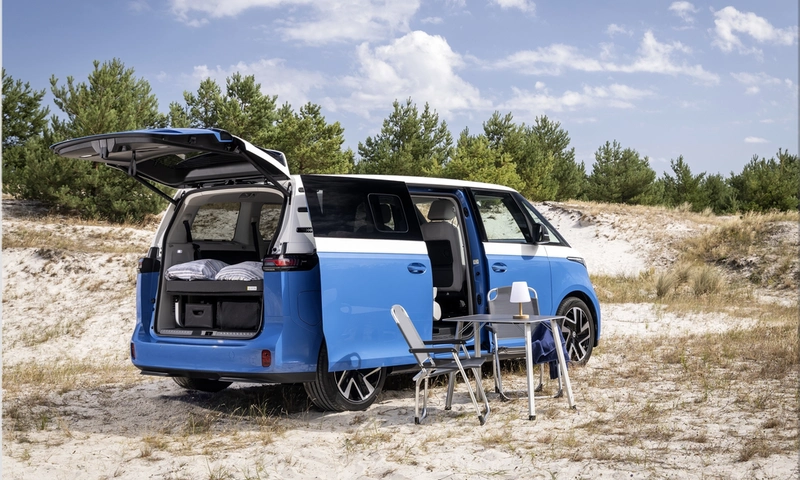
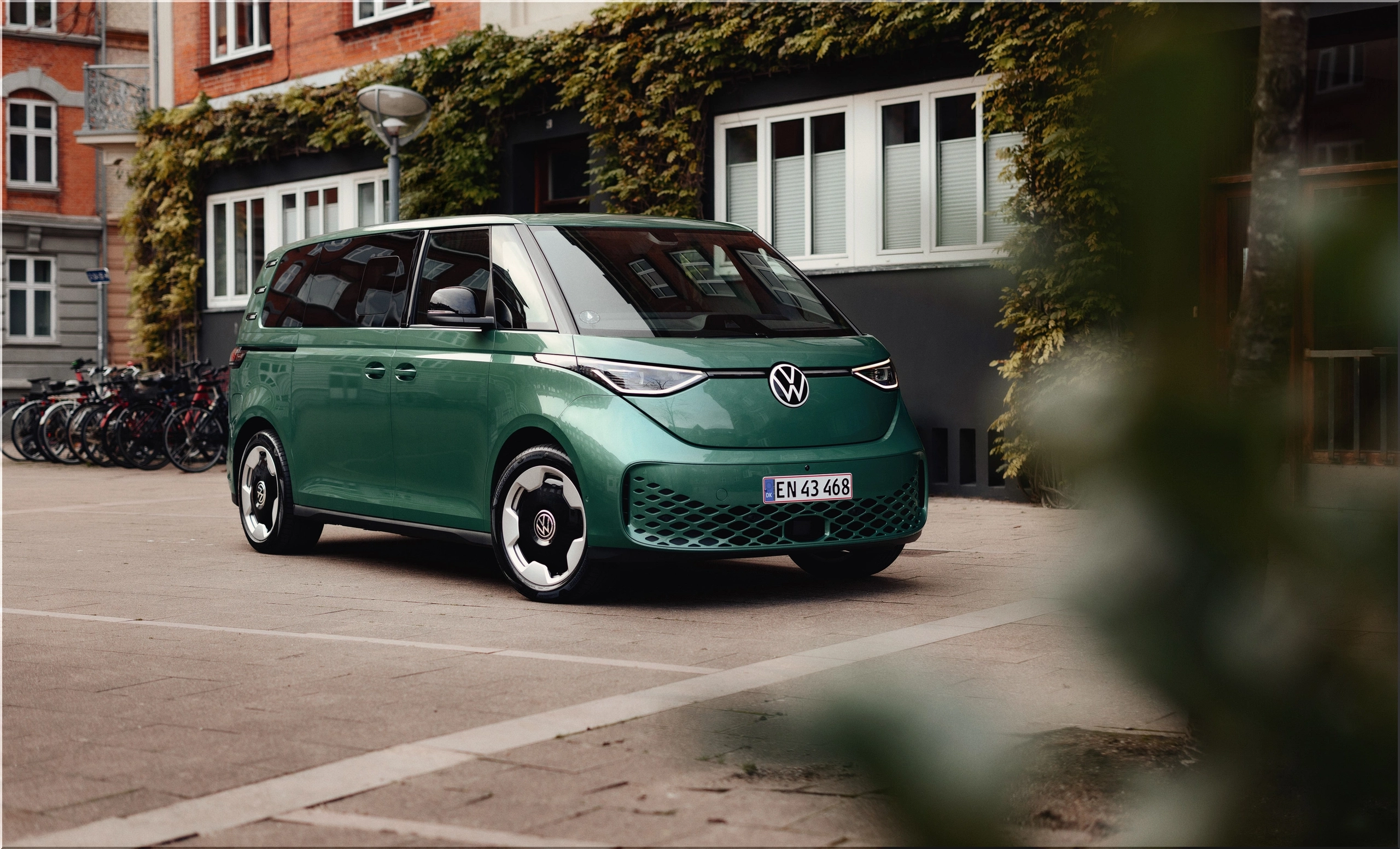
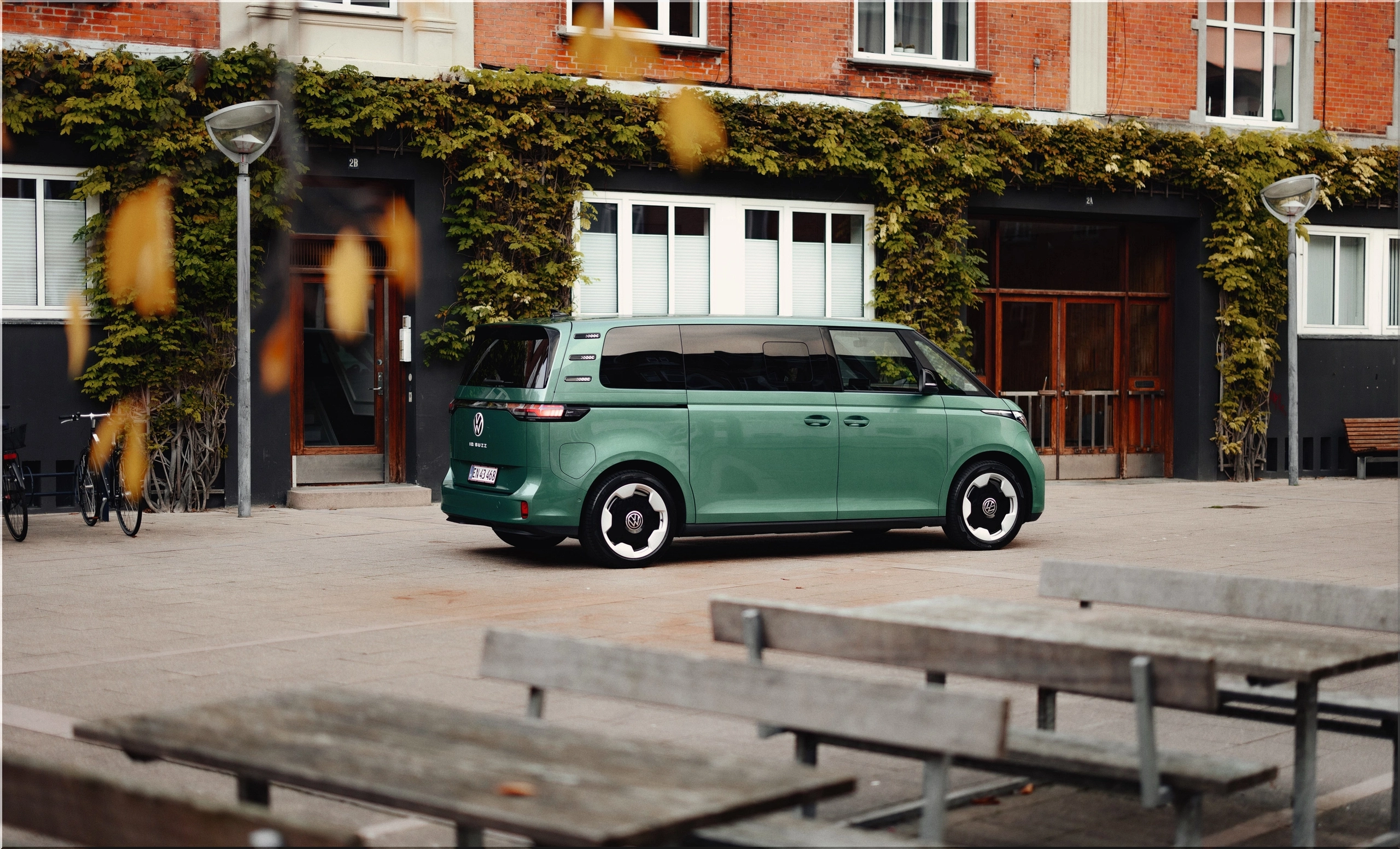
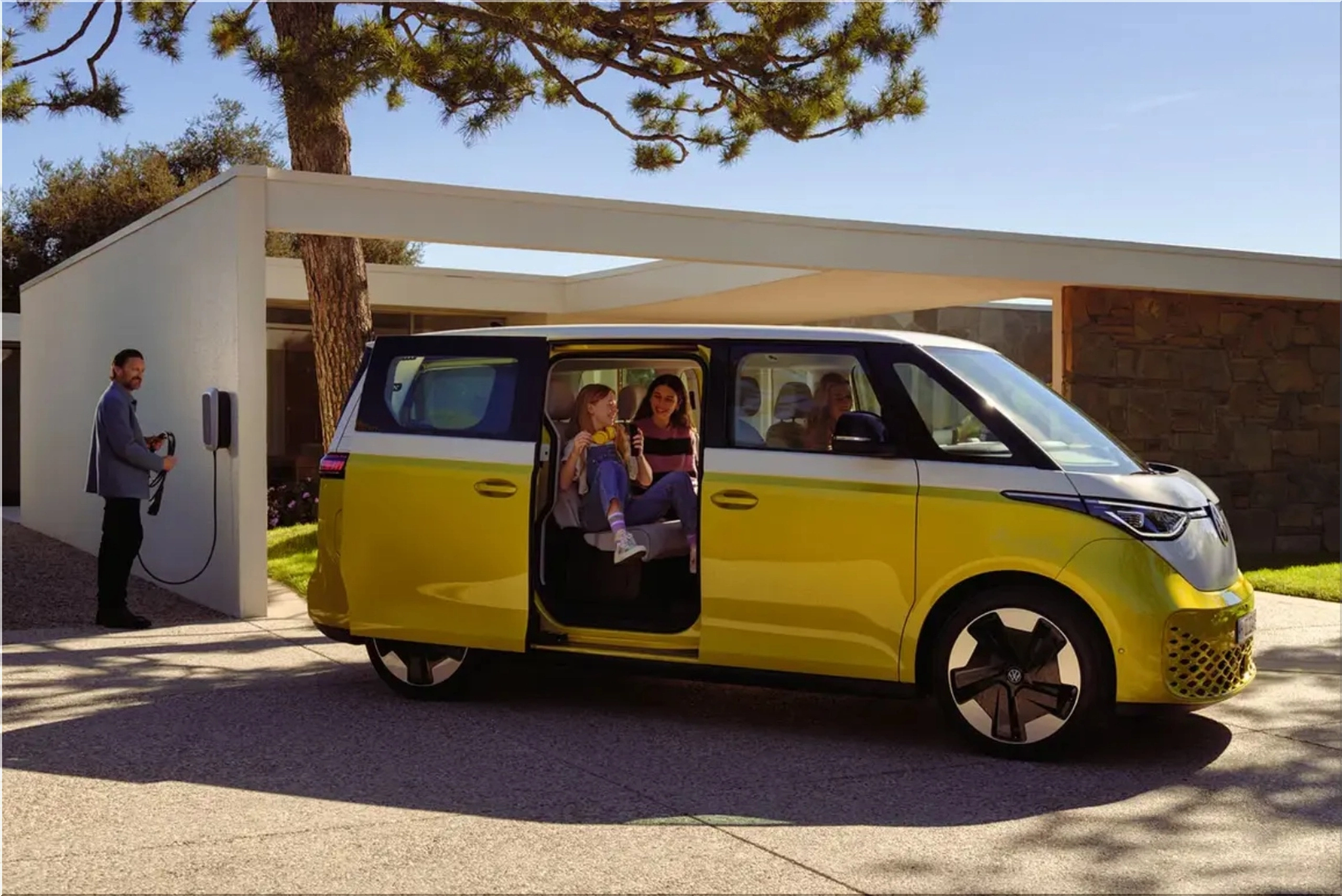
Volkswagen built the Volkswagen ID. Buzz to solve a specific problem: moving a lot of people comfortably without driving a box that feels like a penalty. The new private leasing push makes that pitch easier to act on, because the monthly numbers now land in a range that families actually compare against mainstream crossovers.
Short version: the long-wheelbase ID. Buzz Lang (7-seat) sits at the center of the offer, and the data backs up why. More wheelbase. More battery. More fast-charge headroom. Consequently, the long model finally lines up with how buyers use this thing: school runs on weekdays, highway runs on weekends, and cargo chaos all the time.
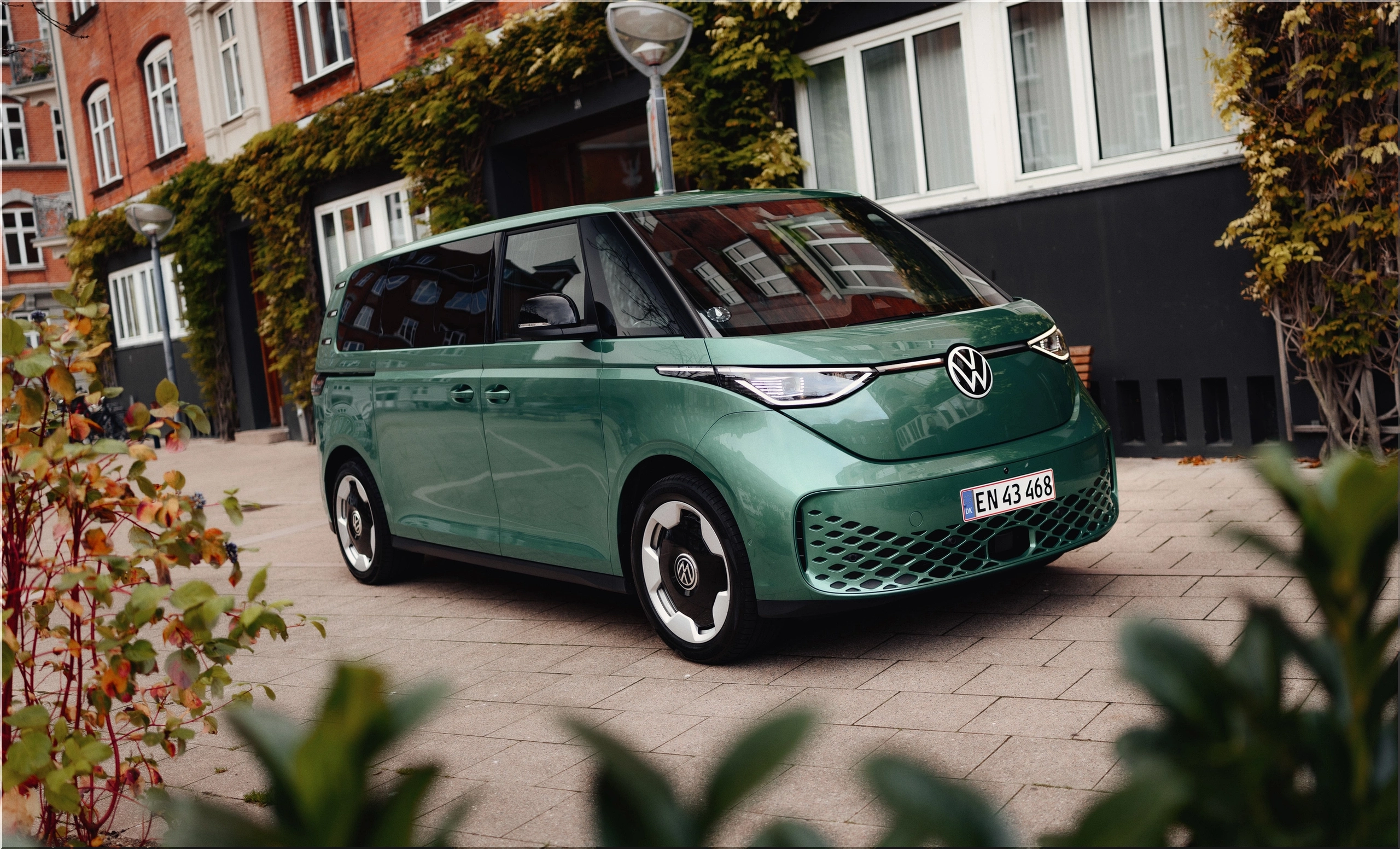
Below, you will get the leasing math, hard specs in mm and inches, charging metrics that matter, and a competitor comparison that does not pull punches.
The Offer in Plain Numbers (Converted to USD)
Volkswagen positions the leasing offer around the most-selected configuration: ID. Buzz Lang in Life trim, with 7 seats, a larger battery, and higher peak DC charging. Specifically, the offer locks a 48-month term with a sizeable upfront payment, then applies mileage-based monthly pricing.
Private leasing pricing overview (USD estimates)
| Model / Plan | Seats | Term | Annual miles (approx) | Upfront (USD) | Monthly (USD) | Notes |
|---|---|---|---|---|---|---|
| ID. Buzz Life Lang | 7 | 48 months | ~6,214 mi (10,000 km) | $7,110 | $584 | Long wheelbase, 86 kWh usable battery |
| ID. Buzz Life Lang (higher mileage add-on) | 7 | 48 months | ~9,321 mi (15,000 km) | $7,110 | +$32 | Add-on vs 10,000 km plan |
| ID. Buzz Life Kort | 5 | 48 months | ~6,214 mi (10,000 km) | $7,110 | $521 | Shorter wheelbase, 5-seat |
| ID. Buzz Style Kort | 5 | 48 months | ~6,214 mi (10,000 km) | $7,110 | $710 | More luxury equipment, same 286 hp drive |
| ID. Buzz GTX | varies by market | 48 months | ~6,214 mi (10,000 km) | $7,110 | $900 | Dual-motor AWD, 340 hp, tow rating up to 1,800 kg |
| ID. Buzz Life Kort (pendlerleasing example) | 5 | 48 months | ~43,496 mi (70,000 km) | $7,110 | $773 | High-mileage plan example |
What the total-cost lines really mean
The offer also lists total cost over 48 months and minimum cost in a 12-month binding period (in DKK). Those figures matter because families often exit early or change mileage needs.
| Cost line item (Life Lang example) | DKK | USD estimate |
|---|---|---|
| Total cost over 48 months (from) | 222,960 | $35,228 |
| Minimum cost in 12-month binding (from) | 89,940 | $14,211 |
By comparison, many EV lease promos look cheap monthly but bury cost in fees or restrictive mileage ladders. Here, Volkswagen signals flexibility by offering annual mileage up to 75,000 km. That angle targets commuters and ride-share use, not only families.
Why The Long Wheelbase Matters: Space, Battery, and Charging
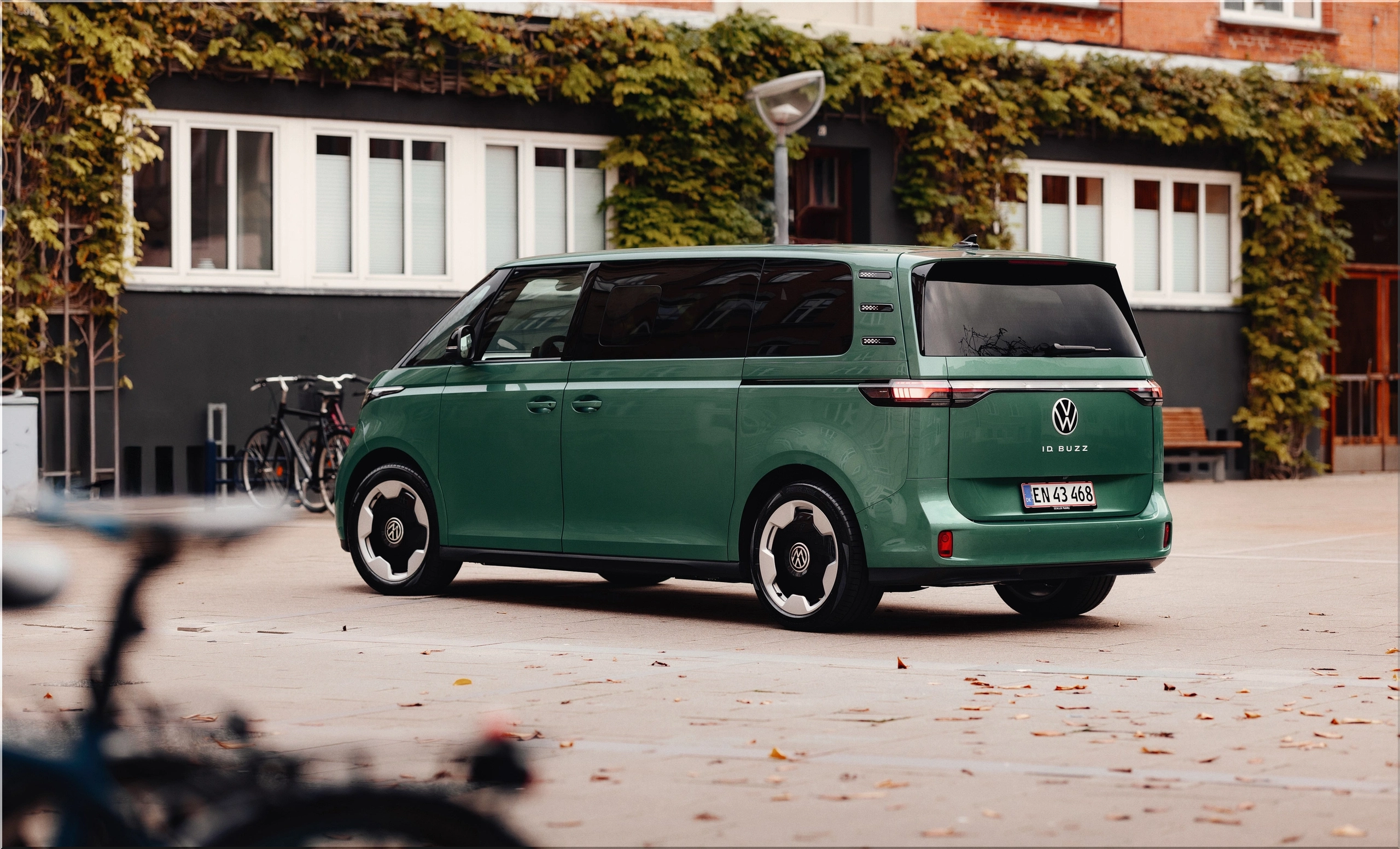
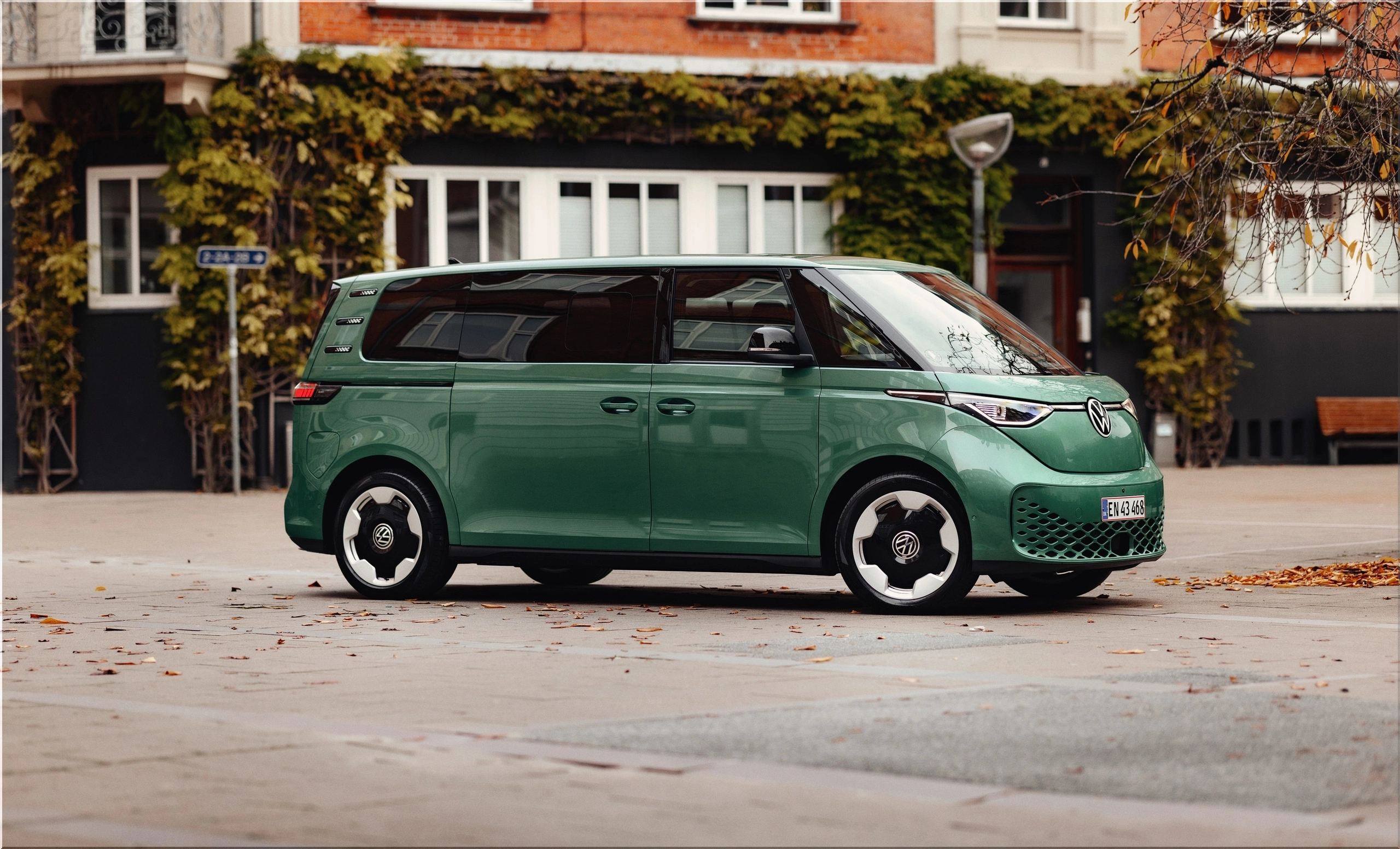
Volkswagen did not stretch the ID. Buzz just to add a third row. The extra wheelbase changes how the vehicle carries people and how it behaves at speed.
Dimensions: 7-seat vs 5-seat (mm and inches)
| Metric | ID. Buzz 5-seat (SWB) | ID. Buzz 7-seat (LWB) | Difference |
|---|---|---|---|
| Length | 4,712 mm (185.5 in) | 4,962 mm (195.4 in) | +250 mm (+9.8 in) |
| Wheelbase | 2,989 mm (117.7 in) | 3,239 mm (127.5 in) | +250 mm (+9.8 in) |
| Width (no mirrors) | 1,985 mm (78.1 in) | 1,985 mm (78.1 in) | 0 |
| Width (with mirrors) | 2,211 mm (87.0 in) | 2,211 mm (87.0 in) | 0 |
| Height | 1,927 mm (75.9 in) | 1,927 mm (75.9 in) | 0 |
| Turning circle | 11.2 m (36.7 ft) | 11.8 m (38.7 ft) | +0.6 m |
The wheelbase gain equals the length gain. That tells you Volkswagen added the stretch between the axles rather than just hanging more body off the ends. Consequently, you get more usable cabin length without turning the rear overhang into a parking-lot battering ram.
Definition: Wheelbase, explained for buyers
Wheelbase measures the distance between the front and rear axles. A longer wheelbase usually improves second- and third-row legroom and steadies the ride over expansion joints because the axles hit bumps farther apart in time.
Powertrain: 286 hp Rear Drive With Real Torque You Can Feel
Volkswagen fits the Life and Style trims with a single rear motor rated at 210 kW (286 hp) and 560 Nm (413 lb-ft). That torque number explains why the ID. Buzz does not feel like a slow van in daily driving.
Short statement: torque moves mass. Longer statement: a 7-seat MPV carries a high curb weight and a big frontal area, so it needs immediate low-speed shove to merge, pass, and climb grades without constant pedal mashing.
Performance snapshot (LWB Pro reference spec)
- Power: 210 kW (286 hp)
- Torque: 560 Nm (413 lb-ft)
- 0 to 100 km/h: about 7.9 seconds
- Top speed: 160 km/h (99 mph)
- Drive layout: rear-wheel drive
From an expert perspective, rear drive also helps traction under load because weight transfers rearward under acceleration. That matters when you run a full cabin plus luggage.
Battery and Charging: The Numbers That Control Your Weekends
The Volkswagen ID. Buzz leasing pitch leans on the larger long-wheelbase battery. That decision tracks real usage: families want fewer charging stops, and they want shorter stops when they do charge.
Battery specs (LWB, usable focus)
- Usable battery capacity: 86.0 kWh
- Nominal capacity: 91.0 kWh
- Architecture: ~400 V
- AC charging: 11 kW
- DC peak charging: up to 200 kW
- 10 to 80 percent DC time: about 26 minutes (best-case session profile)
Range metrics (WLTP context)
- WLTP range (LWB reference): about 453 km (281.5 mi) in one published configuration
- Realistic mixed use: often lower, driven by speed, temperature, wheel choice, and HVAC demand
Looking at the data, the ID. Buzz LWB sits in a practical middle ground: it does not chase 800-volt bragging rights, but it supports a solid 200 kW peak and a fast 10 to 80 window when conditions cooperate.
Pro-Tip: Plan charging around the 10 to 80 window
Fast-charging curves taper hard above 80 percent. If you target 10 to 80 percent stops, you usually cut total trip time more than you would by charging to 95 percent “for safety.” Use that saved time for the part of the trip nobody hates: eating.
Plug and Charge: One less app circus
The vehicle supports Plug and Charge under ISO 15118 in certain configurations. Practically, that reduces card-swiping, app-hopping, and “why did it fail” moments at the charger. In addition, it helps when multiple drivers share the vehicle because authentication can stay tied to the car.
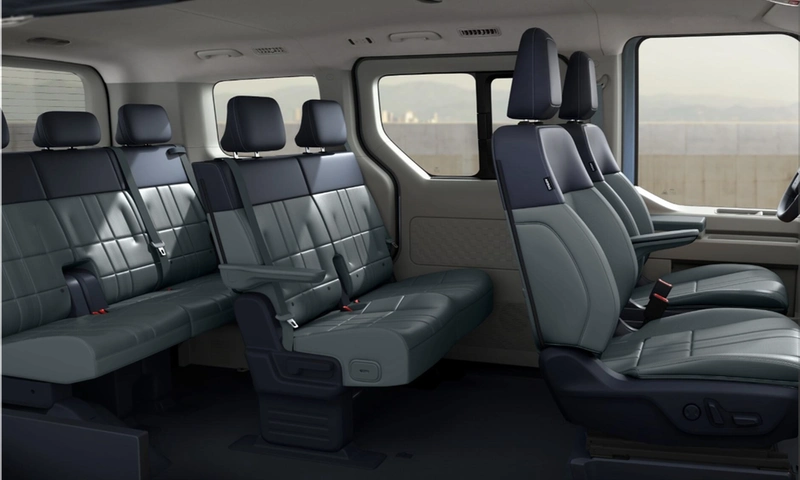
Interior Logic: Why This Layout Works for Families
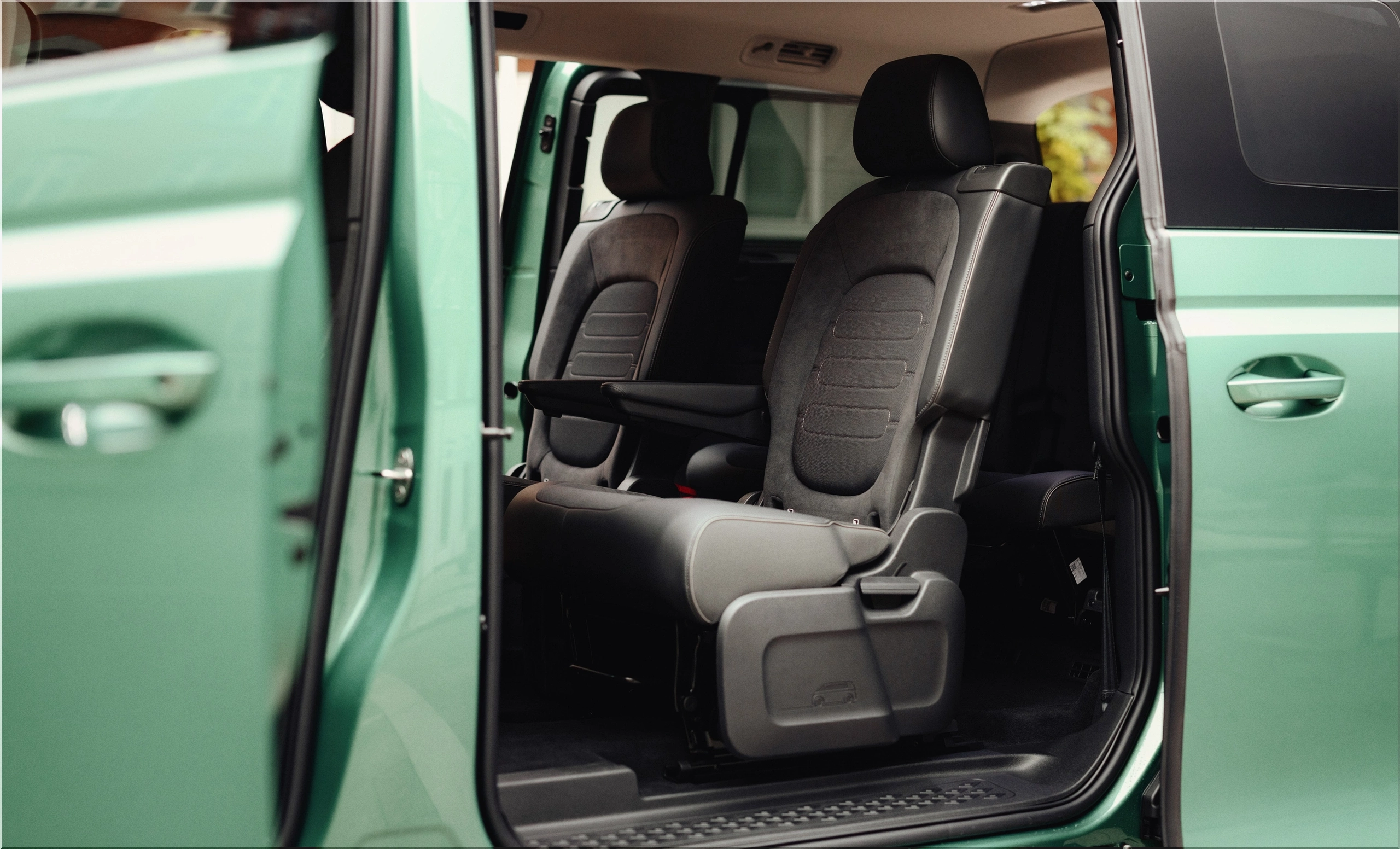
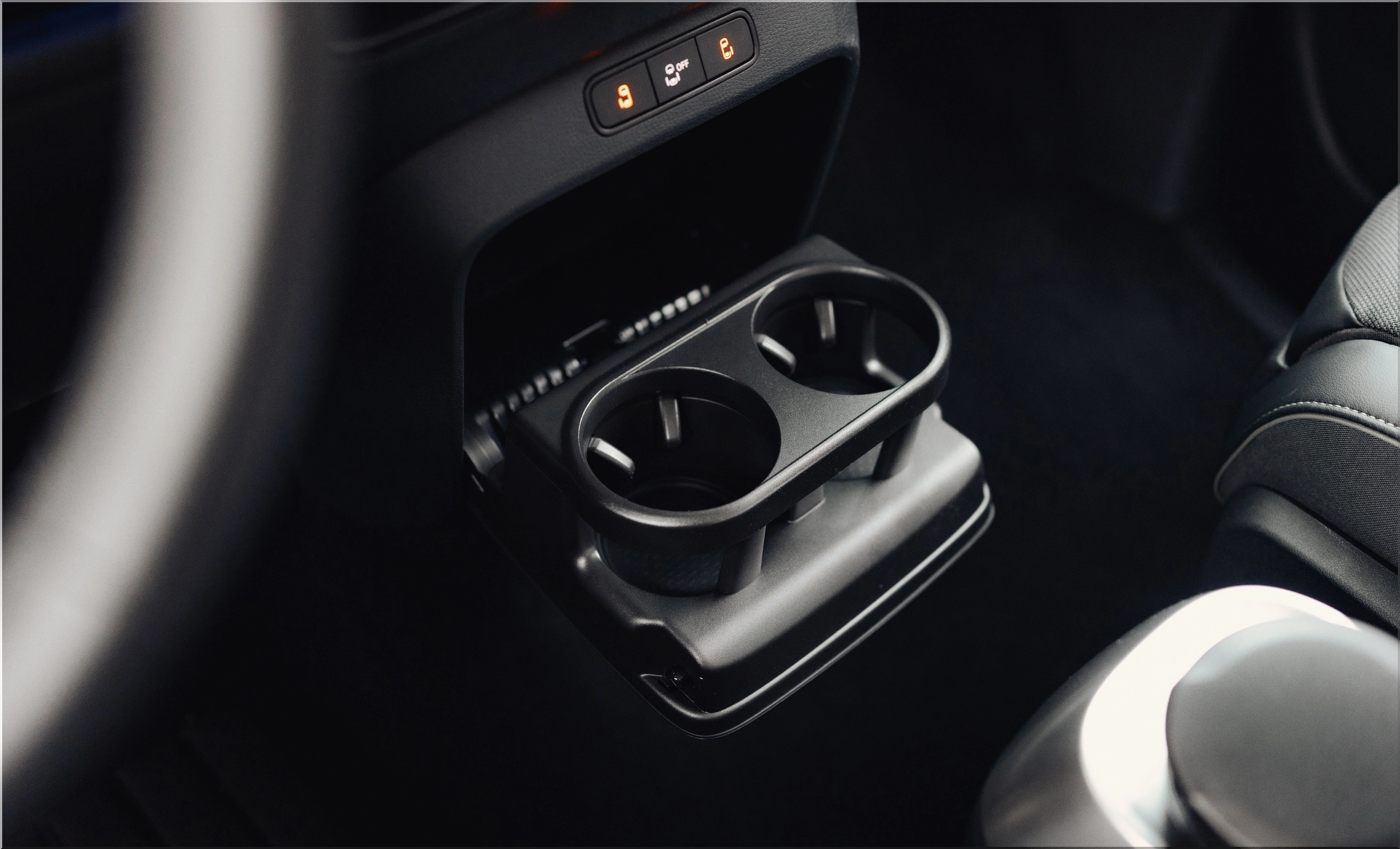
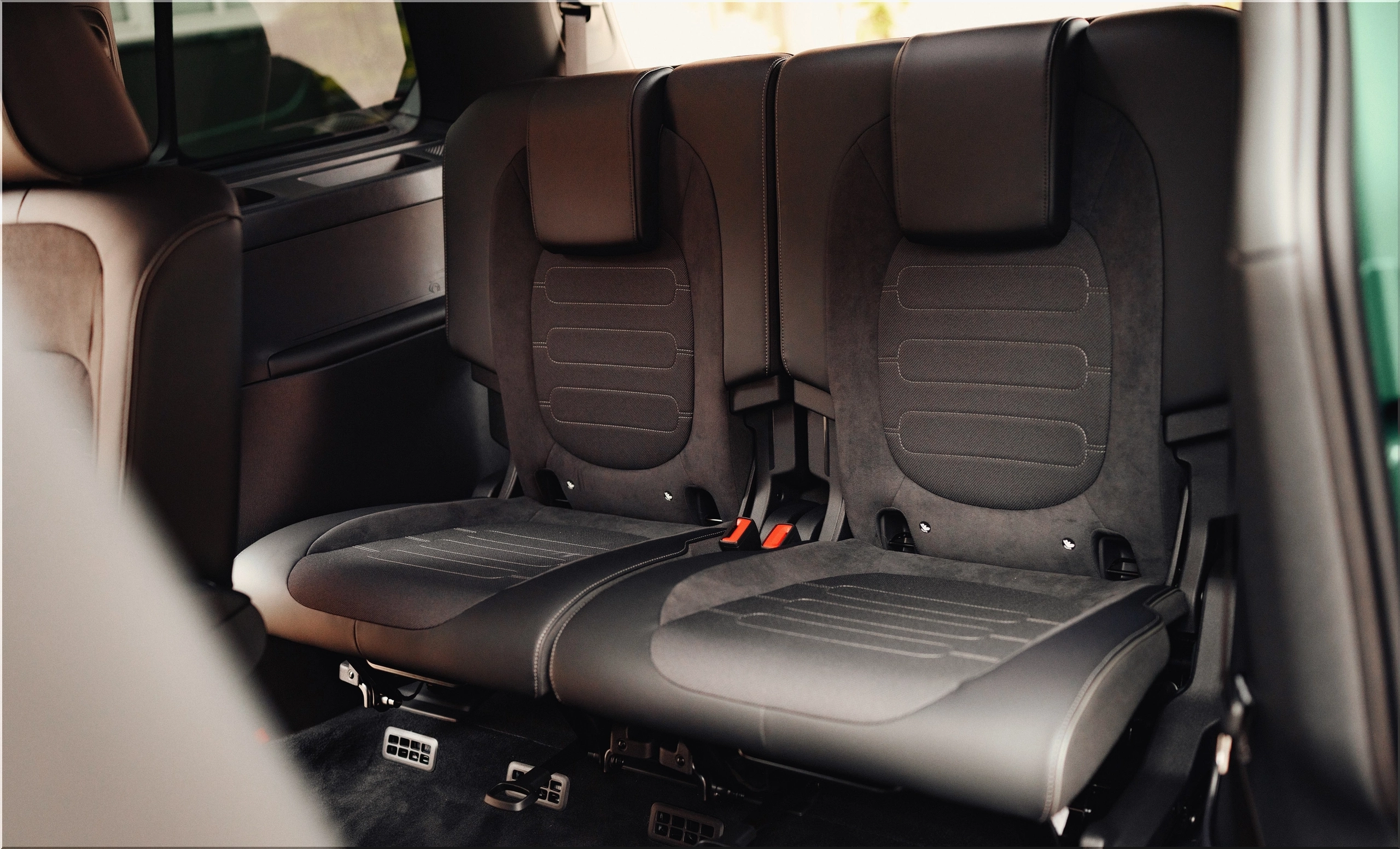
Volkswagen sells “flexibility,” but the measurable part is cabin length and load geometry.
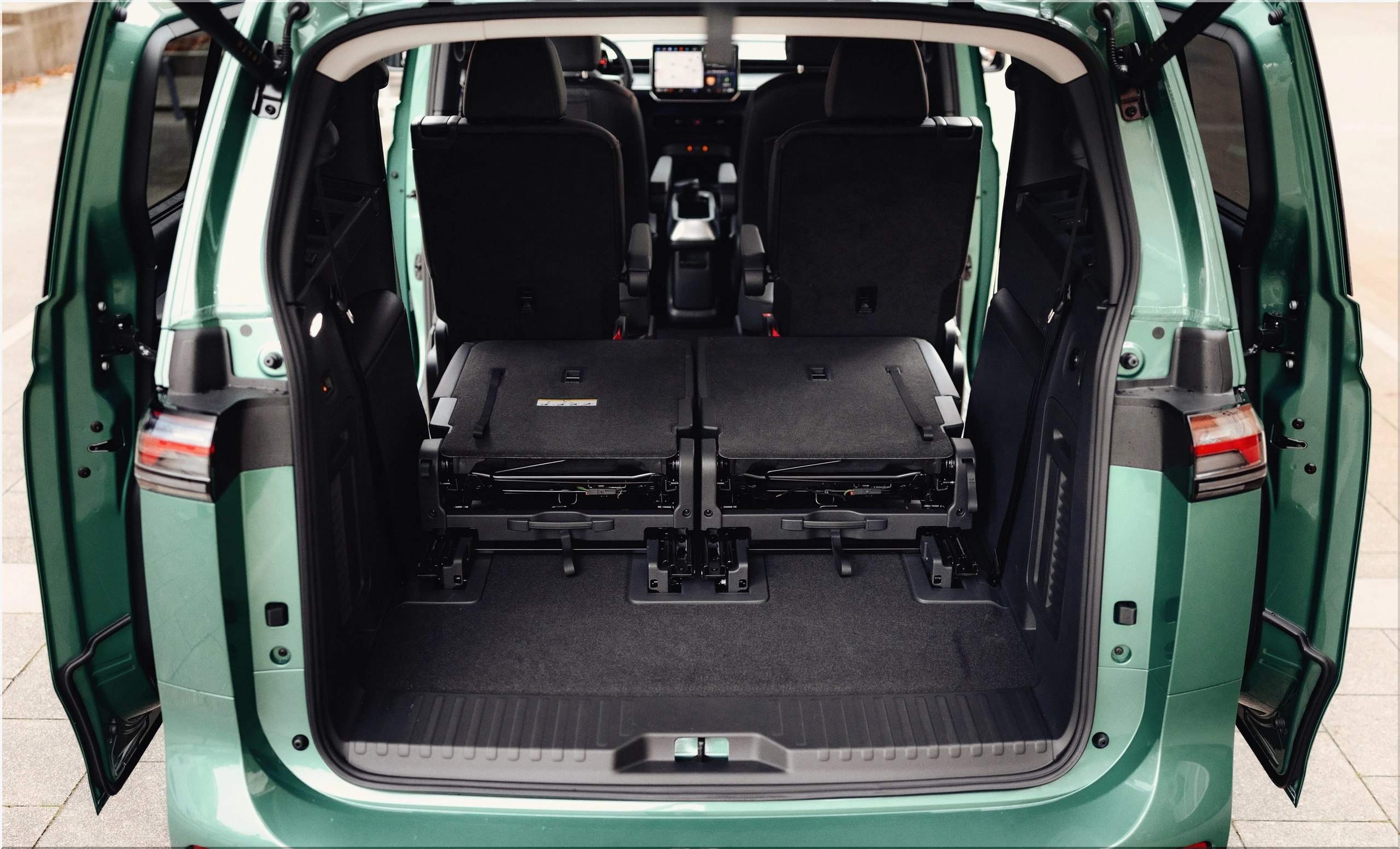
Key cargo numbers referenced for the 7-seat long model:
- Boot capacity with third row up: 306 L
- Boot capacity with second row up (5-seat reference): 1,121 L
- Luggage floor length to second row (LWB): 1,495 mm (58.9 in)
Short statement: the third row costs cargo volume. Longer statement: a 7-seat MPV always forces a choice between people and stuff, so the real win comes from quick reconfiguration, a low load sill, and a wide opening that makes bulky items less annoying.
Pro-Tip: Use the wheelbase, not only the seat count
If you carry five people most days, the LWB still pays off. You get more floor length behind row two and a more stable ride at highway speed, which matters on long trips with a full cabin.
Trim Walk: Life vs Style vs GTX
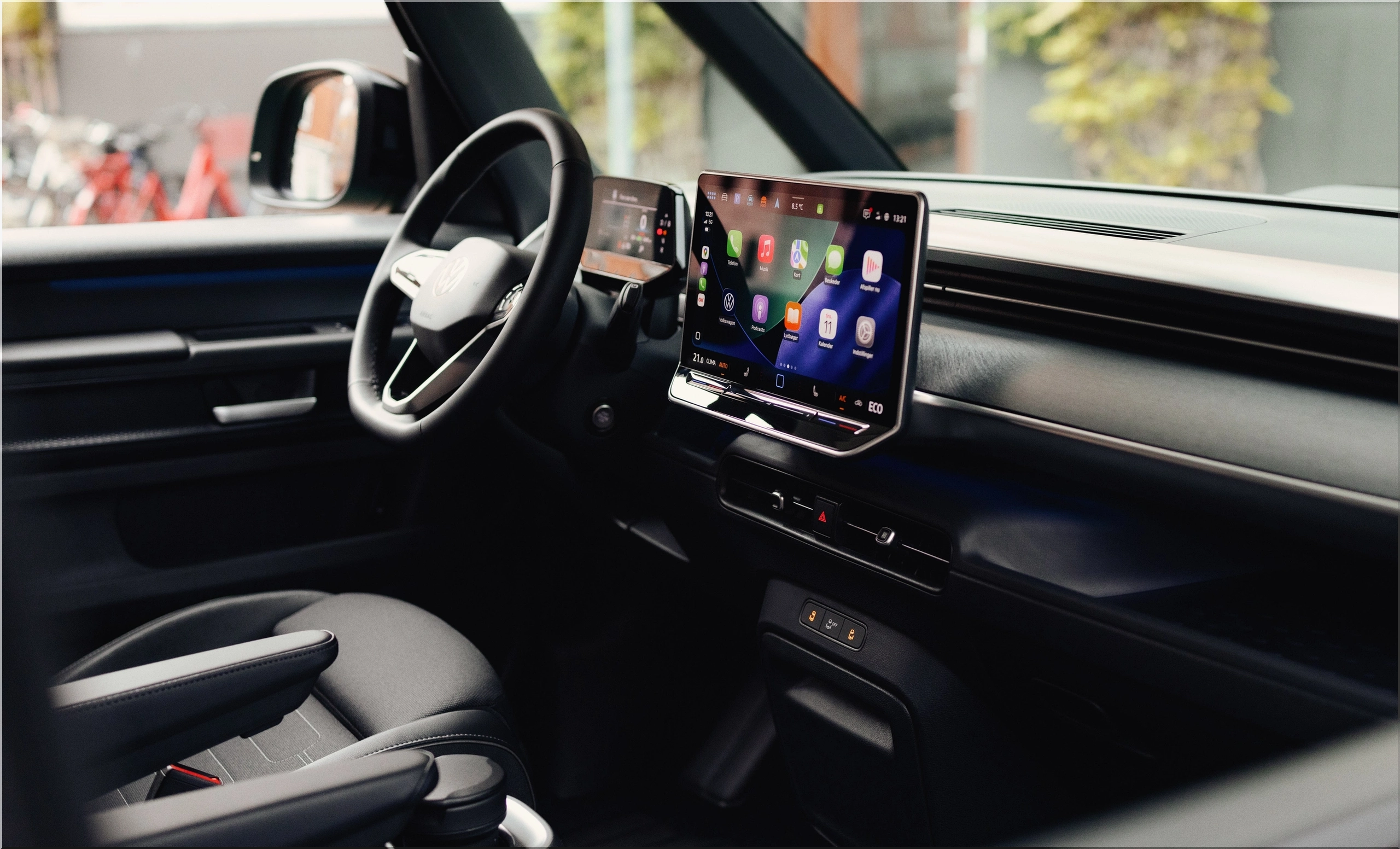
Volkswagen aims the leasing offer at “Life” because it packages the core comfort and driver-assist features without pushing payment into luxury territory.
Life (core value)
- LED headlights
- Adaptive cruise control with stop-and-go behavior
- 2-zone climate control
- Keyless access and start
- 286 hp / 560 Nm rear motor
Style (comfort and convenience)
- Larger driver-assist package
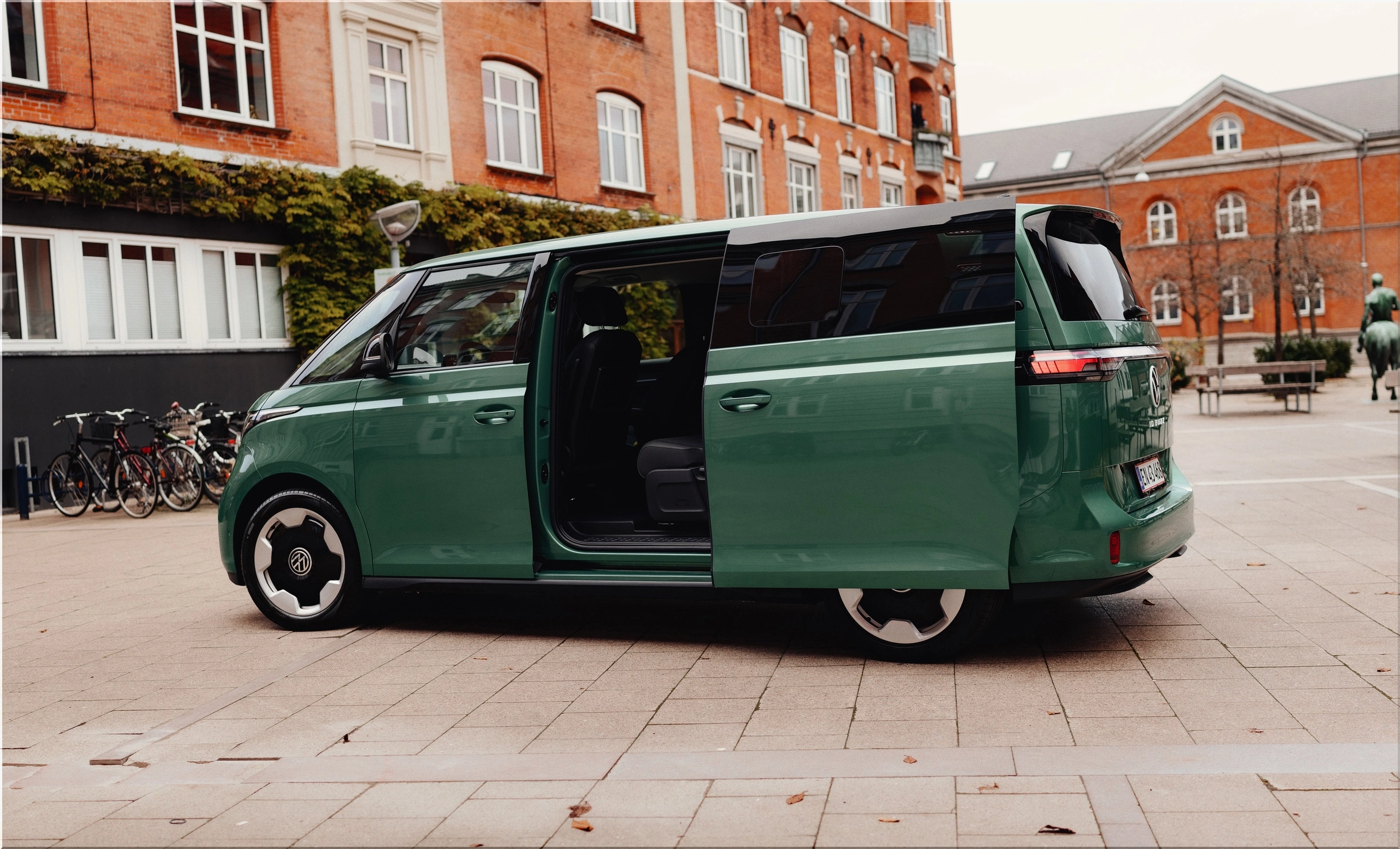
- Power sliding doors and power tailgate
- Matrix LED headlamps (market naming varies)
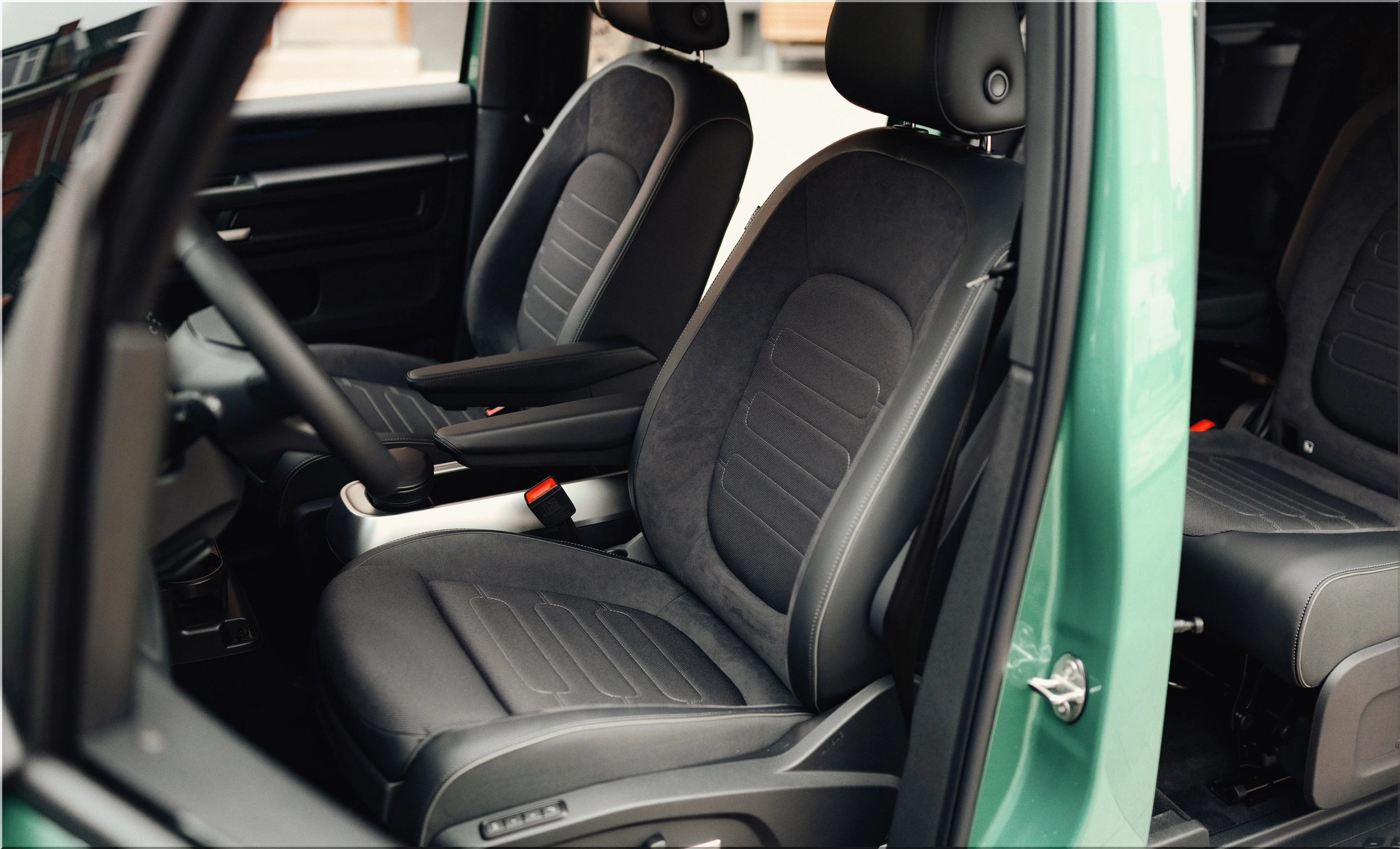
- Power front seats with massage
By comparison, Style pushes convenience hard. Power sliding doors alone change daily life if you load kids in tight spaces.
GTX (performance and tow capability)
GTX adds a second motor for AWD and raises output to 250 kW (340 hp). It also supports towing up to 1,800 kg (3,968 lb) in stated configurations. That tow rating shifts the ID. Buzz from “family hauler” to “family hauler that can pull a real trailer.”
Competitive Comparison: How ID. Buzz LWB Stacks Up
The ID. Buzz sits in a niche. Some rivals match it as an electric MPV. Others compete as three-row EV family movers.
Category peers (electric MPVs and people carriers)
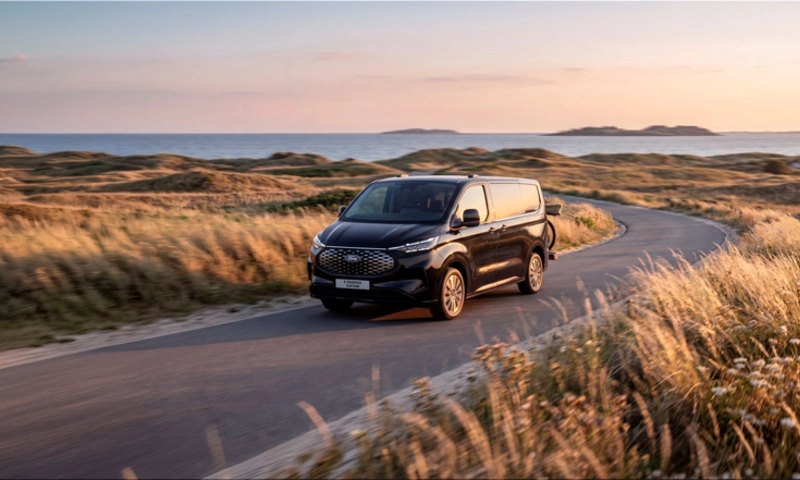
| Metric | VW ID. Buzz LWB | Ford e-Tourneo Custom (L1) | Mercedes EQV 300 Long | Peugeot e-Traveller L2 75 kWh |
|---|---|---|---|---|
| Seats | 7 | 8 | 7 | up to 9 |
| Length | 4,962 mm (195.4 in) | 5,050 mm (198.8 in) | 5,140 mm (202.4 in) | 4,983 mm (196.2 in) |
| Wheelbase | 3,239 mm (127.5 in) | 3,100 mm (122.0 in) | 3,200 mm (126.0 in) | 3,275 mm (128.9 in) |
| Usable battery | 86.0 kWh | 71.0 kWh | 90.0 kWh | 69.0 kWh |
| DC peak | 200 kW | 125 kW | 110 kW | 100 kW |
| 10 to 80 DC time | ~26 min | ~29 to 30 min | ~42 min | ~40 min |
| Power | 286 hp | 286 hp | 204 hp | 136 hp |
| Torque | 560 Nm | 415 Nm | 362 Nm | 270 Nm |
| Drive | RWD | RWD | FWD | FWD |
Win/loss read:
- ID. Buzz wins on DC peak charging and torque delivery in this group. That shows up in highway usability and pass confidence.
- Mercedes EQV wins on usable battery size, but it gives back time on the charger due to lower DC speed.
- Ford wins on seat count and tow rating (in published configurations), but it trails on charging power and range efficiency depending on use.
- Peugeot wins on maximum seat count and payload-type practicality, but it loses hard on performance and charge speed.
The three-row EV SUV angle: the EV9 problem
Some shoppers cross-shop the ID. Buzz against three-row EV SUVs like the Kia EV9. That comparison flips priorities.
- The EV9 can offer higher DC charge rates via an 800-volt approach and a more SUV-like driving position.
- The ID. Buzz counters with a more open cabin feel, easier third-row access, and a more van-like cargo geometry that swallows awkward items.
If you haul people in rows two and three often, the MPV form usually wins on access and packaging. If you prioritize towing, ground clearance, and SUV ergonomics, the three-row SUV starts looking logical.
Engineering Logic: Why VW Stuck With 400V and Still Hits 200 kW
An 800-volt EV architecture can reduce current for the same power, which helps with heat and cable mass. So why does the ID. Buzz still work well with a 400-volt system?
Because peak kW does not tell the whole story. The usable metric is time in the fast part of the curve. VW pairs:
- a large usable pack (86 kWh),
- a high-enough DC peak (200 kW),
- and a charging window that targets road-trip reality (10 to 80 percent).
Consequently, you get road-trip stops in the mid-20-minute range in best-case conditions, which lines up with how long families already stop when everyone needs something.
Buyer Fit: Who Should Target This Lease?
This offer makes the most sense for buyers who value predictable costs and want to avoid long-term depreciation exposure in a fast-moving EV market.
Best fit profiles:
- Families who need a real third row more than once a month
- Drivers who want fast charging and usable torque without stepping into luxury pricing tiers
- High-mileage commuters who want a mileage ladder that goes far beyond the usual 10,000 to 15,000 km bracket
What Now: Action Steps That Save Money and Time
- Choose your mileage first, then pick the trim. If you under-buy mileage, overage costs can wreck the deal faster than any trim upgrade.
- If you carry people, default to the LWB. The wheelbase and battery changes deliver value every day, not only on road trips.
- If you carry stuff, measure your real cargo. Bring a tape measure. Compare stroller width, sports gear length, and your typical load height against the ID. Buzz opening and floor length.
- Plan your charging routine around 10 to 80 percent. That strategy cuts trip time more reliably than chasing a “full” pack at every stop.
- Set a two-driver comfort standard. If you share the vehicle, prioritize seat comfort, door power operation, and driver-assist behavior that both drivers trust.
Pro-Tip: Use the lease to test your EV lifestyle
A 48-month lease gives you a long enough runway to learn winter range behavior, charger reliability on your routes, and how often you truly use row three. That knowledge pays off on the next purchase, EV or not.
- Add new comment
- 89 views